

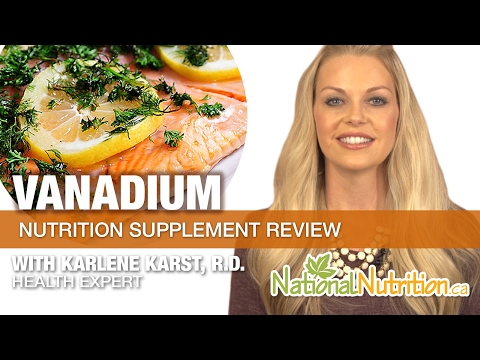
Vanadium - Benefits, Uses, Dosage, Supplement Reviews
Updated Mar. 03rd, 2026 | Read Time: 3 Minutes | What You Will Learn:
- What is Vanadium?
- Key Health Benefits of Vanadium
- Maintains Blood Sugar Balance
- Hypoglycemia
- Improves Insulin Sensitivity
- Supports Lipid Metabolism
- Antioxidant Activity
- Vanadium Supplement Varieties
- Nutritional Information
- Reader Comments (2)
What is Vanadium?
Vanadium is a naturally occurring trace mineral found in small amounts in soil, water, and certain foods. Although it is not officially classified as an essential nutrient for humans, it plays a biological role in enzyme activity and metabolic processes. This trace mineral is present in foods such as:
- Mushrooms
- Shellfish
- Black pepper
- Parsley
- Dill
- Whole grains
- Vegetable oils
In the body, vanadium exists in several forms, with vanadyl sulphate being the most commonly used in dietary supplements. Researchers have studied this trace mineral for its potential effects on blood sugar regulation and metabolic health. Because it is required only in trace amounts, supplementation should be approached carefully and under professional guidance.
Key Health Benefits of Vanadium
Maintains Blood Sugar Balance
Vanadium plays a role in the metabolism of sugar for energy. It maintains stable blood sugar levels by regulating the workings of enzymes involved in the metabolism of sugar. Glycolysis is the process of releasing sugar from glycogen storage, and gluconeogenesis is the process of building glycogen stores from blood sugar.
By regulating these processes, cells have a steady supply of the fuel, glucose. The standard North American diet is high in sugar and refined products, as well as being deficient in blood sugar-stabilizing substances like fibre. The pancreas is the main organ responsible for regulating blood sugar, and it becomes worn out after many years of excessive use. These are important reasons why the prevalence of type II diabetes is increasing, and the need for supplementation with this trace mineral is growing.
Hypoglycemia
Hypoglycemic individuals suffer from the opposite problem as diabetics; their blood sugar is too low. Vanadium supplementation also helps these individuals regulate their blood sugar. This trace mineral is needed for the formation of bones and teeth. It is also important for growth and reproduction; a deficiency of vanadium has been linked to infertility and infant mortality. Some studies show that this trace mineral reduces cholesterol levels, thus protecting an individual from developing cardiovascular disease.
Improves Insulin Sensitivity
Vanadium has been studied for its ability to enhance insulin sensitivity. By influencing cellular signaling pathways involved in glucose metabolism, it may help cells respond more effectively to insulin. This has led to interest in this trace mineral as a supportive nutrient in those with insulin resistance.
Supports Lipid Metabolism
Some research suggests vanadium may influence lipid metabolism, potentially helping regulate cholesterol and triglyceride levels. While findings are still preliminary, this area continues to attract scientific attention in the context of overall metabolic health.
Antioxidant Activity
Vanadium may also exhibit antioxidant properties under certain conditions. Antioxidants help protect cells from oxidative stress, which plays a role in aging and chronic disease development. However, its antioxidant effects appear to depend heavily on dosage and biological context.
Vanadium Supplement Varieties
The supplementation forms of this nutrient are vanadium pentoxide and vanadyl sulphate. These are both inorganic forms of the mineral, which means that they are slightly more difficult for the body to use than organic minerals. Unfortunately, chelated vanadium supplements are not generally available.
Active individuals and athletes need more of this mineral because they consume more carbohydrates than the general population. Those with blood sugar imbalances should seek professional advice before supplementing with vanadium. Vanadium and chromium compete for absorption and should be taken at different times. Tobacco use decreases the uptake of vanadium.














I really liked the video and am looking forward to checking out more of your articles which include a video to enrich learning. It's amazing that so many health conditions are correlated with low vanadium (I was especially interested in the link to ankolysing spondylosis given that as a PhD student, I study autoimmune diseases). Given this correlation of low vanadum with so many health conditions, it is great (and relieving) to learn that it is readily avaialble in numerous healthy foods which should be consumed on a regular basis anyway.
Hello Rachel,
Thank you for your positive feedback! We're thrilled to hear that you enjoyed the video and found it enriching. It's fascinating how vanadium levels can correlate with various health conditions, especially in the context of autoimmune diseases like ankylosing spondylitis. As a PhD student studying autoimmune diseases, this information must be particularly intriguing for you. Be sure to check out more of our supplement review videos over on our Youtube channel, https://www.youtube.com/watch?v=yRq3B5vl4Cc&list=PLFydSZTC8qlbk7KPenG1bwPd8KDniLEbF&pp=iAQB
Happy learning!