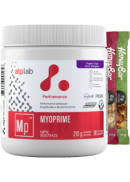
- 3 g
- 99.9% pure creatine monohydrate
- 2 g
- Creatine MagnaPower
- 1.5g
- HMBca
- 400 mg
- Adenosine 5’-triphosphate disodium
- 1000IU
- Vitamin D3
Organic grape flavour, citric acid, organic stevia
Ensure to drink enough fluid before, during, and after exercise. If you are pregnant or breastfeeding, consult a healthcare practitioner before using this product. If you are taking medications for high cholesterol, consult a healthcare practitioner prior to use. Consult a healthcare practitioner prior to use if you have a kidney disorder. May result in weight gain.
 Powder
210g
Adults: 1 scoop 1 time per day. Mix product well in 1-2 cups of liquid (water, juice, etc.) immediately before consumption.
- Advanced creatine formula
- Contain 99.9% pure creatine monohydrate
- Helps increase physical performance during intensive exercise
- Increase muscle mass when used in conjunction with resistance training regimen
- Grape flavoured and sweetened with stevia

Performance, Cognitive, Hormonal & Immune Health Support
At ATP Laboratories, human beings are at the heart of their concerns. In order to improve their quality of life, they have put our 40 years of experience to work to develop, produce, and market natural health products that are pure, effective, and of the highest quality. ATP Laboratories is constantly innovating, committed to working in close cooperation with their partners to develop, produce, and market the best products in the industry. At ATP Lab they test every batch of raw materials to identify, potency, microbial contaminants, heavy metals solvant residues and allergens. Herbal ingredients are tested for pesticide compounds. Essential fatty acids and fish oils are tested for dioxins, furans, PCBs and other agents. Manufactured in Canada. Read more >- Reviews
- POST A NEW REVIEW
Creatine
By: Articles by a Naturopathic Doctor (N.D.)
Creatine has been made popular by athletes, as they constantly strive to achieve peak performance, but it can help protect seniors too...
Creatine is naturally found in all organs and muscles in the body as phosphocreatine. This is the molecule responsible for the transforming adenosine diphosphate (ADP), into adenosine triphosphate (ATP). The body then uses the breakdown of ATP to release energy that is used to power all of our body processes, including muscle contraction. Creatine supplementation has been found to increase muscle strength, power and size while also improving cognitive health and bone density.
Muscle
The more creatine that is available, the faster the ATP conversion occurs and the more work a muscle can do. Creatine also draws water into muscle cells making them plump up and appear larger. Studies show creatine also increases muscle strength and endurance thus enhancing athletic performance. Medically, creatine can rebuild lean tissue after periods of convalescence, muscle wasting illnesses or the natural decline in muscle tissue that occurs with age. Ultimately, creatine supplementation prior to exercise is an easy way to help boost your muscle mass and athletic performance. It is not considered doping in the professional athletic community, and is allowed by the International Olympic Committee and in professional sports.
Pain and Myopathy
Myopathies are conditions of the skeletal muscle that lead to muscular weakness, atrophy, and exercise intolerance. Supplementation with creatine over several months has been shown to improve muscle function and exercise capacity in those with myopathy. It has also been found to help prevent pain after exercise and delayed onset muscle soreness (DOMS). Thus, creatine can also help prevent exercise-induced pain in healthy individuals as well.
Testosterone
One study found that supplementation with creatine in a loading (large) dose for 7 days, followed by 14 days of normal supplementation caused a 40% increase in conversion of testosterone in the body to dihydrotestosterone (DHT). Since DHT is the more active form of testosterone, this may be how creatine boosts muscles. This could also have a beneficial effect on men suffering from low testosterone and andropause. For more information, please see our Andropause and Low Testosterone articles.
Antioxidant and Cardiovascular Health
In addition to its ability to increase the energy supply to the heart muscle itself, supplementation with creatine has also been found to reduce oxidative damage in the body after strenuous exercise. It helps protect against DNA and lipid damage in the blood, which makes creatine able to help protect against cardiovascular disease. For more information, please see our Cardiovascular Health article.
Seniors Health
In addition to its cardiovascular and muscular benefits, creatine has also been found to be extremely beneficial in seniors. It has been found to improve cognitive function in the elderly, and to help boost bone density as well. Thus, creatine supplementation can help improve the quality of life and reduce the disease risk in elderly populations. For more information, please see our Seniors Health article.
Parkinson's Disease
Supplementation with creatine has been shown to help slow the progression of early Parkinson's Disease. For more information on treatment, please see our Parkinson's Disease article.
Co-Supplementation
Creatine has been found to work well with other muscle-feeding supplements like alpha lipoic acid and carbohydrates. Because of this, a number of body building supplements will combine these factors to boost performance. For more information, please see our Alpha Lipoid Acid and Workout Tips articles.
Types of Creatine
There are a number of forms of creatine currently available on the market for supplementation. The most common forms are creatine monohydrate and creatine ethyl ester (CEE). In 2009, a new form called creatine hydrocloride came on the market, which is much more soluble in water. Because of this it can be supplemented at significantly lower doses than other forms of creatine. Follow the manufacturer's dosing for supplementation of these products.
How can I get more creatine?
The body naturally produces creatine from amino acids, which are the building blocks of protein. For more information on how to increase your intake, please see our protein article. In order to get levels boosted faster, creatine can be directly supplemented in powder form. It can be found in flavoured or unflavoured forms and is often added to protein powders or other supplements to enhance athletic performance. The recommended dose of creatine depends on the condition treated. For boosting muscle and testosterone conversion, a loading dose of at least 20g daily is provided for 5-7 days followed by maintenance supplementation of 5g daily. Parkinson's Disease, bone health, mental health, and cardiovascular concerns are best treated with 10g daily. Be sure to take extra water with any creatine supplementation, as it draws water into the muscles and may dehydrate the rest of the body.
Creatine – Quick Facts
Sources
· Supplemental Powder, Meat, Fish.
Applications
· Fatigue, Muscle Wasting Illnesses, Convalescence, Improved Athletic Performance
Optimum Dosage
· Disease States Are Often Treated With 10g Daily
· Muscle: Loading Dose Is 20g Daily For 5-7days. 5g Daily For Maintenance. (Clinical Doses May Differ As Recommended By Your Practitioner). .
Works Well With
· Protein Powder, L-Glutamine, Nadh, alpha lipoic acid, Carbohydrates
Important Information
· Creatine Should Not Be Taken With Fruit Juice Or Caffeine.
· Creatine Should Be Used With Caution In Individuals With Liver Or Kidney Disease.
· There Is No Known Toxicity Or Serious Side Effects For The Use Of Creatine. Some Individuals Report Bloating With Supplementation.
Back to Top ↑