

- 15
- Calories
- 3g
- Carbohydrate
- <1g
- Fibre
- 2g
- Sugars
- 1g
- Protein
- 2mg
- Vitamin C
- 0.7mg
- Iron
- 5g
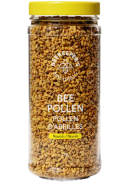
- Bee Pollen Granules
Raw, sustainably sourced, wildflower bee pollen.
To maintain freshness and nutrients, refrigeration recommended after opening. Bee pollen products may cause serious allergic reaction in some people. Do not use you are allergic to bee products or pollen.
 Granules
150g
Start small, with half a teaspoon, and work your way up to 1-2 teaspoons per day. Supplement with a handful as needed, or generously sprinkle over granola, smoothies, toast, and salads. Ideal pre- and post-workout fuel.
- Nutrient dense
- Energy support
- nature’s multivitamin
- B vitamins, minerals, free forming amino acids, and protein
- never heated or treated in order to preserve all the natural enzymes and vitamins.

- Reviews
- POST A NEW REVIEW
Bee Pollen
Bee Pollen can be used to fight of colds, flus infections, allergies and more...
Bee pollen is a powder that is collected from flowering plants by bees. It is a nutritious substance, containing significant amounts of protein, B vitamins, vitamin C, carotene, minerals, essential fatty acids and plant sterols. For individuals who lack energy and suffer from depression, bee pollen provides B vitamins, calcium, magnesium and iron. These vitamins and minerals support the adrenal gland (gives you the get-up-and-go energy), brain (supports the production of brain chemicals) and blood (boosts the oxygen carrying capacity of the blood).
Bee pollen contains plant sterols and vitamin C, both of which support the immune system. Plus bee pollen is an antimicrobial agent. It is used to treat seasonal allergies and colds and flus. People with intestinal diseases or cancer may find bee pollen helpful because of its easy to use nutrients and immune regulating properties.
Bee pollen can be purchased fresh, freeze dried or encapsulated. Fresh bee pollen should be in an airtight container and should not clump together. Bee pollen is often found in combination with other bee products, like royal jelly and propolis, or in formulas for immune boosting or allergies. If you are using bee pollen for allergies local pollen is the most effective.
Do not use bee pollen if you are allergic to bees. To ensure that you do not react to bee pollen take a small amount first and watch for signs of any reaction. They can include rash, hives, wheezing and swelling.
Bee Pollen – Quick Facts
Source
· Collected From Bees When They Return To The Hive. Pollen From Flowers And Trees.
Applications
· Colds And Flus, Infections, Allergies, Fatigue, Depression, Intestinal Conditions
Optimum Dosage
· 1-3 Tsp Of Granules Daily. (Clinical Doses May Be Higher As Recommended By Your Practitioner).
Works Well With
· Bee Pollen, Vitamin C, Bioflavinoids, Goldenseal, Adrenal Extract, B Complex Vitamins
Important Information
· Do Not Use Bee Pollen If You Are Allergic To Bees.
Back to Top ↑
-

UTI Cleanse With Cranberry - 55g Powder
Sale: $39.11
Reg.: $48.89 (Save $9.78)












