Purified water, Pegoxol 7 stearate, Lauroyl polyoxylglycerides,,Glycerine, Cetyl palmitate, 1,2-Hexanediol, Caprylyl glycol, Sorbic acid, Carbomer 980, Sodium hydroxide, Edetate disodium
Keep out of reach of children. Consult a health care practitioner if symptoms persist or worsen. Do not use if you are allergic to plants of the Asteraceae/Compositae/Daisy family or to one of the non-medicinal ingredients. Keep out of reach of children. For external use only; do not apply to the mucous membranes, the eyes, an oozing dermatosis, an infected lesion or a wound.
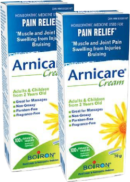
 Cream
Cream
2 X 70g
Adults and Children from 2 Years Old: Apply a thin layer of Arnicare Cream on the affected area as soon as possible. Massage gently until complete penetration. Repeat up to 3 times a day or as recommended by a healthcare practitioner.
- Great for massages and Non-greasy
- 100% naturally-sourced medicinal ingredients
- Fragrance-free
- Paraben-free
- Nonsteroidal Anti-inflammatory Drugs free

Trusted European Homeopathics Source - 16 New Added
Boiron, the makers of Canada’s best selling homeopathic remedies including, Oscillococcinum for aid with relief of flu symptoms and best selling seasonal illness fighter Influenzinum, now brings to you Boiron for Children as well as their classic Arnica Montana which can be useful for pain associated with sprains, strains, and falls. Shop Arnica for homeopathic options you can trust. Read more >- Reviews
- POST A NEW REVIEW
ARNICA MONTANA SUPPLEMENT VARIETIES
Arnica montana, more frequently referred to simply as Arnica, is a perennial herb native to the mountainous regions of Europe and Siberia, though it is also found in North America. Arnica belongs to the daisy Asteraceae family and is recognized for its vibrant yellow flowers. The name is believed to have originated from the Greek word "arni," meaning lamb, possibly due to the plant's soft, hairy leaves. However, Arnica also goes by wolf's bane, leopard's bane, mountain tobacco, and mountain arnica, depending on its growing region.
Arnica has a long and storied history of use in traditional medicine, dating back centuries, particularly in European folk medicine. Indeed, Arnica was and remains a staple of traditional medicine, used both topically and internally to address all kinds of injuries, including bruises, sprains, tears, and muscle and joint aches. It has also been shown to be effective in managing all sorts of painful, inflammatory conditions thanks to its demonstrated anti-inflammatory, antibacterial, antifungal, analgesic, and immunomodulatory effects. These are due to the active constituents in Arnica montana, which include essential oils, fatty acids, thymol, pseudoguaianolide sesquiterpene lactones and flavanone glycosides, among other substances.
Since Arnica montana is one of the most used and studied homeopathic substances and has shown to be safe and effective in a wide range of therapeutic applications, it should be no surprise that it is a protected species in several European countries. Indeed, because of overharvesting, there has been a marked decline in Arnica montana's natural habitat in many areas.
Key Health Benefits Of Arnica Montana
- Antibacterial, Antifungal, Anti-Inflammatory, & Antioxidant
- Improves Circulation
- Promotes Wound Healing
- Relieves Pain / Joint Pain
- Soothes Muscle Soreness
- Speeds The Healing Of Bruises
Who Should Consider Arnica?
Arnica montana is one of the most popular remedies in homeopathic medicine. It is often used by individuals looking to reduce inflammation, alleviate osteoarthritis pain, promote recovery from injuries, or speed post-exercise recovery. Arnica is also commonly recommended for conditions such as bruising, muscle soreness, and all manner of trauma.
Arnica Montana Supplement Formats
If this article has piqued your interest and you'd like to try Arnica, you'll be happy to know that it is widely available in health food stores and many grocery stores, as well as online. It comes in topical gel or cream, oral pellet form, and liquid drops. You can purchase Arnica Montana as a standalone or in combination blends featuring Arnica alongside other homeopathic substances.
Although available in a wide range of dilutions, Arnica montana is most often found in 6C, 30C, and 200C. In homeopathy, the more dilute a remedy is, the higher its potency is considered to be. If you aren't sure what remedy or dilution is right for you, speaking to a qualified homeopathic practitioner is important.
Cautions & Considerations
While Arnica is generally considered safe when used in homeopathic preparations, it's important to note that undiluted Arnica should not be applied directly to broken skin, as it can cause irritation. Ingesting large amounts of undiluted Arnica can be toxic and can cause adverse effects such as nausea, vomiting, and dizziness. That said, most Arnica on the market is sold in homeopathic dilution.
Also noteworthy is that Arnica can increase blood pressure and heart rate in certain individuals when used on open wounds or broken skin. Avoid Arnica if you have high blood pressure.
Those with allergies to plants in the Asteraceae family (such as ragweed, marigolds, and sunflowers) should exercise caution, as they may also be sensitive to Arnica.
Back to Top ↑