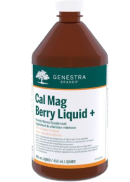
Each 15 ml contains:
- 300 mcg RAE / 1000 IU
- Vitamin A (vitamin A acetate)
- 25 mcg / 1000 IU
- Vitamin D (cholecalciferol)
- 80 mcg
- Vitamin K1 (phylloquinone)
- 20 mcg
- Vitamin K2 (menaquinone-7)*
- 500 mg
- Calcium (calcium citrate)
- 200 mg
- Magnesium (magnesium citrate)
- 2000 mcg
- Boron (boron citrate)
* Naturally derived from fermented soybeans
Non-Medicinal Ingredients:
Purified water, xylitol, natural blueberry flavour, xanthan gum, potassiumsorbate, stevia leaf extract (glucosylsteviosides), ascorbic acid
Non-Medicinal Ingredients:
Purified water, xylitol, natural blueberry flavour, xanthan gum, potassiumsorbate, stevia leaf extract (glucosylsteviosides), ascorbic acid
Important Information:
If you are pregnant or breastfeeding, do not use. If you are taking blood thinners, or if you have been diagnosed with estrogen-dependent cancer, consult your healthcare practitioner prior to use.
Format
 Liquid
450ml
Dosage
One tablespoon taken once daily with a meal, a few hours before or after taking other medications, or as professionally directed. Shake well before each use. Do not refrigerate.
Product Information:
- Calcium and magnesium along with vitamins A, D and K
- Help in the development and maintenance of bones and teeth
- May reduce the risk of developing osteoporosis
- Natural blueberry-flavoured
- Calcium and magnesium are delivered in citrate form providing superior bioavailability

Evidence-Based Natural Health Supplements for Optimal Wellness
Genestra delivers professional-grade products that are offered in a variety of formats. Genestra natural health products have been proven safe, effective and reliable for over 30 years, and are backed by clinical evidence. Genestra brings you HMF Forte, HMF Immune, HMF UTI, Digest Plus, Probiotics, D-Mulsion and Super EFA Liquid. Read more >What People Are Saying:
- Reviews
- POST A NEW REVIEW
Reviews for:
Cal:Mag Berry Liquid + (Blueberry) - 450ml
(4 reviews)
Reviews By Rating
helpful votes
0
0 customers found this product review helpful
More Info
BONE HEALTH & OSTEOPOROSIS
Osteoporosis doesn't need to be inevitable; clinical evidence shows that bone loss can be slowed or even halted with the right diet, supplements, exercise & treatment...
An adult human has 206 bones, which are constantly being renewed and remodelled. Bones perform several important roles in the body. Bones form a framework that supports the body and protects soft organs. They are an essential part of movement because they form attachment points for muscles. In fact, it is the arrangement of bones and the points of muscle attachment that determine the type of movement that can be done by our bodies.
Most people do not think about bone health until they are in their later years. This is a mistake because significant increases in bone density can only be made in childhood or early adulthood (up to age 30). For the remainder of our lives the goal is simply to maintain the bone density we already have.
What Makes Up Bone?
The majority of bone is made up of something called the matrix (no relation to Neo), which has both organic and inorganic parts. Although we all picture bone as a block of mineral, the vast majority of bone is actually an organic (living) framework. This framework is made up of a number of different proteins (including Type I collagen) as well as sugar chains called glycosaminoglycans. The inorganic part of bone is made up of calcium and phosphate, which is simply deposited on the organic framework to add strength. Crawling along this matrix are two cell types called osteoblasts and osteoclasts. Osteoblasts build new bone, while osteoclasts break down old or damaged bone. In fact, approximately 20% of any adult's bones are being remodelled at any point in time, and up to 7% of our bone mass is broken down and replaced every week. This helps to keep our bones strong and new. In addition to their outer structure, the long bones of the body also contain an inner core of bone marrow that produces blood and immune cells.
Mineral and Vitamin Storehouse
Bones are important storehouses of vitamins and minerals in our body. We are all familiar with the ability of bone to store calcium, but did you know that they also store protein, magnesium, phosphorus, vitamin D, and potassium? In times of depletion in the rest of the body, the bone is broken down to release these nutrients for use by the body's cells.
Bone as a Buffer
The body's Acid/Alkali balance plays an important role in bone health. Our body requires being kept at a very stable pH, but acid is produced in the body through normal metabolic processes.
Calcium is the body's major buffering agent and is taken from the bone when our intake of calcium is insufficient. Many people are acidic because they use substances that must be buffered by the body. Eliminating the use of caffeine, tobacco, and carbonated drinks decreases the acidic load on the body. Stress also increases acidity and may be a factor in bone loss.
When Bone Goes Bad
Osteomalacia is a condition in which the bones are weakened, and in severe cases the weight-bearing bones may be deformed (Ricketts). There is a normal amount of bone structure present but it is not sufficiently mineralized. Eating a well balanced diet that provides sufficient amounts of protein, calcium and trace minerals can rectify this problem. Osteoporosis, on the other hand, is a loss of bone density. There is less bony matrix present because more bone is being broken down than is being produced.
Diet for Boosting Bone Health
A healthy diet, with sufficient protein intake, is one protective factor against bone loss. Dietary deficiencies of protein cause bone loss because the bone has to be broken down to free protein for the body's use. Ensuring adequate protein consumption can prevent this needless loss. Good dietary protein sources are: lean meats, fermented dairy products and legumes. If you cannot consume enough protein in your diet, be sure to supplement with protein powder or amino acid complex if you cannot consume enough protein. Be sure to eat plenty of fruits and vegetables, and try to have them raw or lightly steamed to prevent nutrient loss. Drink filtered or spring water. If you drink reverse osmosis or distilled water be sure to replace the missing minerals with a supplement.
Exercise and Bone
One of the most important factors influencing our bone density is actually weight-bearing exercise. The stress that we put on our bones during exercise actually creates micro-fractures in the bone that signal the body to remodel that area. This brings in osteoclasts to remove the old bone and osteoblasts to build fresh new bone in its place. Without these signals from exercise, all the food and supplements in the world can't help improve your bone density. This is the main reason astronauts lose bone density in space.
Vitamin D
Vitamin D helps bring calcium into the bone. It is one of the fat-soluble vitamins that are poorly absorbed through the digestive process as we age. In areas away from the equator, skin production of vitamin D is limited during certain times of the year. Eating vitamin D rich foods like fish and egg yolks, and taking vitamin D supplements, will help to maintain your bone density.
Vitamin K
Vitamin K helps the body create the protein framework for bone building. One famous study (called the Framingham Heart Study) found that those with the higher vitamin K intake had a significantly lower risk of hip fracture than those with lower levels. In fact, high intakes of vitamin D, in the absence of sufficient vitamin K, can actually increase the risk of fracture. The type of vitamin K beneficial for bone health is vitamin K2, and vitamin K1 has not been found to have the same benefit.
Strontium
More recent research has found that strontium is a mineral that has been shown to improve bone mass and mineral density. The dosing is extremely important as excessive intake can actually cause strontium to replace calcium in the bone matrix, actually making it weaker.
Other Requirements for Bone
In addition to calcium, phosphorus, vitamin D, vitamin K, and strontium, bone health requires a number of other nutrients. Some of these are: manganese, copper, boron, iron, zinc, silica, vitamin A, vitamin C, and the B vitamins. Although they are not directly incorporated into the structure of bone, they are required by the osteoblasts that create bone growth.
Bone Benefits of Pregnancy
During pregnancy the mother's high metabolic state allows the building of her own body tissues as well as those of the fetus. This is a time (after age 30) when a woman can actually make improvements to her bone density. The important thing to remember is that only excess nutrients will be used this way. If the mother is malnourished during pregnancy than nutrients will be stripped from the body, including the bones.
WHAT YOU CAN DO TO MAINTAIN HEALTHY BONES
- Take a good calcium supplement
- If you drink non-dairy milk, drink one that is enriched
- Exercise
- Don't drink coffee or cola
- Don't smoke
- Eat lots of vegetable
- Balance your pH
- Lift weights
DID YOU KNOW? (BONE HEALTH FACTS)
- Your bones are alive just like an tissue in your body
- Your maximum bone mass is already set by age 30
- Eating acid foods can leach calcium out of your bones and your teeth
Osteoporosis doesn't need to be inevitable; clinical evidence shows that bone loss can be slowed or even halted with the right diet, supplements, exercise & treatment...
An adult human has 206 bones, which are constantly being renewed and remodelled. Bones perform several important roles in the body. Bones form a framework that supports the body and protects soft organs. They are an essential part of movement because they form attachment points for muscles. In fact, it is the arrangement of bones and the points of muscle attachment that determine the type of movement that can be done by our bodies.
Most people do not think about bone health until they are in their later years. This is a mistake because significant increases in bone density can only be made in childhood or early adulthood (up to age 30). For the remainder of our lives the goal is simply to maintain the bone density we already have.
What Makes Up Bone?
The majority of bone is made up of something called the matrix (no relation to Neo), which has both organic and inorganic parts. Although we all picture bone as a block of mineral, the vast majority of bone is actually an organic (living) framework. This framework is made up of a number of different proteins (including Type I collagen) as well as sugar chains called glycosaminoglycans. The inorganic part of bone is made up of calcium and phosphate, which is simply deposited on the organic framework to add strength. Crawling along this matrix are two cell types called osteoblasts and osteoclasts. Osteoblasts build new bone, while osteoclasts break down old or damaged bone. In fact, approximately 20% of any adult's bones are being remodelled at any point in time, and up to 7% of our bone mass is broken down and replaced every week. This helps to keep our bones strong and new. In addition to their outer structure, the long bones of the body also contain an inner core of bone marrow that produces blood and immune cells.
Mineral and Vitamin Storehouse
Bones are important storehouses of vitamins and minerals in our body. We are all familiar with the ability of bone to store calcium, but did you know that they also store protein, magnesium, phosphorus, vitamin D, and potassium? In times of depletion in the rest of the body, the bone is broken down to release these nutrients for use by the body's cells.
Bone as a Buffer
The body's Acid/Alkali balance plays an important role in bone health. Our body requires being kept at a very stable pH, but acid is produced in the body through normal metabolic processes.
Calcium is the body's major buffering agent and is taken from the bone when our intake of calcium is insufficient. Many people are acidic because they use substances that must be buffered by the body. Eliminating the use of caffeine, tobacco, and carbonated drinks decreases the acidic load on the body. Stress also increases acidity and may be a factor in bone loss.
When Bone Goes Bad
Osteomalacia is a condition in which the bones are weakened, and in severe cases the weight-bearing bones may be deformed (Ricketts). There is a normal amount of bone structure present but it is not sufficiently mineralized. Eating a well balanced diet that provides sufficient amounts of protein, calcium and trace minerals can rectify this problem. Osteoporosis, on the other hand, is a loss of bone density. There is less bony matrix present because more bone is being broken down than is being produced.
Diet for Boosting Bone Health
A healthy diet, with sufficient protein intake, is one protective factor against bone loss. Dietary deficiencies of protein cause bone loss because the bone has to be broken down to free protein for the body's use. Ensuring adequate protein consumption can prevent this needless loss. Good dietary protein sources are: lean meats, fermented dairy products and legumes. If you cannot consume enough protein in your diet, be sure to supplement with protein powder or amino acid complex if you cannot consume enough protein. Be sure to eat plenty of fruits and vegetables, and try to have them raw or lightly steamed to prevent nutrient loss. Drink filtered or spring water. If you drink reverse osmosis or distilled water be sure to replace the missing minerals with a supplement.
Exercise and Bone
One of the most important factors influencing our bone density is actually weight-bearing exercise. The stress that we put on our bones during exercise actually creates micro-fractures in the bone that signal the body to remodel that area. This brings in osteoclasts to remove the old bone and osteoblasts to build fresh new bone in its place. Without these signals from exercise, all the food and supplements in the world can't help improve your bone density. This is the main reason astronauts lose bone density in space.
Vitamin D
Vitamin D helps bring calcium into the bone. It is one of the fat-soluble vitamins that are poorly absorbed through the digestive process as we age. In areas away from the equator, skin production of vitamin D is limited during certain times of the year. Eating vitamin D rich foods like fish and egg yolks, and taking vitamin D supplements, will help to maintain your bone density.
Vitamin K
Vitamin K helps the body create the protein framework for bone building. One famous study (called the Framingham Heart Study) found that those with the higher vitamin K intake had a significantly lower risk of hip fracture than those with lower levels. In fact, high intakes of vitamin D, in the absence of sufficient vitamin K, can actually increase the risk of fracture. The type of vitamin K beneficial for bone health is vitamin K2, and vitamin K1 has not been found to have the same benefit.
Strontium
More recent research has found that strontium is a mineral that has been shown to improve bone mass and mineral density. The dosing is extremely important as excessive intake can actually cause strontium to replace calcium in the bone matrix, actually making it weaker.
Other Requirements for Bone
In addition to calcium, phosphorus, vitamin D, vitamin K, and strontium, bone health requires a number of other nutrients. Some of these are: manganese, copper, boron, iron, zinc, silica, vitamin A, vitamin C, and the B vitamins. Although they are not directly incorporated into the structure of bone, they are required by the osteoblasts that create bone growth.
Bone Benefits of Pregnancy
During pregnancy the mother's high metabolic state allows the building of her own body tissues as well as those of the fetus. This is a time (after age 30) when a woman can actually make improvements to her bone density. The important thing to remember is that only excess nutrients will be used this way. If the mother is malnourished during pregnancy than nutrients will be stripped from the body, including the bones.
WHAT YOU CAN DO TO MAINTAIN HEALTHY BONES
- Take a good calcium supplement
- If you drink non-dairy milk, drink one that is enriched
- Exercise
- Don't drink coffee or cola
- Don't smoke
- Eat lots of vegetable
- Balance your pH
- Lift weights
DID YOU KNOW? (BONE HEALTH FACTS)
- Your bones are alive just like an tissue in your body
- Your maximum bone mass is already set by age 30
- Eating acid foods can leach calcium out of your bones and your teeth
Back to Top ↑