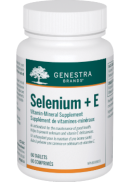
Each tablet contains:
- 134 mg AT / 200 IU
- Vitamin E (d-alpha tocopheryl succinate)
- 200 mcg
- Selenium (selenomethionine)
Non medical ingredients:
Cellulose, dibasic calcium phosphate dihydrate, magnesium stearate, silica, croscarmellose sodium, hypromellose, glycerin
Cellulose, dibasic calcium phosphate dihydrate, magnesium stearate, silica, croscarmellose sodium, hypromellose, glycerin
Important Information:
If you have a history of non-melanoma skin cancer, consult your healthcare practitioner prior to use.
Guaranteed to contain no added wheat, starch, yeast, gluten, corn, sugar, artificial colouring or flavouring, antimicrobial preservatives or dairy products. Ideal for vegetarians.
Format
 Tablets
60 Tabs
Dosage
Adults take one tablet daily with a meal, or as recommended by your healthcare practitioner.
Product Information:
- Combination of antioxidants Selenium and Vitamin E
- An antioxidant for the maintenance of good health
- Ideal for vegetarians
- Convenient tablet format

Evidence-Based Natural Health Supplements for Optimal Wellness
Genestra delivers professional-grade products that are offered in a variety of formats. Genestra natural health products have been proven safe, effective and reliable for over 30 years, and are backed by clinical evidence. Genestra brings you HMF Forte, HMF Immune, HMF UTI, Digest Plus, Probiotics, D-Mulsion and Super EFA Liquid. Read more >What Customers Are Saying:
- Reviews
- POST A NEW REVIEW
More Info
ANTIOXIDANTS
If there's a fountain of youth out there, antioxidants are it!
What are they?
Antioxidants are a large class of substances that help to neutralize free radicals. Free radicals are unstable molecules with an unpaired electron that are extremely reactive, and damage surrounding cell membranes, fats, and fat-soluble vitamins and nutrients. We encounter free radicals through environmental exposures, such as cigarette smoke, air pollution, processed foods, and ultraviolet radiation from the sun (UV rays).
What are the effects of free radicals?
Because of the highly reactive nature of free radicals, they can cause damage to any aspect of our cells and tissues. When the damage affects the cellular DNA, certain cell growths can result. When the damage is to cell membranes and nutrients, an inflammatory response results, which can cause a wide variety of different diseases. Eventually, with prolonged free radical attack, the body begins to break down and this results in the physical signs of aging.
What do they do?
Antioxidants play a huge role in our everyday cellular processes. Because of their far-reaching effects, it is difficult to study the effects of supplementation directly. Instead, research has focused on what occurs when antioxidant levels are low and oxidative stress becomes high in the body. This condition has been associated with stroke, cardiovascular disease, neurodegenerative disease, arthritis, Parkinson's, Alzheimer's, diabetes, and the physical signs of aging. Thus, it seems rational to suppose that increasing the intake of antioxidants can help to protect against the development of these conditions. Because of their ability to neutralize free radicals, antioxidants act as guardians in our bodies by protecting our cells, DNA, and nutrients from attack. Thus, antioxidants almost act as a "fountain of youth" by protecting us from the physical causes of aging and many diseases.
Antioxidants
Some examples of the better sources of antioxidants are listed below. Please note that fruits and vegetables naturally contain varying combinations and concentrations of many of the vitamins and nutrients listed here:
Vitamin A
This vitamin is required for the creation of the molecules in the back of our eyes responsible for vision. It also plays a role in blood cell development, immunity, and skin health.
Vitamin C
This vitamin speeds tissue growth and repair, supports hormone production, increases immune system functioning, protects the body from toxins and supports optimal cell growth. It also regulates cholesterol, blood pressure and blood clotting.
Vitamin E
Is a class of molecules that act as powerful antioxidants that can prevent, and treat, many conditions associated with aging such as: cardiovascular disease, cataracts, and Alzheimer's.
Alpha Lipoic Acid
Alpha lipoic acid is a potent dual solubility antioxidant and mitochondrial coenzyme that aids in the burning of glucose to form energy (as ATP). It is soluble in both fats and water, and aids in blood sugar control, and liver detoxification. It also helps to regenerate other antioxidants so they can continue to function even after they have been used once.
Carotenoids
This class of molecules is responsible for much of our vision, and greatly benefits eye health. Some examples of common carotenoids are: astaxanthin, zeaxanthin, lutein, lycopene and beta-carotene.
CoEnzyme Q10 (CoQ10)
CoQ10 plays a role in the prevention of a number of cardiovascular diseases such as: heart attacks, strokes, high blood pressure, and high cholesterol.
Super Oxide Dysmutase (SOD)
This enzyme is present in each of our cells and is responsible for converting the free radical superoxide into hydrogen peroxide and oxygen. It plays a huge role as an antioxidant and anti-inflammatory molecule.
Glutathione
This peptide is found in our liver and plays a large role in our detoxification pathways. It is used to change toxic chemicals and metabolic byproducts into harmless substances for excretion from the body.
Matcha
Like super-concentrated green tea, matcha helps to provide a massive dose of antioxidants that is the equivalent to drinking 10 cups of regular green tea!
Melatonin
This naturally occurring hormone is released in our brain and is responsible for the feeling we refer to as "sleepy". Levels decline with age, and it is theorized that supplementation can help reverse the effects of aging.
Superfruits
These fruits contain such high levels of antioxidants by weight that they have earned the title "superfruit". Some examples of superfruits are: aa berry, goji berry, noni fruit, and sea-buckthorn.
ORAC is a measure of antioxidant capability
Oxygen Radical Absorbance Capacity (ORAC) is a laboratory test that is used as the industry standard for measuring antioxidant capacity in foods. Although ORAC is not a universal standard, it is a commonly acceptable way of comparing water-soluble antioxidants like anthocyanins to each other. Different extracts and brands of each substance tested rate differently on the ORAC scale, likely because of the different ways that they have been processed. It has been recommended that the average person get at least 1670 ORAC per day with additional health benefits occurring around 2,000 3,000 ORAC per day or more.
Solubility Affects Absorption
Like most substances in the body, antioxidants can be categorized into two main types, water-soluble and fat-soluble. This helps us to distinguish their roles and location of action, as well as how to ensure they are best absorbed. Water-soluble antioxidants, such as vitamin C and glutathione are the most common type. These antioxidants can help to protect the nutrients and structural components present in the tissue and cellular fluids. Fat-soluble antioxidants, such as vitamin E are able to protect lipid membranes like those found surrounding each of the cells in our bodies. Interestingly, alpha-lipoic-acid has dual solubility, meaning that it can cross to both sides of the solubility spectrum and be dissolved in water or fat. Solubility is important to keep in mind when considering how, and when, to take your supplements. Fat-soluble vitamins should come in a fat carrier (oil), or should be ingested with food containing natural fats to promote absorption. Water-soluble antioxidants can generally be absorbed at any time, although taking them away from food may avoid problems with competition for absorption.
How can I get more antioxidants?
One powerful way of increasing your intake of antioxidants is to increase the number of fruit and veggie servings you get in one day. The minimum recommended number is 5, with many sources suggesting closer to 10 servings a day. Due to the incredibly fast pace of our lives nowadays and the prohibitive cost of fresh groceries, many of us have difficulty eating as well as we should. The produce that we do eat is picked before it is fully ripened and shipped over long distances. We also often cook the fruits and vegetables that we do eat. Early picking, cooking, and prolonged storage all reduce the nutritional value and the antioxidant content of our food. If this is the case with your diet, antioxidants can also be supplemented using the sources from the list above. Often combination formulas will include a mixture of the above products in a powder or capsule form that can allow you to significantly boost the antioxidants in your diet.
Important Information
Most antioxidants are sensitive to heat and processing. Cooking and prolonged storage of your antioxidant-rich foods can lead to degradation and a loss of the full benefit. Each individual supplement listed above has its own, unique, dosing and safety information.
If there's a fountain of youth out there, antioxidants are it!
What are they?
Antioxidants are a large class of substances that help to neutralize free radicals. Free radicals are unstable molecules with an unpaired electron that are extremely reactive, and damage surrounding cell membranes, fats, and fat-soluble vitamins and nutrients. We encounter free radicals through environmental exposures, such as cigarette smoke, air pollution, processed foods, and ultraviolet radiation from the sun (UV rays).
What are the effects of free radicals?
Because of the highly reactive nature of free radicals, they can cause damage to any aspect of our cells and tissues. When the damage affects the cellular DNA, certain cell growths can result. When the damage is to cell membranes and nutrients, an inflammatory response results, which can cause a wide variety of different diseases. Eventually, with prolonged free radical attack, the body begins to break down and this results in the physical signs of aging.
What do they do?
Antioxidants play a huge role in our everyday cellular processes. Because of their far-reaching effects, it is difficult to study the effects of supplementation directly. Instead, research has focused on what occurs when antioxidant levels are low and oxidative stress becomes high in the body. This condition has been associated with stroke, cardiovascular disease, neurodegenerative disease, arthritis, Parkinson's, Alzheimer's, diabetes, and the physical signs of aging. Thus, it seems rational to suppose that increasing the intake of antioxidants can help to protect against the development of these conditions. Because of their ability to neutralize free radicals, antioxidants act as guardians in our bodies by protecting our cells, DNA, and nutrients from attack. Thus, antioxidants almost act as a "fountain of youth" by protecting us from the physical causes of aging and many diseases.
Antioxidants
Some examples of the better sources of antioxidants are listed below. Please note that fruits and vegetables naturally contain varying combinations and concentrations of many of the vitamins and nutrients listed here:
Vitamin A
This vitamin is required for the creation of the molecules in the back of our eyes responsible for vision. It also plays a role in blood cell development, immunity, and skin health.
Vitamin C
This vitamin speeds tissue growth and repair, supports hormone production, increases immune system functioning, protects the body from toxins and supports optimal cell growth. It also regulates cholesterol, blood pressure and blood clotting.
Vitamin E
Is a class of molecules that act as powerful antioxidants that can prevent, and treat, many conditions associated with aging such as: cardiovascular disease, cataracts, and Alzheimer's.
Alpha Lipoic Acid
Alpha lipoic acid is a potent dual solubility antioxidant and mitochondrial coenzyme that aids in the burning of glucose to form energy (as ATP). It is soluble in both fats and water, and aids in blood sugar control, and liver detoxification. It also helps to regenerate other antioxidants so they can continue to function even after they have been used once.
Carotenoids
This class of molecules is responsible for much of our vision, and greatly benefits eye health. Some examples of common carotenoids are: astaxanthin, zeaxanthin, lutein, lycopene and beta-carotene.
CoEnzyme Q10 (CoQ10)
CoQ10 plays a role in the prevention of a number of cardiovascular diseases such as: heart attacks, strokes, high blood pressure, and high cholesterol.
Super Oxide Dysmutase (SOD)
This enzyme is present in each of our cells and is responsible for converting the free radical superoxide into hydrogen peroxide and oxygen. It plays a huge role as an antioxidant and anti-inflammatory molecule.
Glutathione
This peptide is found in our liver and plays a large role in our detoxification pathways. It is used to change toxic chemicals and metabolic byproducts into harmless substances for excretion from the body.
Matcha
Like super-concentrated green tea, matcha helps to provide a massive dose of antioxidants that is the equivalent to drinking 10 cups of regular green tea!
Melatonin
This naturally occurring hormone is released in our brain and is responsible for the feeling we refer to as "sleepy". Levels decline with age, and it is theorized that supplementation can help reverse the effects of aging.
Superfruits
These fruits contain such high levels of antioxidants by weight that they have earned the title "superfruit". Some examples of superfruits are: aa berry, goji berry, noni fruit, and sea-buckthorn.
ORAC is a measure of antioxidant capability
Oxygen Radical Absorbance Capacity (ORAC) is a laboratory test that is used as the industry standard for measuring antioxidant capacity in foods. Although ORAC is not a universal standard, it is a commonly acceptable way of comparing water-soluble antioxidants like anthocyanins to each other. Different extracts and brands of each substance tested rate differently on the ORAC scale, likely because of the different ways that they have been processed. It has been recommended that the average person get at least 1670 ORAC per day with additional health benefits occurring around 2,000 3,000 ORAC per day or more.
Solubility Affects Absorption
Like most substances in the body, antioxidants can be categorized into two main types, water-soluble and fat-soluble. This helps us to distinguish their roles and location of action, as well as how to ensure they are best absorbed. Water-soluble antioxidants, such as vitamin C and glutathione are the most common type. These antioxidants can help to protect the nutrients and structural components present in the tissue and cellular fluids. Fat-soluble antioxidants, such as vitamin E are able to protect lipid membranes like those found surrounding each of the cells in our bodies. Interestingly, alpha-lipoic-acid has dual solubility, meaning that it can cross to both sides of the solubility spectrum and be dissolved in water or fat. Solubility is important to keep in mind when considering how, and when, to take your supplements. Fat-soluble vitamins should come in a fat carrier (oil), or should be ingested with food containing natural fats to promote absorption. Water-soluble antioxidants can generally be absorbed at any time, although taking them away from food may avoid problems with competition for absorption.
How can I get more antioxidants?
One powerful way of increasing your intake of antioxidants is to increase the number of fruit and veggie servings you get in one day. The minimum recommended number is 5, with many sources suggesting closer to 10 servings a day. Due to the incredibly fast pace of our lives nowadays and the prohibitive cost of fresh groceries, many of us have difficulty eating as well as we should. The produce that we do eat is picked before it is fully ripened and shipped over long distances. We also often cook the fruits and vegetables that we do eat. Early picking, cooking, and prolonged storage all reduce the nutritional value and the antioxidant content of our food. If this is the case with your diet, antioxidants can also be supplemented using the sources from the list above. Often combination formulas will include a mixture of the above products in a powder or capsule form that can allow you to significantly boost the antioxidants in your diet.
Important Information
Most antioxidants are sensitive to heat and processing. Cooking and prolonged storage of your antioxidant-rich foods can lead to degradation and a loss of the full benefit. Each individual supplement listed above has its own, unique, dosing and safety information.
Back to Top ↑