

Black Cohosh
How Does Black Cohosh Help?
Black Cohosh (Actaea racemosa) is a perennial herbaceous plant member of the buttercup family. It is native to North America and found primarily in the eastern and central regions of the continent. One of the most notable aspects of black cohosh is its role in traditional medicine among Native American tribes. Read more >-
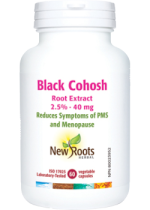
Black Cohosh 40mg from New Roots is commonly taken to help support symptoms of PMS and menopause and as a herb is recognized as one of the most popular herbs for the treatment of menopausal symptoms. Black cohosh contains various glycosides such as actaein, cimicifungin, and racemosin; estrogenic substances; oleic and palmitic acid; phosphorus; tannins; triterpenes; and vitamins A and B5. Black...
+ Earn 18 Reward PointsSale: $18.79
Reg.: $21.31 (Save $2.52)
In Stock
Black Cohosh Tea & Supplements
Black cohosh (Actaea racemosa) is a perennial herbaceous plant member of the buttercup family. It is native to North America and found primarily in the eastern and central regions of the continent. One of the most notable aspects of Black cohosh is its role in traditional medicine among Native American tribes. Indeed, Indigenous communities, particularly those from the Algonquin and Cherokee nations, have long revered the black cohosh plant for its impressive medicinal properties. Traditionally black cohosh was used as a tea, but today it can be bought as an herbal supplement in many formats.
First and foremost, Indigenous peoples regarded the plant as a valuable remedy for gynecological issues. They traditionally used it to alleviate menstrual discomfort, ease labour pains during childbirth, and manage symptoms associated with menopause. Beyond its applications in women's health, black cohosh was also used to soothe pain conditions such as rheumatism, arthritis, and all sorts of nervous disorders.
Today, black cohosh still holds a significant place in modern herbalism, largely thanks to its active compounds, including triterpene glycosides and flavonoids, which have estrogen-mimicking effects that can effectively help regulate hormonal fluctuations. This explains why it is often the go-to herb to alleviate menopausal symptoms like hot flashes, mood swings, sleep disturbances, and other problems associated with hormonal imbalance. Beyond menopause, herbalists frequently recommend black cohosh for its robust anti-inflammatory properties, employing it to address conditions like rheumatoid arthritis, muscle aches, body pains, and menstrual cramps.
Health Benefits of Black Cohosh
- Anti-inflammatory & Antioxidant Effects
- Helps Reduce Anxiety and Improve Mood
- Menopausal Symptom Relief
- PMS and Menstrual Cramp Relief
- Promotes Bone Health
- Supports Cognitive Function
What To Look For When Buying Quality Black Cohosh Tea & Supplements
The underground parts of the black cohosh plant, specifically the roots and rhizomes, are what contain the medicinal compounds. These parts are rich in glycosides, isoferulic acids, phytoestrogens, and other bioactive compounds. These are the parts used in teas, as well as in supplements.
You can purchase black cohosh in its whole, dried root form, which can be steeped in hot water and strained to make tea, which can be drunk hot or cold. Those who do not enjoy the flavour of black cohosh can opt for the more convenient supplement form, which offers a more standardized and consistent dose.
Black cohosh supplements come as extracts (preserved in alcohol or glycerin), tinctures (alcohol or alcohol-water mixtures), and capsules (gelatin or V-caps).
A standard dosage recommendation for black cohosh extract is 40-80 mg daily. It's also typically recommended to start slowly and build your way up to a full dose.
Considerations When Using Herbal Supplements
There has been an ongoing debate as to whether black cohosh can or cannot elevate estrogen levels in the body, and research has yielded conflicting results. While some studies suggest that the herb exhibits estrogenic properties, others indicate that it does not. Because of this, black cohosh is not recommended during pregnancy or lactation and is contraindicated for women undergoing treatment for breast or uterine cancer.
It's also important to note that black cohosh may potentially interact with medications such as birth control pills, hormone replacement therapy, sedatives, and blood pressure drugs. If you take any of these medications, consult your healthcare provider before adding black cohosh to your daily regimen.
Back to Top ↑








