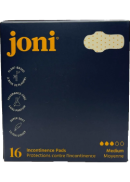
Do not flush. Pad length - 24 cm
Pads
16 Pads
Unfold and peel pad away from packaging. Place onto underwear and press pad down. Securely fasten wings around the sides of the bottom of underwear. Dispose of packaging into compost.
- Best for Light-medium urinary incontinence support (30-40 ml)
- Ecocert organic bamboo
- Chlorine and dioxin bleach free
- Individually wrapped in BPI-certified compostable wrapper
- Designed for sensitive skin
- Leak-free reliability with a thin yet ultra-absorbent core layer
- Plant-based protective moisture barriers to keep your vulva dry

Super-Absorbent & Plant-Based Pads & Tampons
Joni is dedicated to breaking the cycle of period shame, period poverty, menstrual inequity, and stereotypes. Recently B Corp certified, they focus on making period care accessible to all by collaborating with nonprofits across Canada to provide safe, organic, and disposable options. Their certified organic bamboo pads are three times softer and more absorbent than organic cotton, ensuring a comfortable experience. Read more >- Reviews
- POST A NEW REVIEW
DISCOVER INCONTINENCE PADS & PRODUCTS FOR FEMININE CARE
Urinary incontinence – the involuntary loss of urine – is common during and after pregnancy. Thankfully there are ways to combat this including incontinence pads and other natural products.
Two main types of incontinence are commonly associated with pregnancy: stress and urge incontinence.
Stress incontinence is the most common type experienced by women after pregnancy. It occurs when the muscles that control the bladder and urinary sphincter are weakened or damaged, often as a result of the pressure placed on them during pregnancy and childbirth. This can lead to urine leakage when pressure is exerted on the bladder, such as during coughing, sneezing, laughing, or physical activity.
Urge incontinence, also known as overactive bladder, is characterized by a sudden and intense urge to urinate, followed by involuntary bladder contractions that result in urine leakage. Pregnancy and childbirth can contribute to the development of this condition, as the pelvic floor muscles and nerves may be stretched or damaged during the process.
It's worth noting that while incontinence is common after pregnancy, it is not inevitable, and not all women will experience it. Genetics, age, the number of pregnancies, and the mode of delivery can all influence the likelihood of developing incontinence.
Understanding Conventional And Natural Approaches To Incontinence
While there are products such as incontinence pads and liners to help with this concern, the conventional approach to treating an overactive bladder or urinary incontinence typically involves a step-by-step process that begins with conservative measures and progresses to more invasive interventions when necessary.
Different medications may be prescribed to manage leaks. The type of medication will depend on the underlying cause of the incontinence. For example, anticholinergic drugs may be prescribed to relax the bladder muscles, while alpha-blockers may be used to relax the muscles at the bladder neck, and prostate in cases of male urinary incontinence.
In some cases, healthcare providers may recommend using devices or aids to manage urinary incontinence. For example, women with stress urinary incontinence may benefit from using a pessary, a device inserted into the vagina to support the urethra and bladder.
Minimally invasive procedures may be considered if conservative measures and medications do not provide sufficient relief. These can include treatments such as Botox injections into the bladder muscles to relax them.
In more severe cases of urinary incontinence that do not respond to other treatments, surgical interventions may be recommended. These can range from procedures to repair anatomical abnormalities to the placement of an artificial urinary sphincter or a bladder sling.
Effective Natural Solutions And Pads For Managing Incontinence
The first step to effectively managing urinary incontinence is often making lifestyle adjustments. This usually includes tweaking the diet to avoid triggers, including alcohol, caffeine, soda, and other carbonated beverages, as well as citrus fruits and juices, foods high in sugar, dairy products, and spicy foods.
Bladder training is also highly effective. It is a technique that involves scheduling regular bathroom breaks and gradually increasing the time between voiding to train the bladder to hold larger volumes of urine. Once you are comfortable, increase the interval by 10-15 minutes and keep following this pattern until your urination frequency is under control.
Maintaining a healthy weight is also essential, as are pelvic floor exercises (Kegel exercises) to strengthen the muscles that control urination.
Having some incontinence pads and panty liners on hand for those occasional leaks is also essential to avoid embarrassment. Look for natural feminine hygiene products made from certified organic cotton that do not contain super absorbent polymers, perfumes, dyes, or chlorine, that are 100% plastic free, as well as biodegradable & compostable.
Back to Top ↑