

Korean Red Ginseng 500mg - 60 Caps - Trophic

We're sorry, we no longer carry this item.
Check These out
Suggested, Similar, & Related Products:

ONE OF NATURE'S MOST NUTRITIOUS FOODS!Ashwagandha is an Ayurvedic herb that means "imparting the strength of a stallion" and is also known as "Indian Ginseng". To enjoy this nutriant packed superfood, simply add 1 teaspoon to any beverage or recipe! [POWDER]
ONE OF NATURE'S MOST NUTRITIOUS FOODS!Ashwagandha is an Ayurvedic herb that means "imparting the strength of a stallion" and is also known as "Indian Ginseng". To enjoy this nutriant packed superfood, simply add 1 teaspoon to any beverage or recipe! [POWDER]
+ Earn
8
Reward Points
Sale: $8.99
Reg.: $9.99 (Save $1.00)
In Stock

EROXIL FOR MEN.At last A unique, naturally-based product that addresses the cause, not the symptoms like drugs, of male sexual dysfunction. The result of years of extensive research, Eroxil works with the body's own natural processes to help rejuvenate the entire sexual reproductive system sperm production, libido, performance. And wi...
EROXIL FOR MEN.At last A unique, naturally-based product that addresses the cause, not the symptoms like drugs, of male sexual dysfunction. The result of years of extensive research, Eroxil works with the body's own natural processes to help rejuvenate the entire sexual reproductive system sperm production, libido, performance. And without the side effects normally associated with drugs. Eroxil should be taken on a regular basis, one tablet a day. Most men will notice a visible difference within just a few days. [CAPSULES]
+ Earn
40
Reward Points
Sale: $40.41
Reg.: $50.95 (Save $10.54)
In Stock

100% PURE KOREAN RED GINSENG.Derived from only six year old roots, Organika's high quality Korean Red Ginseng contains a high concentration of active components. An adaptogenic herb, ginseng can offer support during times of stress, fatigue, low energy, or poor concentration. Ginseng is an ideal substitute for coffee and combines well ...
100% PURE KOREAN RED GINSENG.Derived from only six year old roots, Organika's high quality Korean Red Ginseng contains a high concentration of active components. An adaptogenic herb, ginseng can offer support during times of stress, fatigue, low energy, or poor concentration. Ginseng is an ideal substitute for coffee and combines well with ginkgo. [CAPSULE]
+ Earn
25
Reward Points
Sale: $25.99
Reg.: $47.99 (Save $22.00)
In Stock
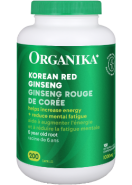
100% PURE KOREAN RED GINSENG.Derived from only six year old roots, Organika's high quality Korean Red Ginseng contains a high concentration of active components. An adaptogenic herb, ginseng can offer support during times of stress, fatigue, low energy, or poor concentration. Ginseng is an ideal substitute for coffee and combines well ...
100% PURE KOREAN RED GINSENG.Derived from only six year old roots, Organika's high quality Korean Red Ginseng contains a high concentration of active components. An adaptogenic herb, ginseng can offer support during times of stress, fatigue, low energy, or poor concentration. Ginseng is an ideal substitute for coffee and combines well with ginkgo. [CAPSULE]
+ Earn
38
Reward Points
Sale: $38.49
Reg.: $48.49 (Save $10.00)
In Stock

PANAX GINSENGFROM NATURAL FACTORS.Panax Ginseng is one of the oldest and most well researched species of ginseng. It has adaptogenic as well as mental and physical enhancement properties. If you need a boost, give Natural Factors Panax Ginseng a try! As an adaptogenic, Panax Ginseng enhances the body's non-specific response to external...
PANAX GINSENGFROM NATURAL FACTORS.Panax Ginseng is one of the oldest and most well researched species of ginseng. It has adaptogenic as well as mental and physical enhancement properties. If you need a boost, give Natural Factors Panax Ginseng a try! As an adaptogenic, Panax Ginseng enhances the body's non-specific response to external stress. It also improves physical and mental performance. [SOFTGELS]
+ Earn
17
Reward Points
Sale: $17.99
Reg.: $24.99 (Save $7.00)
In Stock

SIBERIAN GINSENG FROM NATURAL FACTORS HERBAL FACTORNatural Factors SIBERIAN GINSENG EXTRACT - Siberian Ginseng's tonic action helps build energy, mental awareness, stamina and endurance. Used for centuries, this herb has shown good results in protection from colds, flus and other ailments such as chronic bronchitis, and is also effecti...
SIBERIAN GINSENG FROM NATURAL FACTORS HERBAL FACTORNatural Factors SIBERIAN GINSENG EXTRACT - Siberian Ginseng's tonic action helps build energy, mental awareness, stamina and endurance. Used for centuries, this herb has shown good results in protection from colds, flus and other ailments such as chronic bronchitis, and is also effective in regulating blood pressure and blood sugar levels. Siberian Ginseng has beneficial influences on the functions of the adrenals, thymus, spleen, thyroid gland and the liver. [CAPS]
+ Earn
14
Reward Points
Sale: $14.99
Reg.: $18.99 (Save $4.00)
In Stock

NATURE'S WAY SIBERIAN GINSENG ROOT 425 MG POTENCY TO COMBAT FATIGUE AND IMPROVE MENTAL FUNCTION.Siberian Ginseng has been used for centuries in China as an herbal tonic taken to restore good health and vitality. Nature's Way Siberian Ginseng contains a 425 mg dosage per capsule and is harvested from the wilds of Chinese Manchuria. Sibe...
NATURE'S WAY SIBERIAN GINSENG ROOT 425 MG POTENCY TO COMBAT FATIGUE AND IMPROVE MENTAL FUNCTION.Siberian Ginseng has been used for centuries in China as an herbal tonic taken to restore good health and vitality. Nature's Way Siberian Ginseng contains a 425 mg dosage per capsule and is harvested from the wilds of Chinese Manchuria. Siberian Ginseng is often recommended by Herbalists for those with chronic fatigue syndrome, fibromyalgia, stress, and more. [CAPSULE]
+ Earn
11
Reward Points
Sale: $11.99
Reg.: $15.99 (Save $4.00)
In Stock

BOOST YOUR ENERGY WITH NOW FOODS AWARD WINNING PANAX GINSENG.Now's superior panax ginseng is an ideal energy booster with high active ingredient content. Now chooses Panax Ginseng Roots and root hairs specially selected for their high concentration of ginsenosides, the most active constituent in ginseng. The typical ginsenoside content...
BOOST YOUR ENERGY WITH NOW FOODS AWARD WINNING PANAX GINSENG.Now's superior panax ginseng is an ideal energy booster with high active ingredient content. Now chooses Panax Ginseng Roots and root hairs specially selected for their high concentration of ginsenosides, the most active constituent in ginseng. The typical ginsenoside content of this product is 5% minimum. [CAPS]
+ Earn
17
Reward Points
Sale: $17.99
Reg.: $22.99 (Save $5.00)
In Stock
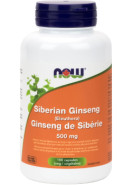
FIGHT PSYCHICAL AND MENTAL STRESS WITH SIBERIAN GINSENG.Formerly known as Siberian ginseng, Eleuthero senticosus is a powerful adaptogenic herb that has been shown in studies to help protect against the effects of physical and mental stress. It has been a staple in eastern medicine for over 2,000 years, enjoying a history of both safet...
FIGHT PSYCHICAL AND MENTAL STRESS WITH SIBERIAN GINSENG.Formerly known as Siberian ginseng, Eleuthero senticosus is a powerful adaptogenic herb that has been shown in studies to help protect against the effects of physical and mental stress. It has been a staple in eastern medicine for over 2,000 years, enjoying a history of both safety and effectiveness. The eleuthero roots used in NOW Eleuthero are carefully selected based on their high eleutheroside concentrations, the plant's active therapeutic compounds. [CAPS]
+ Earn
9
Reward Points
Sale: $9.99
Reg.: $12.99 (Save $3.00)
In Stock
Or, Shop our Latest Deals:
Shop Now >
product description:
500MG RED KOREAN GINSENG FROM TROPHIC.Trophic Red Korean Ginseng capsules contain 500 mg of the finest six-year old Korean ginseng root. Korean ginseng is made from the root of the Panax ginseng plant, which is native to Eastern Asia and has a history that dates back 2,000 years. Used widely in China as a tonic, aphrodisiac and for rejuvenation. Stimulates the central nervous and respiratory systems. Has been used for loss of appetite and for stomach and digestive afflictions arising from mental and nervous exhaustion. In trading medicine, Ginseng acts as a tonic for general weakness with shortness of breath, cold limbs, sweating and loss of appetite. [CAPS]
Each cap contains:
- 500mg
- Red Korean Ginseng (Panax Ginseng) (Root)
Important Information:
Contains no wheat, dairy, sugar, starch, corn, artificial colour, preservatives
Format
 Capsules
60caps
Dosage
One capsule with each meal.
Product Information:
- Stimulates the central nervous & respiratory systems
- Can be used for loss of appetite & stomach/digestive problems
- Acts as a tonic for general weakness
- Used widely in China as a tonic, aphrodisiac & for rejuvenation

Trophic makes top selling Acidophilus Non Dairy probiotics for digestive support, Milk Thistle and Dandelion to support detoxification, Complete One Iron Free multi vitamin for overall health plus many more natural health supplements. Trophic supplements are packed with quality ingredients and undergo rigorous testing. Read more >
What Customers Are Saying:
- Reviews
- POST A NEW REVIEW
More Info
About Trophic Red Korean Ginseng
Trophic Red Korean Ginseng capsules contain 500 mg of the finest six-year old Korean ginseng root. Korean ginseng is made from the root of the Panax ginseng plant, which is native to Eastern Asia and has a history that dates back 2,000 years. Used widely in China as a tonic, aphrodisiac and for rejuvenation. Stimulates the central nervous and respiratory systems. Has been used for loss of appetite and for stomach and digestive afflictions arising from mental and nervous exhaustion. In trading medicine, Ginseng acts as a tonic for general weakness with shortness of breath, cold limbs, sweating and loss of appetite.
Ginseng
There are several plants that are commonly referred to as ginseng. In the strict sense of the word "ginseng" refers to the Panax genus, of which Korean and American ginseng are the most well known medicinal herbs. Siberian, Indian and Brazilian ginsengs are not members of this genus, but share similar medicinal effects to the true ginsengs. This article will discuss Korean, American and Siberian ginseng. For a discussion on Indian and Brazilian ginseng see the articles titled "Ashwagandha" and "Suma".
The ginsengs are adaptogenic herbs, meaning that they help people during stressful times and recovery from illness and fatigue. The ginsenosides and eleuthrosides are the active medicinal components of the ginsengs. Studies show that they have a structure that is similar to the steroid hormones and act through the brain. The end result is stimulation of the adrenal gland and activation of the body's energy reserves. This response keeps us safe, allowing us to fight for survival, or to flee from dangerous situations. It also increases heart rate; blood pressure and blood flow to the brain, muscles, lungs and heart. Thus ginseng leads to increased energy, mental performance and performance in physical tasks like athletics.
This response can deplete the body after a while so ginseng also contains substances that stimulate cell replication, protein synthesis, immune functioning and blood sugar regulation. All of these properties nourish the body and aid in recovery from times of high activity, illness and stress. The ginsengs are recommended by natural health practitioners for a variety of needs including athletic performance, energy, recovery from illness or surgery, stress, support during cancer treatment, impotence, low libido and frequent colds and flus.
The difference in the ginsengs is the strength of their activity and the amount that they stimulate versus nourish the body. Red Korean ginseng is the most stimulating and least nourishing. It is usually recommended for men. Korean white ginseng is slightly less stimulating than the red variety and is a good choice for energy enhancement in women. Both of these varieties are not usually recommended for long-term use. Siberian and American ginseng are moderately stimulating and more nourishing. They are useful for everyone and can be used for longer periods of time.
Traditional Chinese Medicine (TCM)
Traditional Chinese Medicine (TCM) had been the primary form of medicine in Asia for centuries, even thousands of years, and includes Chinese Herbal medicine, nutritional therapy and acupuncture. Some TCM practitioners also include Shiatsu or Tui Na massage, as a regular part of their practice. There are many theories on which Chinese medicine is based.
One of the core principals of TCM is the idea that there must be balance of yin versus yang in order for the body to work at its optimal level. This balance must be maintained in order to optimize our qi (the life force, or spiritual energy of the body), blood, and jing (the essence we are born with and irreversibly lost as we get older). The organs can also be classified in terms of their yin (or Zang) and yang (Fu) functions. The functions of the Heart, Liver, Spleen, Lung, Kidney and Pericardium make them Zang organs, while the small intestine, large intestine, gallbladder, urinary bladder and stomach are all Fu or Yang organs. Under this model each yin organ is paired with a yang order in order to maintain that balance (Heart and Small intestine, Liver and gallbladder, etc.).
Trophic Red Korean Ginseng capsules contain 500 mg of the finest six-year old Korean ginseng root. Korean ginseng is made from the root of the Panax ginseng plant, which is native to Eastern Asia and has a history that dates back 2,000 years. Used widely in China as a tonic, aphrodisiac and for rejuvenation. Stimulates the central nervous and respiratory systems. Has been used for loss of appetite and for stomach and digestive afflictions arising from mental and nervous exhaustion. In trading medicine, Ginseng acts as a tonic for general weakness with shortness of breath, cold limbs, sweating and loss of appetite.
Ginseng
There are several plants that are commonly referred to as ginseng. In the strict sense of the word "ginseng" refers to the Panax genus, of which Korean and American ginseng are the most well known medicinal herbs. Siberian, Indian and Brazilian ginsengs are not members of this genus, but share similar medicinal effects to the true ginsengs. This article will discuss Korean, American and Siberian ginseng. For a discussion on Indian and Brazilian ginseng see the articles titled "Ashwagandha" and "Suma".
The ginsengs are adaptogenic herbs, meaning that they help people during stressful times and recovery from illness and fatigue. The ginsenosides and eleuthrosides are the active medicinal components of the ginsengs. Studies show that they have a structure that is similar to the steroid hormones and act through the brain. The end result is stimulation of the adrenal gland and activation of the body's energy reserves. This response keeps us safe, allowing us to fight for survival, or to flee from dangerous situations. It also increases heart rate; blood pressure and blood flow to the brain, muscles, lungs and heart. Thus ginseng leads to increased energy, mental performance and performance in physical tasks like athletics.
This response can deplete the body after a while so ginseng also contains substances that stimulate cell replication, protein synthesis, immune functioning and blood sugar regulation. All of these properties nourish the body and aid in recovery from times of high activity, illness and stress. The ginsengs are recommended by natural health practitioners for a variety of needs including athletic performance, energy, recovery from illness or surgery, stress, support during cancer treatment, impotence, low libido and frequent colds and flus.
The difference in the ginsengs is the strength of their activity and the amount that they stimulate versus nourish the body. Red Korean ginseng is the most stimulating and least nourishing. It is usually recommended for men. Korean white ginseng is slightly less stimulating than the red variety and is a good choice for energy enhancement in women. Both of these varieties are not usually recommended for long-term use. Siberian and American ginseng are moderately stimulating and more nourishing. They are useful for everyone and can be used for longer periods of time.
Traditional Chinese Medicine (TCM)
Traditional Chinese Medicine (TCM) had been the primary form of medicine in Asia for centuries, even thousands of years, and includes Chinese Herbal medicine, nutritional therapy and acupuncture. Some TCM practitioners also include Shiatsu or Tui Na massage, as a regular part of their practice. There are many theories on which Chinese medicine is based.
One of the core principals of TCM is the idea that there must be balance of yin versus yang in order for the body to work at its optimal level. This balance must be maintained in order to optimize our qi (the life force, or spiritual energy of the body), blood, and jing (the essence we are born with and irreversibly lost as we get older). The organs can also be classified in terms of their yin (or Zang) and yang (Fu) functions. The functions of the Heart, Liver, Spleen, Lung, Kidney and Pericardium make them Zang organs, while the small intestine, large intestine, gallbladder, urinary bladder and stomach are all Fu or Yang organs. Under this model each yin organ is paired with a yang order in order to maintain that balance (Heart and Small intestine, Liver and gallbladder, etc.).
Back to Top ↑








