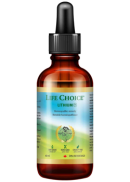
Water (purified), ethanol (grain distilled). 100% pure pharmaceutical grade ingredients.
Keep out of the reach of children, do not use if security seal is broken. Please see below for more information.
 Liquid
60ml
Adults: Take 30 drops under tongue three times per day, or as directed by your health care provider.
- safe for all ages and free from side effects
- represents the benefits of lithium
- Homeopathic Formula
- Homeopathic for mood
- Contains no wheat, corn, yeast, dairy, or any other filler.

- Reviews
- POST A NEW REVIEW
Reviews By Rating
helpful votes
0
0 customers found this product review helpful
Caution/ Risk Information: Consult a health care practitioner if symptoms persist or worsen, or before use if you are pregnant or breastfeeding. Keep out of the reach of children, do not use if security seal is broken. Contains no wheat, corn, yeast, soy or dairy, sugar, or peanuts. NON-GMO
LIFE CHOICE LITHIUM HOMEOPATHIC
Lithium is both an element and a mineral locked within salts. First discovered in 1790, the color is white to gray and when thrown into fire it flares bright crimson.
Lithium salts have the power to change the brain: they were the first drugs approved by the Food and Drug Administration to treat mania, depression and Bipolar disorder, according to the National Institute of Health.
No one knows exactly how lithium works to stabilize mood. Studies show multiple effects on the nervous system. In 2008, researchers reported in the journal Cell that lithium interrupts the activity of a receptor for the neurotransmitter dopamine.
- Represents the benefits of lithium
- Safe for all ages and free from side effects
- 100% USP Pharmaceutical Grade
- Homeopathic Formula
- Non-GMO
- Cruelty Free
- Vegan
In homeopathic medicine it is important to assess the patient and match the medications characteristics to the treatment. Below is the homeopathic profile for lithium.
Lithium Homeopathic Profile
Those At The Beginning Of Self-Discovery:
- Confused about who they are, sense of self-worth has not been established
- Weak willed and indecisive, delaying decisions, struggle to finish
- Often upset by the insignificant issues, easily afraid and worry
- Seek protection, are afraid of everything unknown, fear standing up for themselves
An Impulsive Person:
- Quickly changeable, instant doers
- They attempt something new, give up, then try again, or they alternate between different possibilities to see if it will work this time
- Values, the difference between good and bad seem unfounded, viewing most things in extremes
- Trying to prove themselves, and show their worth in the world
- Don't think actions through
- Struggle with their measure of values if they are bad or good
Background: Lithium is one of the three original elements (with hydrogen and helium) and can be found throughout our atmosphere. In 1817, Swedish chemist Johan August Arfwedson discovered an unknown mineral, and isolates one of its salts. The name lithium comes from lithos, the Greek word for stone.
The organs and tissues in the human body also contain lithium. It can be found in food and water supplies: grains and vegetables serve as the primary sources of lithium in a standard diet, while eggs and milk provide further sources. It has been added to the World Health Organization's list of nutritionally essential trace elements (with zinc, iodine etc.) The US Environmental Protection Agency has estimated that the daily lithium intake of an average adult ranges from about 0.65 mg to 3 mg which has a special importance in brain health.
What Is Lithium?
According to the National Institute of Mental Health, lithium salts were the first drugs approved by the Food and Drug Administration to treat mania and depression. In clinical practice, lithium is used bound to uracil-a conjugate acid of an orotate (a cell salt) to treat the patient's mood swings and other disorders. Even the dosage of five milligrams of lithium orotate administered three times per day (far below the prescribed dosage of 1,800 milligrams) had great success in clinical practice.
While lithium is an essential element, it is important to understand the difference between lithium orotate and lithium carbonate. Lithium orotate is a stable form of elemental lithium that is bound to orotic acid. Lithium carbonate is a pharmaceutical form of lithium that is prescribed in high doses for the treatment of bipolar disorder to prevent mania; it is also used in certain neurodegenerative diseases, such as Alzheimer's disease. However, high doses could cause a danger of toxicity. Animal studies suggest that lithium orotate is more bioavailable than lithium carbonate. In low doses it is considered safe and efficient in the treatment of mood disorders.
Even though the method how lithium works is still not completely clear, "It appears that lithium functions in two central ways in the body's neurochemistry: repairing damaged neurons and stimulating neuronal growth. Proposed mechanisms for lithium's effect on balancing mood include the altering of dopamine, glutamate, and GABA levels in the synapses (referred as neuronal junction) as well as modulation of secondary messenger pathways that effect neurotransmission, including the adenylyl cyclase system, cAMP signaling pathway, and phosphoinositide system.
Back to Top ↑