

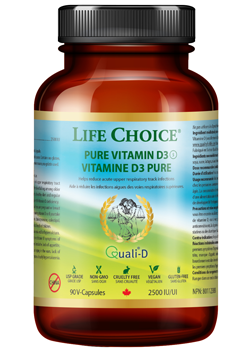
Pure Vitamin (Quali) D3 - 90 V-Caps - Life Choice
We're sorry, we no longer carry this item.
Check These out
Suggested, Similar, & Related Products:

Sale: $17.99
Reg.: $29.99 (Save $12.00)
(Click Add to Select Bonus)


Sale: $19.99
Reg.: $39.99 (Save $20.00)
(Click Add to Select Bonus)

Sale: $12.99
Reg.: $17.99 (Save $5.00)

Sale: $27.99
Reg.: $49.99 (Save $22.00)
(Click Add to Select Bonus)
Sale: $56.45
Reg.: $70.57 (Save $14.12)
(Click Add to Select Bonus)

Sale: $14.99
Reg.: $19.99 (Save $5.00)
(Click Add to Select Bonus)

Sale: $9.99
Reg.: $14.99 (Save $5.00)

Sale: $9.99
Reg.: $12.99 (Save $3.00)
Or, Shop our Latest Deals:
Shop Now >- 2500IU
- Vitamin D3 (as Quali® D-from cholecalciferol)
Cellulose, hypromellose, all from vegetable source.
V-Capsules are made from vegetarian source, no gelatin used.
Contains no: wheat, corn, yeast, sugar, peanuts, soy or dairy.
Do not use this product if you have hypercalcemia and/or hypercalciura.
See below for more details.
 Veggie Caps
90 V-caps
Adults: Adults take 1 capsule daily with food.
- Bone Health
- Immune Support
- High 2500IU Potency
- Helps The Absorption Of Calcium
- Promotes Cardiovascular Health

- Reviews
- POST A NEW REVIEW
Life Choice® Pure Vitamin D - Quali D is the purest on the planet and manufactured in Switzerland. USP grade is the assurance that the material has undergone strict guidelines giving peace of mind that the material is free from all contaminants and/or by-products since all documentation and testing must be made to pharmaceutical standards and not feed or food grade standards. Generally, due to minimal quality oversight, the lower quality vitamin D3 may have mammalian and poultry slaughter by-products which may have contaminants. Life Choice's pure, crystalline vitamin D3 is derived from a multi-step process using cholesterol extracted from sheep wool lanolin (oil). This product is halal and kosher, vegan, ethically produced, soy free, cruelty free.
According to the data, Vitamin D is an important component in the prevention and treatment of influenza and upper respiratory tract infections because it suppresses inflammatory processes and strengthens the immune function, which allows the body to combat the virus more effectively. Studies have also shown the health benefits of vitamin D on chronic illnesses and in prevention and treatment of diseases associated with aging.
Vitamin D
Vitamin D is a fat-soluble vitamin that is naturally present in food (e.g. in fatty fish such as trout, salmon, tuna, and mackerel also beef liver, egg yolks, cheese and mushrooms also contain some Vitamin D) or dietary supplements and it is produced when ultraviolet {UV) rays from sunlight strike the skin and trigger vitamin D synthesis. Although the importance of sun is non-negotiable, limiting excessive exposure to sunlight and UV radiation is crucial.
Vitamin D obtained from sun exposure, foods, and supplements is biologically inert and must undergo two hydroxylations in the body for activation.
Vitamin D benefits:
• increased calcium absorption
• bone growth
• prevention of hypocalcemic tetany (involuntary contraction of muscles)
• reduction of inflammation
• modulation of cell growth, glucose metabolism, neuromuscular and immune function
Vitamin D and Depression
According to scientific articles, vitamin D has been a significant factor in the prevention and the treatment of depression and other mental disorders. Due to insufficient dietary intake or lifestyle choices {e.g. little exposure to sunshine), most individuals have insufficient levels of vitamin D. According to a study from 2010 effective detection and treatment of inadequate vitamin D levels in persons with depression and other mental disorders may be an easy and cost-effective therapy which could improve patients' long-term health outcomes as well as their quality of life.
Several randomized studies have examined the relationship of vitamin D to depression, schizophrenia and seasonal affective disorder (SAD) and whether light therapy improved mood. Results showed that depression has significantly decreased in persons who received vitamin D as oppose to those receiving phototherapy. Low levels of vitamin D have been connected to other psychiatric or mood disorders as well.
The groups who are at risk for vitamin D deficiency (elderly, adolescents, obese individuals, those with chronic illnesses like diabetes) are the same as those reported to be at risk for depression. This is why vitamin D supplementation through food, dietary supplements and outdoor activities in sunlight could improve one's mental well being especially for those who are at risk for mental disorders.
Vitamin D and Aging
With the discovery of vitamin D receptors in the nervous, cardiovascular and endocrine systems, the role of vitamin D and its impact on these systems has become an important area of research.
Evidence shows that vitamin D plays a crucial role not only in brain development and cognitive performance but physical aging as well. Approximately 10 million adults, over the age of 50, suffer from osteoporosis and 34 million have reduced bone mass, or osteopenia. Osteoporosis affects all sexes, races, and ethnicities but 80% of individuals with osteoporosis are women and 20% are Caucasian. Factors increasing a person's risk for osteoporosis include inactivity, tobacco use, age, female gender, menopausal status or heredity but inadequate consumption of calcium and vitamin D also plays its role.8 Research has suggested a positive correlation between low vitamin D levels and poor physical functioning and loss of balance; this is why vitamin Dis an essential nutrient needed for skeletal health.
Recommended use: Helps to reduce the incidence of acute and upper respiratory tract infections in individuals with Vitamin D deficiency. May reduce the risk of falling among older adults.Vitamin D intake, when combined with sufficient calcium, a healthy diet and regular exercise, may reduce the risk of developing osteoporosis in people with Vitamin D deficiency.
Cautions and Warnings: Consult a health care practitioner prior to use if you are pregnant or breast feeding or if you have a kidney disorder, or if taking other vitamins containing Vitamin D or if you take prescription medication, including antacids, anticonvulsants, digoxin, cholestyramine, colestipol, mineral oil, steroids, or statins, or if you take thiazide diuretics. Keep out of reach of children.
Contra-indications: Do not use this product if you have hypercalcemia and/or hypercalciura.
Known adverse reactions: Stop use and consult a health care practitioner if symptoms of early hypercalcemia exist which are weakness, fatigue, drowsiness, headache, lack of appetite, dry mouth, metallic taste, nausea, vomiting. Or if vertigo occur, ringing in ears, lack of coordination occurs or if muscle weakness occurs, possible symptoms of early hypercalcemia.
Back to Top ↑












