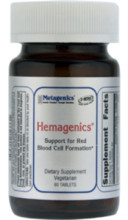
Each tablet contains:
- 5mg
- Thiamin (as thiamin mononitrate)
- 5mg
- Vitamin B6 (as pyridoxine HCl)
- 600mcg
- Folate (as folic acid and L-5-methyl tetrahydrofolate)
- 350mcg
- Vitamin B12 (as cyanocobalamin)
- 25mg
- Calcium
- 29mg
- Iron (as iron glycinate)
- 19mg
- Phosporus
- 1mg
- Copper (as copper glycinate)
- 100mg
- Succinic Acid
- 100mg
- L-Glycine
Microcrystalline cellulose, dicalcium phosphate, croscarmellose sodium, stearic acid, silica, magnesium stearate, and coating (deionized water, microcrystalline cellulose, polyethelene glycol, and carrageenan).
Important Information:
Free of all common allergens, including: wheat, dairy, eggs, corn, and yeast.
Format
 Tablets
60 Tabs
Dosage
One tablet daily or as directed by your healthcare practitioner
Product Information:
- Supports the formation and maintenance of healthy red blood cells
- Provides iron as a mineral amino acid chelate that is designed to be non-constipating in most individuals
- Features L-5-methyl tetrahydrofolatea body-ready, nature identical form of folate
- Highly absorable
- Researched and Tested

Premium Metagenics Formulas for Whole‑Body Health
For over 30 years, Metagenics has been dedicated to scientific discovery and bringing you the highest quality supplements. Some of Metagenics most popular supplements inlcude Metagenics Ultra Flora, Probiotics, Phytomulti, Clear Change, Ultra Glucose Control, Candibactin-BR and Candibactin-AR. From gluten-free to non-GMO, Metagenics aims to deliver clear and accurately labeled nutritional solutions with over 120 vegetarian supplements. Read more >What Customers Are Saying:
- Reviews
- POST A NEW REVIEW
More Info
Are You Low in Iron?
Iron is one of the most common dietary deficiencies, affecting as many as 4-5 billion people or 66-80% of the world's population, according to the World Health Organization.
Some of the symptoms of iron deficiency are:
Iron is one of the most common dietary deficiencies, affecting as many as 4-5 billion people or 66-80% of the world's population, according to the World Health Organization.
Some of the symptoms of iron deficiency are:
- Fatigue and general lack of energy
- Decreased ability to concentrate
- Decreased endurance during exercise
- Increased frequency of infection
- Paleness and/or dark circles under the eyes
- Brittle hair and nails
- Cold hands and feet
Iron deficiency (pre-anemia) and anemia have also been linked to PMS, depression, decreased fertility and complications in pregnancy. An early diagnosis of pre-anemia can be achieved with a simple blood test called serum ferritin, allowing for easy correction and prevention of the progression of symptoms.
Why Do We Need Iron?
Iron is needed daily in order for your body to keep making new red blood cells, which transport oxygen and permit energy production. Vital for growth and optimal functioning, iron is required in varying amounts throughout the stages of your life. Research has shown that declining iron stores are responsible for numerous health concerns.
Anemia
Anemia refers to a group of common blood disorders. It results in the decreased ability of red blood cells to carry oxygen. This manifests as symptoms of fatigue, exhaustion after small amounts of activity, headaches, constipation, loss of appetite, coldness of the extremities, dizziness, sore mouth and increased susceptibility to colds and flus. In more severe cases, heart palpitations and breathlessness occur as the body attempts to increase tissue oxygenation. Outward signs of anemia are pale skin, pale mucus membranes (especially in the inside of the eyelid), dry skin and brittle nails.
There are several types of anemia. Iron deficiency anemia is the most common. It can be caused by large blood losses, small but recurrent blood loss (excess menstrual bleeding or ulcers), hypothyroidism, or long-term illnesses. Megaloblastic anemia is due to a deficiency of B12 and possibly folic acid. Restlessness, numbness and skin cracks on the sides of the mouth are signs of this type of anemia. Liver disease, Crohn's and celiac disease can cause it. Pernicious anemia is also due to a deficiency of B12. This time it occurs because of lack of the ability to absorb B12 in the stomach.
Hemolytic anemia occurs when red blood cells are prematurely destroyed. It is an inherited blood disorder. Jaundice and an enlarged spleen are signs of this type of anemia. Poisoning form toxic substances may also cause anemia.
Anemia during pregnancy is common but is usually caused by increased blood volume as opposed to a lack of oxygen carrying ability.
Back to Top ↑