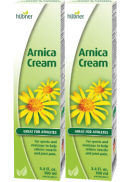
- 1.00%
- Arnica (Arnica montana), flower
Water, glyceryl stearate, pentylene glycol, isopropyl myristate, glycerin, myristyl myristate, polyglyceryl-3 methylglucose distearate, cetearyl alcohol, caprylic/capric triglyceride, alcohol denat., St. John’s Wort (hypericum perforatum) extract, camphor, peppermint (mentha piperita) oil, lavender (lavandula angustifolia) oil, rosemary (rosmarinus officinalis) leaf oil, wintergreen (gaultheria procumbens) leaf oil, panthenol, xanthan gum, sodium citrate, benzyl nicotinate, linalool, dipentene, geraniol, citric acid.
Consult a health care practitioner if symptoms persist or worsen. Do not apply to broken skin. Do not take internally. Do not apply near or on the nipple if you are breastfeeding. Do not use if you are allergic to plants of the Asteraceae/Compositate/Daisy family. Do not put arnica cream into eyes. Hypersensitivity (e.g. allergy) has been known to occur. If this happens, discontinue use.
 Cream
Cream
100ml
Apply an adequate amount of cream to the skin and massage thoroughly. Athletes can massage the cream onto the legs, shoulders, chest and back before training and competitions to help prevent strains.
- Topical Cream
- Body Care
- Athletic Performance
- Arthritis
- Joint Care
- Mood
- Injuries

Premium Quality & Canadian Made - 12 New Added
Founded in 1991, Naka’s success has been built upon introducing innovative supplements in liquid or easy-to-swallow capsule forms designed to meet the better health needs of consumers worldwide. Their most popular supplements include: Naka Pro Collagen, Naka Vital Greens, Naka Magnesium Bisglycinate, Naka Nutri Flex, Naka Vital Greens and Naka Probiotics.You can find Naka herbs and buy Naka supplements at NationalNutrition.ca Read more >- Reviews
- POST A NEW REVIEW
Reviews By Rating
helpful votes
11
11 customers found this product review helpful
ARNICA MONTANA
Arnica montana, more frequently referred to simply as Arnica, is a perennial herb native to the mountainous regions of Europe and Siberia, though it is also found in North America. Arnica belongs to the daisy Asteraceae family and is recognized for its vibrant yellow flowers. The name is believed to have originated from the Greek word "arni," meaning lamb, possibly due to the plant's soft, hairy leaves. However, Arnica also goes by wolf's bane, leopard's bane, mountain tobacco, and mountain arnica, depending on its growing region.
Arnica has a long and storied history of use in traditional medicine, dating back centuries, particularly in European folk medicine. Indeed, Arnica was and remains a staple of traditional medicine, used both topically and internally to address all kinds of injuries, including bruises, sprains, tears, and muscle and joint aches
Arnica Montana Supplement Formats
If this article has piqued your interest and you'd like to try Arnica, you'll be happy to know that it is widely available in health food stores and many grocery stores, as well as online. It comes in topical gel or cream, oral pellet form, and liquid drops. You can purchase Arnica Montana as a standalone or in combination blends featuring Arnica alongside other homeopathic substances.
Although available in a wide range of dilutions, Arnica montana is most often found in 6C, 30C, and 200C. In homeopathy, the more dilute a remedy is, the higher its potency is considered to be. If you aren't sure what remedy or dilution is right for you, speaking to a qualified homeopathic practitioner is important.
Cautions & Considerations
While Arnica is generally considered safe when used in homeopathic preparations, it's important to note that undiluted Arnica should not be applied directly to broken skin, as it can cause irritation. Ingesting large amounts of undiluted Arnica can be toxic and can cause adverse effects such as nausea, vomiting, and dizziness. That said, most Arnica on the market is sold in homeopathic dilution.
Also noteworthy is that Arnica can increase blood pressure and heart rate in certain individuals when used on open wounds or broken skin. Avoid Arnica if you have high blood pressure.
Those with allergies to plants in the Asteraceae family (such as ragweed, marigolds, and sunflowers) should exercise caution, as they may also be sensitive to Arnica.
Back to Top ↑