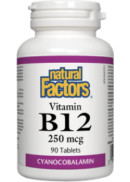
Each tablet contains:
- 250mcg
- Vitamin B12 (Cyanocobalamin)
Non-Medicinal Ingredients:
microcrystalline cellulose, vegetable grade magnesium stearate
microcrystalline cellulose, vegetable grade magnesium stearate
Important Information:
Contains no artificial preservatives, color or sweeteners; no corn, dairy, starch, wheat or yeast.
Format
 Tablets
90 Tabs
Dosage
1 tablet 1-4 times daily or as directed by a health practitioner.
Product Information:
- Needed for energy production.
- Support nervous system functions.
- Regulates red blood cell production.
- Therapeutic potency.
- Important for vegetarians, vegans and seniors.

Trusted Wellness For 60 Years, Sold at National Nutrition.
Based in British Columbia, Natural Factors Canada is one of the largest manufacturers of nutritional products in North America. Natural Factor Supplements origins reach back to the 1950s, & right from day one, they've been fully committed to making products right. Today, Natural Factors vitamins brings you tested and true products like Acidophilus and Bifidus, Ultimate Multi Probiotics, RX Omega-3, Theracurmin, PGX Daily, Whey Factors Protein and Oil of Oregano all of which you can BUY right here at National Nutrition.ca. Read more >What Customers Are Saying:
- Reviews
- POST A NEW REVIEW
More Info
The Importance of Vitamin B-12
B12 is a water-soluble B vitamin. Deficiencies of B12 may not be seen for several years because the body can store up to 5 years worth of this vitamin. There are several forms of B12 including cyanocobalamin and methylcobalamin. B12 is required in areas where there is high cell turnover, for example the gastrointestinal tract, bone marrow and nervous system. Thus B12 has been used for the treatment of neurological diseases like multiple sclerosis and depression. B12 regulates blood cell production, with folic acid. Lack of B12 leads to types of anemia where the red blood cells look too large, macrocytic, under the microscope. Supplementing sublingually with B12 reverses this type of anemia. B12 is required for digestion, fertility and the normal growth and development of all cells. It enhances learning and memory, and normalizes sleep patterns.
B12 is depleted by sedatives, estrogen, oral contraceptives and alcohol. Anti-gout medication, anti-coagulants and potassium supplements block the absorption of B12. Vegetarians that do not consume eggs or dairy products require B12 supplementation. Diets high in protein require more B12 intake.
Why do I Need B Vitamins?
The Nutrition Almanac states that B vitamins "may be the single most important factor for maintenance of the nerves."B vitamins are essential for healthy skin, hair, eyes, mouth and liver. Water-soluble B vitamins are not stored in the body and must be replenished daily.
All of the B vitamins work together and are best used by the body in a B complex, which is why many B complex supplements include a small dose of riboflavin in them. If additional supplementation of riboflavin is needed it should be taken in addition to a good B complex. Most B vitamins are water-soluble and any extra from large doses is flushed out of the body easily, therefore it's best to take lower dosages of the B complex several times a day than one larger dose. Spray or sublingual forms of B vitamins are easily absorbed, as are capsules - if your digestion is healthy, then the tablet form is usually suitable for most people.
Anemia
Anemia refers to a group of common blood disorders. It results in the decreased ability of red blood cells to carry oxygen. This manifests as symptoms of fatigue, exhaustion after small amounts of activity, headaches, constipation, loss of appetite, coldness of the extremities, dizziness, sore mouth and increased susceptibility to colds and flus.
There are several types of anemia. Iron deficiency anemia is the most common. It can be caused by large blood losses, small but recurrent blood loss (excess menstrual bleeding or ulcers), hypothyroidism, or long-term illnesses. Megaloblastic anemia is due to a deficiency of B12 and possibly folic acid. Restlessness, numbness and skin cracks on the sides of the mouth are signs of this type of anemia. Liver disease, Crohn's and celiac disease can cause it.Pernicious anemia is also due to a deficiency of B12. This time it occurs because of lack of the ability to absorb B12 in the stomach.
B12 is a water-soluble B vitamin. Deficiencies of B12 may not be seen for several years because the body can store up to 5 years worth of this vitamin. There are several forms of B12 including cyanocobalamin and methylcobalamin. B12 is required in areas where there is high cell turnover, for example the gastrointestinal tract, bone marrow and nervous system. Thus B12 has been used for the treatment of neurological diseases like multiple sclerosis and depression. B12 regulates blood cell production, with folic acid. Lack of B12 leads to types of anemia where the red blood cells look too large, macrocytic, under the microscope. Supplementing sublingually with B12 reverses this type of anemia. B12 is required for digestion, fertility and the normal growth and development of all cells. It enhances learning and memory, and normalizes sleep patterns.
B12 is depleted by sedatives, estrogen, oral contraceptives and alcohol. Anti-gout medication, anti-coagulants and potassium supplements block the absorption of B12. Vegetarians that do not consume eggs or dairy products require B12 supplementation. Diets high in protein require more B12 intake.
Why do I Need B Vitamins?
The Nutrition Almanac states that B vitamins "may be the single most important factor for maintenance of the nerves."B vitamins are essential for healthy skin, hair, eyes, mouth and liver. Water-soluble B vitamins are not stored in the body and must be replenished daily.
All of the B vitamins work together and are best used by the body in a B complex, which is why many B complex supplements include a small dose of riboflavin in them. If additional supplementation of riboflavin is needed it should be taken in addition to a good B complex. Most B vitamins are water-soluble and any extra from large doses is flushed out of the body easily, therefore it's best to take lower dosages of the B complex several times a day than one larger dose. Spray or sublingual forms of B vitamins are easily absorbed, as are capsules - if your digestion is healthy, then the tablet form is usually suitable for most people.
Anemia
Anemia refers to a group of common blood disorders. It results in the decreased ability of red blood cells to carry oxygen. This manifests as symptoms of fatigue, exhaustion after small amounts of activity, headaches, constipation, loss of appetite, coldness of the extremities, dizziness, sore mouth and increased susceptibility to colds and flus.
There are several types of anemia. Iron deficiency anemia is the most common. It can be caused by large blood losses, small but recurrent blood loss (excess menstrual bleeding or ulcers), hypothyroidism, or long-term illnesses. Megaloblastic anemia is due to a deficiency of B12 and possibly folic acid. Restlessness, numbness and skin cracks on the sides of the mouth are signs of this type of anemia. Liver disease, Crohn's and celiac disease can cause it.Pernicious anemia is also due to a deficiency of B12. This time it occurs because of lack of the ability to absorb B12 in the stomach.
Back to Top ↑