

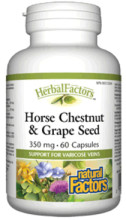
Each capsule contains:
- 300mg
- Horse Chestnut Seed Extract (Aesculus hippocastanum)
- 50mg
- Grape Seed Extract (Vitis vinifera)
In a gelatin capsule with rice protein and vegetable grade magnesium stearate (lubricant).
Important Information:
Contains no artificial preservatives, color or sweeteners; no corn, dairy, starch, wheat or yeast.
Format
 Capsules
60 Caps
Dosage
1 capsule every 12 hours or as directed by a health practitioner.
Product Information:
- Supports circulatory and vein health.
- Helps to strengthen blood vessels.
- Protective antioxidant support.
- Also good for varicose veins, chronic venous insufficiency, hemorrhoids and edema.
- Standardized Potency.

Trusted Wellness For 60 Years, Sold at National Nutrition.
Based in British Columbia, Natural Factors Canada is one of the largest manufacturers of nutritional products in North America. Natural Factor Supplements origins reach back to the 1950s, & right from day one, they've been fully committed to making products right. Today, Natural Factors vitamins brings you tested and true products like Acidophilus and Bifidus, Ultimate Multi Probiotics, RX Omega-3, Theracurmin, PGX Daily, Whey Factors Protein and Oil of Oregano all of which you can BUY right here at National Nutrition.ca. Read more >What People Are Saying:
- Reviews
- POST A NEW REVIEW
Reviews for:
Horse Chestnut & Grape Seed Extract - 60 Caps
(11 reviews)
Reviews By Rating
helpful votes
11
11 customers found this product review helpful
More Info
NATURAL FACTORS HORSE CHESTNUT & GRAPE SEED...
is a superior combination of standardized herbal extracts that benefit varicose veins, chronic venous insufficiency, hemorrhoids and edema.
Grape seed extract works synergistically with horse chestnut to strengthen blood vessels, reduce bruising and inhibits the tendency to develop varicose veins. The helpful flavonoids in grape seed extract, called proanthocyanidins or leucoanthocyanins, are superior antioxidants, protecting capillaries, veins and arteries from free radical damage. Grape Seed flavonoids enhance the performance of vitamin C, essential for collagen formation.
What are Varicose Veins?
Varicose veins are swollen, enlarged veins occurring on the lower leg and occasionally the abdomen. They may start as small "spider" veins, and then gradually become larger over time, often becoming progressively painful. Several factors contribute to the development of varicose veins:
Varicose veins are often caused by enzymes that destroy the proteoglycan network in the veins, which reduces the strength of vessel walls, causing the veins to dilate and pool blood. Aescin (escin), a triterpenoid isolated from horse chestnut, helps to inhibit these damaging enzymes, increases the tone of the veins and improves return blood flow to the heart.
Vein walls may become weak due to deficiencies in important nutrients such as bioflavanoids and vitamin C. When the vein wall weakens, the blood inside presses against it, and causes it to balloon out, becoming varicose because of the loss in elasticity.
Valves can become faulty primarily due to poor circulation from a lack of exercise. However, they also need bioflavanoids to function effectively and to maintain their shape and when you do not ingest enough, the flow of blood is affected, causing further ballooning of the vein wall.
Increased pressure in the affected are can be caused by prolonged periods of sitting or standing with the accompanying impairment in circulation and pooling of blood.
Other factors can include: obesity, genetics, hormonal changes like pregnancy, constipation, and hot weather.
Diet and Lifestyle Support for Varicose Veins
Lifestyle changes to help with varicose veins include regular exercise and weight management. Avoid staying stationary for long periods of time because it stagnates circulation. Avoid tight clothing on the legs. Move the bowels regularly. Raise your legs above your heart level for 10-15 minutes every day. Alternate hot and cold leg baths to increase circulation. Massage around the area and towards the heart to ease blood congestion. Topically apply horse chestnut gel to the legs or add horse chestnut tea to bath water. It firms and tones vessels and reduces inflammation.
Dietary changes aimed at improving blood circulation and regulating bowel movements prevent varicose vein formation. Eat a high fibre diet to add bulk to the stool and maintain regularity. Eat whole grain products, flax seeds, fruits and vegetables. Eat one salad of raw vegetables daily. Be sure to drink 2L of filtered water daily to soften stools and maintain regularity. Eat citrus fruits and berries for bioflavinoids, which strengthen veins. Eat wheat germ, as a source of vitamin E, to improve circulation and tissue elasticity. Avoid constipating and irritating foods such as, dairy products, spicy food, fats, processed foods, salt, alcohol, coffee, chocolate, cocoa, cola and black tea.
is a superior combination of standardized herbal extracts that benefit varicose veins, chronic venous insufficiency, hemorrhoids and edema.
Grape seed extract works synergistically with horse chestnut to strengthen blood vessels, reduce bruising and inhibits the tendency to develop varicose veins. The helpful flavonoids in grape seed extract, called proanthocyanidins or leucoanthocyanins, are superior antioxidants, protecting capillaries, veins and arteries from free radical damage. Grape Seed flavonoids enhance the performance of vitamin C, essential for collagen formation.
What are Varicose Veins?
Varicose veins are swollen, enlarged veins occurring on the lower leg and occasionally the abdomen. They may start as small "spider" veins, and then gradually become larger over time, often becoming progressively painful. Several factors contribute to the development of varicose veins:
Varicose veins are often caused by enzymes that destroy the proteoglycan network in the veins, which reduces the strength of vessel walls, causing the veins to dilate and pool blood. Aescin (escin), a triterpenoid isolated from horse chestnut, helps to inhibit these damaging enzymes, increases the tone of the veins and improves return blood flow to the heart.
Vein walls may become weak due to deficiencies in important nutrients such as bioflavanoids and vitamin C. When the vein wall weakens, the blood inside presses against it, and causes it to balloon out, becoming varicose because of the loss in elasticity.
Valves can become faulty primarily due to poor circulation from a lack of exercise. However, they also need bioflavanoids to function effectively and to maintain their shape and when you do not ingest enough, the flow of blood is affected, causing further ballooning of the vein wall.
Increased pressure in the affected are can be caused by prolonged periods of sitting or standing with the accompanying impairment in circulation and pooling of blood.
Other factors can include: obesity, genetics, hormonal changes like pregnancy, constipation, and hot weather.
Diet and Lifestyle Support for Varicose Veins
Lifestyle changes to help with varicose veins include regular exercise and weight management. Avoid staying stationary for long periods of time because it stagnates circulation. Avoid tight clothing on the legs. Move the bowels regularly. Raise your legs above your heart level for 10-15 minutes every day. Alternate hot and cold leg baths to increase circulation. Massage around the area and towards the heart to ease blood congestion. Topically apply horse chestnut gel to the legs or add horse chestnut tea to bath water. It firms and tones vessels and reduces inflammation.
Dietary changes aimed at improving blood circulation and regulating bowel movements prevent varicose vein formation. Eat a high fibre diet to add bulk to the stool and maintain regularity. Eat whole grain products, flax seeds, fruits and vegetables. Eat one salad of raw vegetables daily. Be sure to drink 2L of filtered water daily to soften stools and maintain regularity. Eat citrus fruits and berries for bioflavinoids, which strengthen veins. Eat wheat germ, as a source of vitamin E, to improve circulation and tissue elasticity. Avoid constipating and irritating foods such as, dairy products, spicy food, fats, processed foods, salt, alcohol, coffee, chocolate, cocoa, cola and black tea.
Back to Top ↑
Viewing History
-
Magnesium Chloride Spray - 237ml
Sale: $16.99
Reg.: $19.99 (Save $3.00)
Trending Products
Trending Brands












