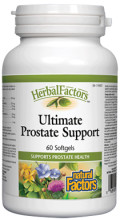
Each softgel contains:
- 160mg
- Saw Palmetto Berry Extract (Serenoa repens) (Standardized to contain 85-95% Fatty Acids)
- 100mg
- VegPure FS Phytosterols* (Beta Sitosterol 45%)
- 75mg
- Nettle Root Extract (Urtica dioica L.)
- 25mg
- Turmeric Extract (Curcuma longa L.)(95% Curcuminioids)
- 25mg
- Rye Flower Pollen Extract (20:1 Extract)
- 25mg
- Pygeum Africanum Extract (bark)
- 1mg
- LYC-O-MATO Tomato Extract (standardized to 6% Lycopene)
Non-Medicinal Ingredients:
soybean oil, softgel (gelatin, glycerin , purified water, carob) yellow beeswax, lecithin
soybean oil, softgel (gelatin, glycerin , purified water, carob) yellow beeswax, lecithin
Important Information:
Contains no artificial preservatives, color or sweeteners; no corn, dairy, starch, wheat or yeast.
Format
 Softgels
60 Softgels
Dosage
1 softgel, 2 times daily or as directed by a health professional.
Product Information:
- Superior Prostate protection.
- Supports healthy prostate function and protects against BPH.
- With Saw Palmetto, Nettle, Pygeum and more!
- Ideal for men over 40.
- Recommended by Dr. Michael Murray.
Trusted Wellness For 60 Years, Sold at National Nutrition.
Based in British Columbia, Natural Factors Canada is one of the largest manufacturers of nutritional products in North America. Natural Factor Supplements origins reach back to the 1950s, & right from day one, they've been fully committed to making products right. Today, Natural Factors vitamins brings you tested and true products like Acidophilus and Bifidus, Ultimate Multi Probiotics, RX Omega-3, Theracurmin, PGX Daily, Whey Factors Protein and Oil of Oregano all of which you can BUY right here at National Nutrition.ca. Read more >What People Are Saying:
- Reviews
- POST A NEW REVIEW
Reviews for:
Ultimate Prostate Support - 60 Softgels
(5 reviews)
Reviews By Rating
helpful votes
5
5 customers found this product review helpful
More Info
Ultimate Prostate Support from Natural Factors
Dr. Murray recommends this formula for ALL men over 40. Each component is proven to support prostate health. Containing a complete blend of herbs including:
Saw Palmetto -Saw palmetto, in many cases, relieves the symptoms of prostate enlargement just as well as conventional medication. Prostate growth is stimulated by excess levels of dihydrotestosterone (DHT) in the condition known as benign prostatic hyperplasia (BPH). Saw palmetto works by inhibiting the production of DHT, stopping DHT from binding in the prostate and increasing the rate at which DHT is metabolized in the gland.
Beta Sitosterol- Supplementation with beta-sitosterol increasesurinary flow rate and decreases pain and burning on urination in men with benign prostates hypertrophy.
nettle Root -Nettle root is used for prostate disorders like BPH. Components in nettle bind to hormone receptors in the prostate thus preventing the stimulation of the gland, which ultimately prevents the prostate's enlargement.
Turmeric -Turmeric contains antioxidant chemicals, called curcuminoids, for neutralizing free radicals. Thus turmeric can be used to stop infections, protect the liver from toxins and may be useful for optimal cell growth. The same molecules inhibit inflammation, thus acting as pain relieving agents.
Flower Pollen Extract-pollen extract has been shown through numerous scientific studies to not only help reduce the symptoms of prostatitis, but actually help shrink the size of an enlarged prostate gland.
Pygeum -Modern medicine uses fat-soluble bark extracts to treat benign prostatic hyperplasia (BPH) and hypertrophy. There are three components of pygeum that affect the prostate. Phytosterols, including beta-sitosterol, reduce inflammation in the prostate. Pentacyclic terpenes decrease fluid accumulation in the prostate. Fatty alcohol molecules decrease stimulation from hormones, like prolactin and testosterone. This ultimately stops the unwanted growth of prostate cells. Clinically pygeum extract has been shown to increase urine flow, decrease residual urine and improve the sexual performance of men who have BPH.
Lycopene-An antioxidant carotenoid, derived 100% from tomatoes, protective against heart disease. Men who eat substantial quantities of tomatoes appear to have a lower incidence of prostate concerns.
Prostate Facts:
Getting up frequently at night, pain in the groin, painful urination, and reduced sexual function - all symptoms of common prostate conditions.The prostate is the organ responsible for producing the fluid part of seminal emissions, helping to control the flow of urine, and for the contractions that cause ejaculation during orgasm. It's no wonder that when a man has a concern with his prostate that it can be troublesome.
Prostate problems occur when the gland becomes infected or swollen. The most common prostate condition is benign prostatic hyperplasia (BPH). It occurs in men over the age of fifty (but can occur earlier) due to hormonal imbalances, heredity, poor diet, nutrient deficiencies or high cholesterol. The growth of malignant or benign tumours can also cause prostate swelling. Your PSA level (prostate specific antigen) can indicate the degree of enlargement; it can also indicate whether or not you are at risk for cell growths. Make at least yearly appointments past age forty for this test.
Prostate Enlargement:
BPH affects one in three men over age 50. Symptoms appear when the prostate becomes large enough to interfere with urination. Dribbling, frequent and urgent urination occur and often cause men to wake at night to urinate. Starting and stopping urination can be difficult. When bladder emptying is impaired there is an increased risk for the development of urinary stones and infections. Drug therapy for BPH uses finasteride, which blocks the conversion of testosterone into dehydrotestosterone (DHT). DHT stimulates the growth of prostate cells. Side effects of drug therapy include impotence, decreased libido and difficulty detecting prostate concerns.
Dr. Murray recommends this formula for ALL men over 40. Each component is proven to support prostate health. Containing a complete blend of herbs including:
Saw Palmetto -Saw palmetto, in many cases, relieves the symptoms of prostate enlargement just as well as conventional medication. Prostate growth is stimulated by excess levels of dihydrotestosterone (DHT) in the condition known as benign prostatic hyperplasia (BPH). Saw palmetto works by inhibiting the production of DHT, stopping DHT from binding in the prostate and increasing the rate at which DHT is metabolized in the gland.
Beta Sitosterol- Supplementation with beta-sitosterol increasesurinary flow rate and decreases pain and burning on urination in men with benign prostates hypertrophy.
nettle Root -Nettle root is used for prostate disorders like BPH. Components in nettle bind to hormone receptors in the prostate thus preventing the stimulation of the gland, which ultimately prevents the prostate's enlargement.
Turmeric -Turmeric contains antioxidant chemicals, called curcuminoids, for neutralizing free radicals. Thus turmeric can be used to stop infections, protect the liver from toxins and may be useful for optimal cell growth. The same molecules inhibit inflammation, thus acting as pain relieving agents.
Flower Pollen Extract-pollen extract has been shown through numerous scientific studies to not only help reduce the symptoms of prostatitis, but actually help shrink the size of an enlarged prostate gland.
Pygeum -Modern medicine uses fat-soluble bark extracts to treat benign prostatic hyperplasia (BPH) and hypertrophy. There are three components of pygeum that affect the prostate. Phytosterols, including beta-sitosterol, reduce inflammation in the prostate. Pentacyclic terpenes decrease fluid accumulation in the prostate. Fatty alcohol molecules decrease stimulation from hormones, like prolactin and testosterone. This ultimately stops the unwanted growth of prostate cells. Clinically pygeum extract has been shown to increase urine flow, decrease residual urine and improve the sexual performance of men who have BPH.
Lycopene-An antioxidant carotenoid, derived 100% from tomatoes, protective against heart disease. Men who eat substantial quantities of tomatoes appear to have a lower incidence of prostate concerns.
Prostate Facts:
Getting up frequently at night, pain in the groin, painful urination, and reduced sexual function - all symptoms of common prostate conditions.The prostate is the organ responsible for producing the fluid part of seminal emissions, helping to control the flow of urine, and for the contractions that cause ejaculation during orgasm. It's no wonder that when a man has a concern with his prostate that it can be troublesome.
Prostate problems occur when the gland becomes infected or swollen. The most common prostate condition is benign prostatic hyperplasia (BPH). It occurs in men over the age of fifty (but can occur earlier) due to hormonal imbalances, heredity, poor diet, nutrient deficiencies or high cholesterol. The growth of malignant or benign tumours can also cause prostate swelling. Your PSA level (prostate specific antigen) can indicate the degree of enlargement; it can also indicate whether or not you are at risk for cell growths. Make at least yearly appointments past age forty for this test.
Prostate Enlargement:
BPH affects one in three men over age 50. Symptoms appear when the prostate becomes large enough to interfere with urination. Dribbling, frequent and urgent urination occur and often cause men to wake at night to urinate. Starting and stopping urination can be difficult. When bladder emptying is impaired there is an increased risk for the development of urinary stones and infections. Drug therapy for BPH uses finasteride, which blocks the conversion of testosterone into dehydrotestosterone (DHT). DHT stimulates the growth of prostate cells. Side effects of drug therapy include impotence, decreased libido and difficulty detecting prostate concerns.
Back to Top ↑