

- 400mg
- Bilberry (European blueberry),(Vaccinium myrtillus L.) [5:1], equivalent to 2000 mg dried fruit
- 5mg
- Lutein
Keep out of reach of children. Do not exceed stated dose. Do not take if you are pregnant or breastfeeding. If you are taking any recommended medicines consult your MD. Gluten and dairy free. Suitable for vegetarians and vegans. Do not use if you are allergic to plants of the Asteraceae (daisy) family.
 Tablets
120 Tabs
Take 2 tablets daily with a meal.
- Successfully used in Scandinavia for over ten years
- Convenient easy to swallow tablets
- Contains 5mg luetin
- Supports eye health
- Keep healthy eyes at their best!

- Reviews
- POST A NEW REVIEW
Reviews By Rating
helpful votes
4
4 customers found this product review helpful
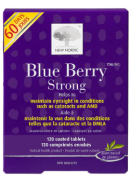
Blue Berry Strong
HELPS PROTECT AND STRENGTHEN THE VISION. HELPS INCREASE MACULAR PIGMENTATION IN THE EYES.
INNOVATION
Highly concentrated blueberry tablets with high content of bio-activeanthocyanins and natural lutein which help maintain a healthy macula of the eye. Combined with Luetin it helps defend against damaging free radicals.
ADVANTAGES
- Recommended by leading vision scientists.
- Provides 10 milligram of lutein per daily dosage.
- May help maintain healthy macula of the eye.
FAQ
What is AMD?
Age-related Macular Degeneration, AMD, is the most common cause of severe visual impairment. AMD causes an impairment of the sharp sight called reading sight. The degeneration happens gradually in the sensing cells of the yellow spot in the eye (the macula) causing the cells not to function properly.
What causes AMD?
Dry AMD is the most common form, which develops with an accumulation of toxins and a lack of proper nutrients, especially lack of the natural nutrient lutein.
Wet AMD is less common, and happens when small blood vessels leak blood and lymph, which will harm the yellow spot.
How do I try to prevent AMD complications?
Include plenty of vitamins & minerals in your diet, and increase the intake of flavonoids. Blueberries are a natural source of nutrients that contain high amounts of flavonoids, as are grape seeds and grapes. Another natural ingredient that has proven vital in connection with AMD is lutein - a pigment found in many berries and plants. Several clinical studies have documented the importance of lutein, for keeping eyes healthy.
How do I know if I have AMD?
People suffering from AMD experience one or more of the following symptoms:
1.Reduced eyesight - most often noticed at shorter distances, such as while reading. Reduced eyesight is often less impaired when looking far away.
2.Distorted forms i.e. straight lines are crooked or distorted. The size of objects appears larger or smaller than they actually are.
3.A grey or blurred spot is noticed in the middle of the visual field.
Bilberry
Bilberry became valued as a medicinal agent during World War II when British pilots claimed that eating bilberries improved their visual acuity, night vision and ability to adapt to glare. Scientific studies have backed up these testimonials by uncovering bilberry's antioxidant properties. Free radicals are unstable molecules that in their bid to become more stable must bump into healthy cells and cause damage.
Bilberry's antioxidant properties neutralize free radicals and therefore reduce damage to vessels all over the body, including those in the eye. Cataracts are caused by free radical damage in the lens of the eye and therefore bilberry can treat cataracts. Other eye problems that are also helped by bilberry are: macular degeneration, diabetic retinopathy, night blindness and myopia.
Bilberry has anti-aging properties because as an antioxidant it protects the body against environmental pollutants other substances that and lead to aging. Bilberry also stabilizes the connective tissue called collagen. Thus it is beneficial for conditions of collagen instability in the vascular system such as varicose veins, phlebitis and heart disease. Finally, bilberry inhibits blood clotting and can be useful to increase circulation in cases of atherosclerosis and diabetes.
The berries of the bilberry plant contain the greatest concentration of the medicinally active ingredients, anthocyanadins. Supplements often contain the whole plant in encapsulated form. By purchasing supplements standardized to anthocyanadins one can be sure that there are some dried berries in the formula. Bilberry can be found in formulas for enhancing eye health and are often combined with other antioxidants, berries and herbs, such as eyebright.
Bilberry should be used with caution if you are nursing or pregnant. Bilberry can interfere with iron absorption and should not be taken at the same time as iron supplements. Bilberry may alter blood sugar levels and should be used cautiously in diabetics and hypoglycemics.
Luetin
Lutein and zeaxanthin are both different isomers of the same xanthophyll pigment molecule. They are naturally occurring carotenoids found in highest abundance in green leafy vegetables. Both of these molecules play a large role in eye health. They are both found to be highly concentrated in the retina, which is the lining on the back of the eye that is responsible for vision.
Like with many other carotenoids, any lutein and zeaxanthin that is not used for immediate bodily requirements is able to act as an antioxidant to reduce free radical damage to the tissues.
Eye Health
Lutein and zeaxanthin are responsible for the ability of our eyes to absorb blue light, which is a wavelength of light that produces free radicals and puts significant oxidative stress on tissues. Studies show a correlation between high lutein consumption and increased pigmentation of the retina. Increased pigment has been shown to lower your risk of macular degeneration and cataracts, although it doesn't reverse already established illnesses. Interestingly, lutein is found in highest concentration in the peripheral retina, which better senses motion and black-and-white. Zeaxanthin, on the other hand, is found to be highly concentrated in the macula, the more detail and colour-sensitive region of the retina. Lutein may also prove helpful for retinopathies associated with advanced diabetes likely from protection against damage from excess sugar in the blood.
Other Benefits
High lutein consumption has been associated with supporting healthy cell growth. It may also help prevent or slow down the thickening of the arteries known as atherosclerosis, which is a major risk for cardiovascular disease. Interestingly, cardiovascular disease is often accelerated by free radical damage.
How can I get lutein and zeaxanthin?
Eating a diet rich in green leafy vegetables like spinach, kale and collard greens is a great way to increase your lutein and zeaxanthin intake. As a supplement, lutein comes individually in capsules, or as a sublingual spray for those with compromised digestion. Both lutein and zeaxanthin can be found in a number of combination formulas for eye health. There is currently no recommended dosage for lutein or zeaxanthin. Many supplements commonly suggest between 6-12mg/day of lutein and 2-6mg/day of zeaxanthin. It is advisable to follow the recommended dosage provided by each manufacturer.
Important Information
Lutein and zeaxanthin are non-toxic, but can cause harmless yellow-orange skin pigmentation if consumed in very large amounts.
Back to Top ↑
-
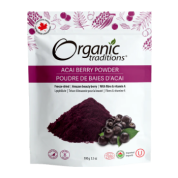
Acai Berry Powder (Organic) - 100g
Sale: $19.99
Reg.: $26.99 (Save $7.00)
-

Happy Mama Nipple Butter - 25g
Sale: $14.39
Reg.: $15.79 (Save $1.40)
-

Moisturizing Hair Mask + Organic Bamboo Extract - 200ml
Sale: $16.99
Reg.: $19.99 (Save $3.00)












