1 teaspoon (4g) contains:
- 25
- Calories
- 2g
- Fat
- 0.4g
- Saturdated
- 0g
- +Trans
- 0mg
- Cholesterol
- 2mg
- Sodium
- 2g
- Carbohydrates
- 1g
- Fibre
- 0g
- Sugars
- 0.3g
- Protein
100% freeze dried acai berry powder
Important Information:
Certified Organic, Kosher & Unsulfured
Format
 Powder
100g
Dosage
Add to water, juice, smoothies or mix with yogurt, cereal and desserts
Product Information:
- Antioxidant support.
- Source of fibre
- Immune system support
- Helps with cholesterol

It’s Not A Trend, It’s a Tradition... Naturally
Organic Traditions Fibre Flow range offers an easy and delicious way to support daily digestive health and increase fibre intake, with options like Fibre Flow (Strawberry), Fibre Flow (Unflavoured), Fibre Flow (Yuzu Lime), and Fibre Flow (Variety Pack), all made with clean, plant-based ingredients to support gut wellness. The functional latte collection includes nourishing blends such as Matcha Latte With Probiotics, Turmeric Latte With Probiotics And Saffron, Beet Latte With Probiotics, Chocolate Latte With Ashwagandha And Probiotics, Lavender Latte, Pumpkin Spice Latte, Holiday Spice Latte, Mint Chocolate Latte, and Yerba Mate Mint Latte With Matcha And Probiotics, delivering targeted benefits for energy, immunity, relaxation, and overall wellness. Shop these high-quality superfoods right here at National Nutrition.ca Read more >What People Are Saying:
- Reviews
- POST A NEW REVIEW
Reviews for:
Acai Berry Powder (Organic) - 100g
(3 reviews)
Reviews By Rating
helpful votes
0
0 customers found this product review helpful
More Info
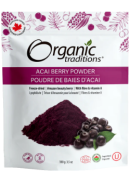
Organic Traditions Acai Berry Powder
Acai Berries have long been revered by indigenous cultures of the Amazon. Considered to be one of the most important superfruits, they were used in the daily diet and in medicinal preparations. They are a source of fibre and a host of antioxidants giving them and ORAC value of 1900 per 4g serving! Antioxidant flavonoids known as anthocyanins give them their striking purple pigment. Organic Traditions Acai is a freeze dried powder with no fillers, flavours, added sweeteners or maltodextrin. Add to water, juice, smoothies or mix with yogurt, cereal and desserts.
Support Your Immune System
The immune system is the police force of the body. It is a complex system of cells that defend the body from invading organisms, regulate inflammation and control abnormal cell growth. Many organs are involved in the immune response, the bone marrow, lymphatic system, thymus, liver and spleen. Bone marrow produces red blood cells, white blood cells and platelets.
The spleen is a location where immune cells can monitor the blood for foreign matter. It also speeds up red blood cell production and activates blood clotting. The liver can increase body temperature and induce sweating to help fight off infections. The thymus produces B cells, which make antibodies, and T cells, which are part of the immune response.
The immune system is capable of fighting off intruders and remembering them so that they are killed off quickly if they invade again. The immune system must be able to differentiate self from non-self in order to know what to attack. If it does not recognize the body's own tissue than autoimmune diseases occurs.
Lower Your Cholesterol
Heart disease is one of the leading causes of death in North America. High cholesterol contributes to heart disease when the fatty molecules build up on the inside of arteries. This leads to a decrease in the flexibility and elasticity of the walls. As the artery becomes narrower, decreased circulation leads to high blood pressure because the body struggles to maintain enough blood flow to its tissues. Pieces of the cholesterol plaque can break off or the turbulent flow of blood can cause clots to form. If the pieces or clots lodge in smaller vessels this leads to heart attack or stroke.
Lifestyle factors such as smoking, obesity, improper diet, stress and lack of exercise contribute to your risk of developing High cholesterol and heart disease. It is encouraging to note that adopting a healthier lifestyle and using natural therapies can maintain a healthy vascular system.
Cholesterol is not all bad; it is the amount and the ratio of the various forms of cholesterol that are a health concern. LDL (low density lipoprotein) cholesterol is fat that is being transported from the liver for use by your cells. It is commonly called bad cholesterol. HDL (high density lipoprotein) cholesterol is called good cholesterol because it is fat that is being taken unused cholesterol from your cells back to the liver, where it is broken down. Cholesterol levels are unhealthy if you have lots of circulating LDL, not enough HDL or a combination of the two.
Dietary cholesterol is different than the serum cholesterol mentioned above. Although eating foods that are high in cholesterol does raise serum cholesterol levels the liver is responsible for making cholesterol when needed. Thus a cholesterol reduction plan should include a low cholesterol diet with other treatments to help to reduce serum cholesterol. Genetics also plays a role in high cholesterol.
Acai Berries have long been revered by indigenous cultures of the Amazon. Considered to be one of the most important superfruits, they were used in the daily diet and in medicinal preparations. They are a source of fibre and a host of antioxidants giving them and ORAC value of 1900 per 4g serving! Antioxidant flavonoids known as anthocyanins give them their striking purple pigment. Organic Traditions Acai is a freeze dried powder with no fillers, flavours, added sweeteners or maltodextrin. Add to water, juice, smoothies or mix with yogurt, cereal and desserts.
Support Your Immune System
The immune system is the police force of the body. It is a complex system of cells that defend the body from invading organisms, regulate inflammation and control abnormal cell growth. Many organs are involved in the immune response, the bone marrow, lymphatic system, thymus, liver and spleen. Bone marrow produces red blood cells, white blood cells and platelets.
The spleen is a location where immune cells can monitor the blood for foreign matter. It also speeds up red blood cell production and activates blood clotting. The liver can increase body temperature and induce sweating to help fight off infections. The thymus produces B cells, which make antibodies, and T cells, which are part of the immune response.
The immune system is capable of fighting off intruders and remembering them so that they are killed off quickly if they invade again. The immune system must be able to differentiate self from non-self in order to know what to attack. If it does not recognize the body's own tissue than autoimmune diseases occurs.
Lower Your Cholesterol
Heart disease is one of the leading causes of death in North America. High cholesterol contributes to heart disease when the fatty molecules build up on the inside of arteries. This leads to a decrease in the flexibility and elasticity of the walls. As the artery becomes narrower, decreased circulation leads to high blood pressure because the body struggles to maintain enough blood flow to its tissues. Pieces of the cholesterol plaque can break off or the turbulent flow of blood can cause clots to form. If the pieces or clots lodge in smaller vessels this leads to heart attack or stroke.
Lifestyle factors such as smoking, obesity, improper diet, stress and lack of exercise contribute to your risk of developing High cholesterol and heart disease. It is encouraging to note that adopting a healthier lifestyle and using natural therapies can maintain a healthy vascular system.
Cholesterol is not all bad; it is the amount and the ratio of the various forms of cholesterol that are a health concern. LDL (low density lipoprotein) cholesterol is fat that is being transported from the liver for use by your cells. It is commonly called bad cholesterol. HDL (high density lipoprotein) cholesterol is called good cholesterol because it is fat that is being taken unused cholesterol from your cells back to the liver, where it is broken down. Cholesterol levels are unhealthy if you have lots of circulating LDL, not enough HDL or a combination of the two.
Dietary cholesterol is different than the serum cholesterol mentioned above. Although eating foods that are high in cholesterol does raise serum cholesterol levels the liver is responsible for making cholesterol when needed. Thus a cholesterol reduction plan should include a low cholesterol diet with other treatments to help to reduce serum cholesterol. Genetics also plays a role in high cholesterol.
Back to Top ↑