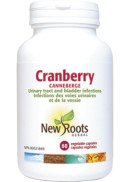
Each vcap contains:
- 600mg
- Cranberry (Vaccinium macrocarpon) 107×
Non-Medicinal Ingredients: Non‑GMO vegetable capsule made of vegetable carbohydrate gum and purified water.
Important Information:
Contains no: preservatives, artificial flavour or colour, sugar, milk, starch, wheat, yeast, citrus or egg.
Format
 Veggie Caps
60 V-caps
Dosage
Adults: Take 2 capsules daily or as directed by your health-care practitioner.
Product Information:
- Super potent cranberry extract.
- A rich source of proanthocyanidins.
- Helps prevent urinary tract and bladder infections.
- Made from 100% whole red cranberries.
- Non-GMO veggie capsule.

Proudly Manufactured In Canada & Available National Nutrition.
New Roots Herbal offers high-quality natural health products like their best-selling probiotics, digestive enzymes, chill pills, strong bones, acidophilus ultra and black cumin seed oil among hundreds more herbal remedies. Founded in 1985 New Roots Canada delivers formulas that were designed to address health imbalances and support the body's natural healing processes and overall well-being. You can buy all New Roots supplements at National Nutrition.ca Read more >What People Are Saying:
- Reviews
- POST A NEW REVIEW
Reviews for:
Cranberry Concentrate 600mg - 60 V-Caps
(2 reviews)
Reviews By Rating
helpful votes
1
1 customers found this product review helpful
More Info
New Roots Cranberry Concentrate
Indigenous people have used cranberry preparations to treat urinary tract infections (UTI) and other illnesses for centuries. Modern medical research has revealed the chemical and physiological effects cranberries have on the urinary tract and just how supplementing cranberry concentrates may help prevent urinary tract infections.
New Roots 107 X cranberry concentrate is the highest proanthocyanidin cranberry available.
What are Proanthocyanidins?
Proanthocyanidins (PACs) are the active components found in cranberries which inhibit harmful bacteria from adhering to the inner lining of the urinary tract.
How does it work?
Early theories regarding the mechanism of action of cranberry in helping prevent UTIs involved acidification of the urine. However, that has not been confirmed, and evidence has been accumulating instead which indicates that natural components in the fruit act to inhibit the adhesion of infection-causing E. coli bacteria within the urinary tract. The compounds responsible have been identified by Howell et al. as proanthocyanidins (PACs), or condensed tannins. While many fruits contain similar compounds, thus far only the PACs of cranberries and blueberries, which are botanically related species, have been shown to exhibit this effect. More detailed work presented in April 2002 showed that of tests with cranberries, grapes, apples, tea, and chocolate, only cranberries exhibited this ability to block the Helicobacter pylori bacteria from adhering to bladder walls.
While cranberry is perhaps best known for its effect on urinary tract health, newer research indicates that it may act elsewhere in the body against other bacteria as well. The adhesion of the different types of bacteria that cause both stomach ulcers, and periodontal gum disease, have been shown to be inhibited in the presence of cranberry, and it is likely that other susceptible bacteria will be found as well.
What causes UTIs?
Infections of the urinary tract are quite common, especially in women. Infections usually begin when bacteria colonize the bladder lining and cause inflammation (cystitis). The infection may spread up into the kidney causing nephritis or to the prostate causing prostatitis.
Interstitial cystitis is a chronic infection between the bladder lining and muscular layer. Its exact cause is unknown but it is usually non-infectious and occurs subsequent to several cystitis episodes.
Factors that predispose an individual to bladder infections are poor hygiene, the use of perfumed of coloured hygiene products, antibiotic use, oral contraceptive use, catheter use, sexually transmitted diseases, stress, Candida, and poor nutrition.
Symptoms of cystitis are urinary frequency and urgency with burning pain on urination. Emptying the bladder may not relieve the symptoms. The urine may be cloudy or "coke coloured", due to the presence of blood. Lab testing of the urine reveals the presence of bacteria. Symptoms can be mild, with gradual onset or severe, with a quick onset. Fever and lower back pain signal that the kidney is affected. The symptoms of interstitial cystitis are the same but are usually recurring and lab testing is negative for bacteria.
Conventional treatment of cystitis involves the use of antibiotics to clear up the current infection. However, the body becomes susceptible to subsequent infections if friendly bacteria are not replaced. The overuse of antibiotics has also lead to antibiotic resistant strains of urinary tract pathogens. Individuals can help to minimize resistance by using antibiotics sparingly and always taking recommendations until they are finished.
Can I Help Prevent UTIs?
To prevent cystitis proper hygiene is essential. Do not use scented or coloured toilet paper or feminine hygiene products. Douches, lubricants, latex condoms, spermicides and seminal fluid can also cause bladder irritation. For women, always wipe from front to back when using the toilet and both partners should urinate as soon as possible after sexual intercourse. Wear breathable cotton underwear. Exercise the bladder by contracting the bladder muscles as you would to stop the flow of urine. Repeat this several times a day.
Dietary interventions to prevent cystitis include drinking 2-2.5 litres of filtered water or unsweetened cranberry juice daily. This flushes the urinary tract. Cranberry juice inhibits bacterial growth and prevents the binding of the bacteria to the bladder wall. Carrot and watermelon juices also flush the urinary tract. Eat garlic for its antibacterial properties. Avoid spicy foods, acidic foods, refined carbohydrates, sugar in all forms, coffee, black tea, tomatoes, spinach and yeast because they may irritate the bladder. For interstitial cystitis maintain an alkaline diet. Read the article entitled "Acid/Alkali balance" for more information.
Indigenous people have used cranberry preparations to treat urinary tract infections (UTI) and other illnesses for centuries. Modern medical research has revealed the chemical and physiological effects cranberries have on the urinary tract and just how supplementing cranberry concentrates may help prevent urinary tract infections.
New Roots 107 X cranberry concentrate is the highest proanthocyanidin cranberry available.
What are Proanthocyanidins?
Proanthocyanidins (PACs) are the active components found in cranberries which inhibit harmful bacteria from adhering to the inner lining of the urinary tract.
How does it work?
Early theories regarding the mechanism of action of cranberry in helping prevent UTIs involved acidification of the urine. However, that has not been confirmed, and evidence has been accumulating instead which indicates that natural components in the fruit act to inhibit the adhesion of infection-causing E. coli bacteria within the urinary tract. The compounds responsible have been identified by Howell et al. as proanthocyanidins (PACs), or condensed tannins. While many fruits contain similar compounds, thus far only the PACs of cranberries and blueberries, which are botanically related species, have been shown to exhibit this effect. More detailed work presented in April 2002 showed that of tests with cranberries, grapes, apples, tea, and chocolate, only cranberries exhibited this ability to block the Helicobacter pylori bacteria from adhering to bladder walls.
While cranberry is perhaps best known for its effect on urinary tract health, newer research indicates that it may act elsewhere in the body against other bacteria as well. The adhesion of the different types of bacteria that cause both stomach ulcers, and periodontal gum disease, have been shown to be inhibited in the presence of cranberry, and it is likely that other susceptible bacteria will be found as well.
What causes UTIs?
Infections of the urinary tract are quite common, especially in women. Infections usually begin when bacteria colonize the bladder lining and cause inflammation (cystitis). The infection may spread up into the kidney causing nephritis or to the prostate causing prostatitis.
Interstitial cystitis is a chronic infection between the bladder lining and muscular layer. Its exact cause is unknown but it is usually non-infectious and occurs subsequent to several cystitis episodes.
Factors that predispose an individual to bladder infections are poor hygiene, the use of perfumed of coloured hygiene products, antibiotic use, oral contraceptive use, catheter use, sexually transmitted diseases, stress, Candida, and poor nutrition.
Symptoms of cystitis are urinary frequency and urgency with burning pain on urination. Emptying the bladder may not relieve the symptoms. The urine may be cloudy or "coke coloured", due to the presence of blood. Lab testing of the urine reveals the presence of bacteria. Symptoms can be mild, with gradual onset or severe, with a quick onset. Fever and lower back pain signal that the kidney is affected. The symptoms of interstitial cystitis are the same but are usually recurring and lab testing is negative for bacteria.
Conventional treatment of cystitis involves the use of antibiotics to clear up the current infection. However, the body becomes susceptible to subsequent infections if friendly bacteria are not replaced. The overuse of antibiotics has also lead to antibiotic resistant strains of urinary tract pathogens. Individuals can help to minimize resistance by using antibiotics sparingly and always taking recommendations until they are finished.
Can I Help Prevent UTIs?
To prevent cystitis proper hygiene is essential. Do not use scented or coloured toilet paper or feminine hygiene products. Douches, lubricants, latex condoms, spermicides and seminal fluid can also cause bladder irritation. For women, always wipe from front to back when using the toilet and both partners should urinate as soon as possible after sexual intercourse. Wear breathable cotton underwear. Exercise the bladder by contracting the bladder muscles as you would to stop the flow of urine. Repeat this several times a day.
Dietary interventions to prevent cystitis include drinking 2-2.5 litres of filtered water or unsweetened cranberry juice daily. This flushes the urinary tract. Cranberry juice inhibits bacterial growth and prevents the binding of the bacteria to the bladder wall. Carrot and watermelon juices also flush the urinary tract. Eat garlic for its antibacterial properties. Avoid spicy foods, acidic foods, refined carbohydrates, sugar in all forms, coffee, black tea, tomatoes, spinach and yeast because they may irritate the bladder. For interstitial cystitis maintain an alkaline diet. Read the article entitled "Acid/Alkali balance" for more information.
Back to Top ↑