

Glutamic Acid - 100 V-Caps - New Roots
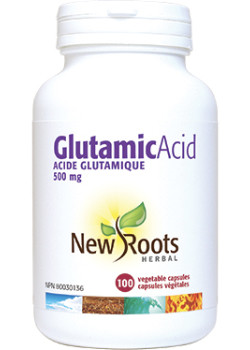
We're sorry, we no longer carry this item.
Check These out
Suggested, Similar, & Related Products:

Sale: $17.99
Reg.: $29.99 (Save $12.00)
(Click Add to Select Bonus)

Sale: $19.99
Reg.: $39.99 (Save $20.00)
(Click Add to Select Bonus)


Sale: $12.99
Reg.: $17.99 (Save $5.00)

Sale: $27.99
Reg.: $49.99 (Save $22.00)
(Click Add to Select Bonus)
Sale: $56.45
Reg.: $70.57 (Save $14.12)
(Click Add to Select Bonus)

Sale: $14.99
Reg.: $19.99 (Save $5.00)
(Click Add to Select Bonus)

Sale: $9.99
Reg.: $14.99 (Save $5.00)

Sale: $9.99
Reg.: $12.99 (Save $3.00)
Or, Shop our Latest Deals:
Shop Now >- 500mg
- Glutamic Acid
Microcrystalline cellulose, vegetable magnesium stearate, and silicon dioxide in a non‑GMO vegetable capsule composed of vegetable carbohydrate gum and purified water.
Contains no: Preservative, yeast, corn, wheat, gluten, sugar, salt, starch, milk, egg, artificial flavour or colour, or chemical additives. Keep out of reach of children.
 Veggie Caps
100 Caps
Take 3 capsules daily with meals and water or as directed by your health-care practitioner.
- Good for prostate health
- Supports muscle recovery
- Good for brain function
- Metabolizes sugars & fats

Proudly Manufactured In Canada & Available National Nutrition.
New Roots Herbal offers high-quality natural health products like their best-selling probiotics, digestive enzymes, chill pills, strong bones, acidophilus ultra and black cumin seed oil among hundreds more herbal remedies. Founded in 1985 New Roots Canada delivers formulas that were designed to address health imbalances and support the body's natural healing processes and overall well-being. You can buy all New Roots supplements at National Nutrition.ca Read more >- Reviews
- POST A NEW REVIEW
Glutamic acid is beneficial for the maintenance of good prostate health, muscle recovery and brain function.
Glutamic acid is a nonessential amino acid used by the body to manufacture human protein, a vital component of all the body's cells. This amino acid is labeled nonessential because, when the acids are lacking in the diet, the body can manufacture them. All nonessential amino acids must be on hand before the body can synthesize protein; and several have additional, more specialized roles as well. Glutamic acid is biosynthesized from a number of amino acids including ornithine and arginine. When aminated, glutamic acid forms the important amino acid glutamine. Because it has a carboxylic acid moiety (functional group) on the side chain, glutamic acid is one of only two amino acids (the other being aspartic acid) that has a net negative charge at physiological pH. This negative charge makes glutamic acid a very polar molecule and it is usually found on the outside of proteins and enzymes where it is free to interact with the aqueous intracellular surroundings.
It is an organic compound, one of the 20 amino acids commonly found in animal proteins. Only the L-stereoisomer occurs in mammalian proteins. Like aspartic acid, glutamic acid has an acidic carboxyl group on its side chain, which can serve as both an acceptor and a donor of ammonia, a compound toxic to the body. Once glutamic acid has coupled with ammonia, it is called glutamine and can as such safely transport ammonia to the liver, where the ammonia is eventually converted to urea for excretion by the kidneys. Free glutamic acid (not incorporated into proteins) can also be converted reversibly to ketoglutaric acid, an intermediate in the Krebs cycle, and as such can be degraded to carbon dioxide and water, or transformed into sugars. The acidic side chain of glutamic acid confers one negative charge under most conditions to proteins in which this amino acid is found, thus increasing the water solubility of the protein.
Glutamic acid is an important excitatory neurotransmitter, necessary in the metabolism of sugars and fats and supports prostate function.
Prostate Health
The prostate is the organ responsible for producing the fluid part of seminal emissions, helping to control the flow of urine, and for the contractions that cause ejaculation during orgasm. It's no wonder that when a man has a concern with his prostate that it can be troublesome.
Prostate problems occur when the gland becomes infected or swollen. Infection can occur directly in the prostate or it can be a complication of a urinary tract infection. The most common prostate condition is benign prostatic hyperplasia (BPH). It occurs in men over the age of fifty (but can occur earlier) due to hormonal imbalances, heredity, poor diet, nutrient deficiencies or high cholesterol. The growth of malignant or benign tumours can also cause prostate swelling. It is important to have your prostate monitored by your doctor. Your PSA level (prostate specific antigen) can indicate the degree of enlargement; it can also indicate whether or not you are at risk for cell growths. Make at least yearly appointments past age forty for this test.
Symptoms of prostate inflammation can be mild if it develops slowly or intense if it develops quickly. Prostate infections cause fever, chills, lower back pain, rectal pain, urgency for stool and urination and painful urination. The urine can be blood or pus filled. Chronic infections may cause mild, local discomfort and may result in painful ejaculation or erection. Conventionally prostate infections are treated with antimicrobial medications. They must be fairly powerful because it is difficult to get enough medication to the prostate due to its poor blood supply. Make sure to replace the helpful bacteria in your system with a probiotic supplement after antimicrobial therapy.
Back to Top ↑












