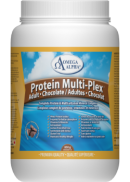
- 10 g
- Milk Protein Isolate
- 10 g
- Whey Protein Isolate
- 3750 FCC HUT
- Protease (Enzyme)
- 100 mg
- Acetyl-L-Carnitine
- 50 mg
- R-alpha-Lipoic acid
- 2.5 mg
- Vit. B1 (Thiamine mononitrate)
- 2.5 mg
- Vit. B2 (Riboflavin)
- 10 mg
- Vit. B3 (Niacinamide)
- 902 mg
- Vit. B5 (D-Pantothenic acid)
- 5 mg
- Vit. B6 (Pyridoxal 5-phosphate)
- 100 mcg
- Vit. B9 (L-Methylfolate)
- 500 mcg
- Vit. B12 (Cyanocobalamin)
- 25 mcg
- Biotin
- 10 mg
- Choline (Choline bitartrate)
- 20 mg
- Inositol (Myo-inositol)
- 1563 mcg (2605 IU)
- beta-Carotene
- 100 mg
- Vitamin C (L-Ascorbic acid)
- 5 mcg (200 IU)
- Vitamin D3
- 46 mg (69 IU)
- Vitamin E
- 347 mcg
- Boron (Sodium borate)*
- 100 mg
- Calcium lactate*
- 89 mcg
- Chromium (Chromium polynicotinate)*
- 200 mcg
- Copper (Cupric gluconate)*
- 20 mg
- Magnesium citrate*
- 900 mcg
- Manganese sulphate
- 10 mcg
- Molybdenum (Sodium molybdate)*
- 10 mcg
- Selenium (L-Selenomethionine)*
- 2 mg
- Silicon (Sodium metasilicate)*
- 10 mcg
- Vanadium (Vanadyl sulphate)*
- 2 mg
- Zinc (Zinc citrate)*
- 18g
- Protein
- 1g
- Fat
- 2g
- Carbohydrates
- 85 calories/355 KJ
- Energy
Sunflower lecithin, Xanthan gum, Stevia, Cocoa powder, Natural chocolate flavour
Consult a health care practitioner prior to use if you are pregnant, breastfeeding, have diabetes, liver disorders, kidney disorders, gastrointestinal lesions/ ulcers, taking anticoagulant/anti-inflammatory agents or are having surgery. This product may cause mild gastrointestinal disturbances, discontinue use or consult a health care practitioner if symptoms persist or worsen. This product may have come into contact with soy and milk allergens. Do not use this product if you have soy/soybeans and/or milk allergy. Hypersensitivity/allergy has been known to occur, in which case discontinue use. Do not use if security seal is broken. Store away from children and protected from light/moisture.
 Powder
850g
Adults: Take 1 scoop (25 g) per day. Mix well in 1 cup (250 mL) with liquid (water, juice, milk, etc.) or smoothies. Take a few hours before or after taking medications.
- Complete Protein & Multi-vitamin/Mineral Complex
- Supports overall health
- Helps digest proteins
- Delicious chocolate flavour
- Contains no preservatives, yeast, corn, wheat or gluten

Advanced Herbal Formulas That Deliver
Support immune health, energy, and focus with Omega Alpha’s mushroom extracts. Chaga Mushroom Extract delivers antioxidant support, while Cordyceps Mushroom Extract boosts energy and endurance. Coriolus (Turkey Tail) Mushroom Extract supports immune and gut health, and Lion’s Mane Mushroom Extract enhances memory and cognition. Maitake Mushroom Extract, Reishi Mushroom Extract, and Shiitake Mushroom Extract provide additional support for immunity, stress balance, and overall wellness. Read more >- Reviews
- POST A NEW REVIEW
PROTEIN
Protein is one of the most important building blocks in our bodies...
Protein is second most abundant substance in our body; it is second only to water. Protein makes up much of the structure of our body, including: our muscles, ligaments, tendons, bones, organs, glands, nails, and hair. It also makes up the vast majority of the molecules that allow our bodies to function and regulate itself; protein is required for: cell signaling molecules, hormones, transport molecules and most enzymes in our bodies, including our digestive enzymes. For more information on enzymes, please click here. Without sufficient protein, our bodies cannot function properly.
DNA – The Code For Proteins
Our genetic material (DNA) is the blueprint that shows each cell how to produce the proteins that make life possible. It is differences in this coding that makes the variations of our proteins that make each of us unique. For example, it is protein in the iris of our eyes that gives us our distinctive eye colours.
What Is Protein?
Proteins are composed of building blocks called amino acids. These subunits are linked together by peptide bonds to form chains that can be straight lines, or branched like the sub-branches on a tree. When we eat protein the body must break these peptide bonds in the digestive tract using proteases (for more information on proteases, please click here). Then single amino acids, or amino acids in short chains (called peptides), are absorbed through the gut, into the body, where they are used as building blocks to create whatever protein the body needs.
Essential Amino Acids
Some amino acids are considered "non-essential". This means that we do not need to ingest these amino acids, because our bodies can biosynthesize them using the skeleton of other amino acids. So long as the body gets sufficient protein, these amino acids are not required. The amino acids that the body cannot produce itself need to be taken in through the diet, and are called "essential" amino acids. There are 9 essential amino acids: isoleucine, leucine, lysine, methionine, phenylalanine, threonine, tryptophan, histidine, and valine. Some amino acids are "conditionally essential", meaning that certain populations who naturally don't make enough, or all humans under certain conditions, may require certain dietary intake to meet their needs. Some examples of conditionally essential amino acids are: arginine, glutamine, cysteine, and glycine.
Protein Malnutrition
Protein is an easily available energy source for the body. When insufficient protein is ingested in the diet, or insufficient calories are taken in, the body will catabolize protein from muscle mass and then eventually from the organs to cover the deficit. This breakdown of body tissue can even happen before exhausting fat reserves. As protein levels drop, the body will prioritize protein usage to enzymes and signaling molecules to continue proper bodily function, and will catabolize other tissues to do so. As such, insufficient protein or calorie intake results in protein malnutrition, which causes muscle wasting, and eventually can lead to the breakdown of organs, and tissues. Eventually this causes a condition known as Kwashiorkor, which causes diarrhea, edema (swelling) and a large protruding belly.
Protein And Weight Loss
It is important to note the connection between low calorie diets and loss of muscle mass. Those individuals seeking to lose weight who overly restrict their dietary intake will ultimately lower their muscle mass. This is counterproductive, as our muscles are the body tissue that burns the most calories by weight. From a biological perspective, the body's response makes sense; when food is scarce, reducing the amount of calorie burning tissue you have, allows you to live with lesser requirements until food can be found again. In modern society, this leads to the inability to lose weight despite a calorie-restricted diet. Recently, the popularity of high protein diets has made supplementation of protein popular for weight loss. When protein is ingested with carbohydrate, it slows the rate at which sugar enters the body. By avoiding spikes in blood sugar, protein minimizes the storage of sugar as fat. Individuals with blood sugar imbalances, like diabetes and hypoglycemia, will benefit from protein's regulation of blood sugar. Because protein also builds muscle tissue, which burns more energy than other body tissue, it can also help weight loss.
Protein Requirements
According to the Canadian Dietary Reference Intake guidelines: sedentary adult women require 46 grams of protein per day, while sedentary adult males require 56 grams to avoid deficiency. This is just the amount to prevent protein malnutrition. Athletes and individuals who are physically active at work or play will all require additional protein to repair their tissue and build more lean muscle. People who are recovering from illness or long periods of inactivity require additional protein to rebuild their lost muscle mass as well. The immune system is dependent on protein to make the cells and antibodies that protect our body. Frequent colds and flus and chronic infections are signs that the body may need more protein. In general, the recommendation is between 1.5 and 2 grams of protein per kilogram body weight daily intake for fairly active people. This is around 125g of protein per day for a 70kg (155lb) person.
Excess Protein
The body is incapable of storing protein, so when we ingest it in much larger amounts than the body needs, excess protein has to be broken down. The extra amino acids are transported to the liver where they are broken down to create energy. Although an easy energy source, protein does not "burn clean", and breaking it down creates a waste product called urea. Normally this is easily excreted through the kidneys in our urine. This excretion requires calcium, so high protein diets should be combined with a calcium supplement to protect against reduced calcium stores.
Protein Powders
Protein powders can be used for many different health and performance enhancing purposes. There are a large variety of readily available protein supplements and protein processing techniques. The six main supplemental sources are: whey, egg, hemp, soy, rice and pea, although other sources are occasionally used in some supplements. Higher quality formulas use superior processing techniques, and avoid binders, fillers, artificial flavorings and sweeteners. Be sure to check the ingredients on the label of your protein supplement.
Back to Top ↑