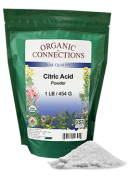
Store in a cool, dry place. Keep out of reach of children.
 Powder
454g
Use 1 tsp. per quart of water or juice for most fruits and vegetables
- Powder
- Pure Quality
- Absent of harmful chemicals and GMOs
- Useful in sprouting
- Necessary for canning, drying & freezing
- Used to preserve vitamin C
- Prevents bacterial growth spoilage
- Prevents discoloration

Certified Organic Loose Herbal Teas & Remedies
Organic Connections makes quality food supplements including: Organic ground Cinnamon powder, both Ceylon and Cassia and Organic Slippery Elm Bark powder to provide fibre and support intestinal health. Organic Connections believes in quality, natural and organic ingredients to provide the best in natural health. Read more >- Reviews
- POST A NEW REVIEW
What is Sprouting?
Sprouting is the process of soaking, draining and then rinsing seeds at regular intervals until they germinate or "sprout". Sprouting can be done commercially, or in the privacy of your own home quite easily. Common beans for sprouting include mung beans, alfalfa, chickpeas, barley, lentils and azuki beans.
What are some benefits of sprouting?
Very simply put, sprouts offer the highest amount and quality of vitamins, minerals, proteins, fibre and enzymes per unit of calorie. Among its many nutritional claims, sprouting is shown to increase content of B vitamins, vitamin E and A. Some argue they are the most nutritious food we can eat. As sprouting or germination occurs, the seed is transformed into only essential content, while the nutritionally undesirable content is broken down, producing energy or power to change from seed to sprout. In this case, the protein or amino acid content is increased as seed becomes sprout, while the carbohydrate content is decreased or broken down to provide the seed with the energy to grow.
Sprouts are a living food, they continue to gain in vitamin and nutritional content even after they are harvested and to a certain extent when refrigerated. Compare that to store bought vegetables which start to lose nutritional content as soon as they are picked, and at times long before they arrive at the store. As an added benefit, sprouts are very easily assimilated and digested,while improving the overall efficiency of digestion. This is particularly important in the case of protein, which is often requires more work to digest. Sprouting significantly increases the protein content of many beans, while making it one of the easiest forms of protein to digest.
How to do it yourself!
The most important tip when sprouting is to make sure that the container you choose to use allows water to drain from it. A jar with a mesh or cheese cloth top works well. If the sprouts are not drained in the recommended time and allowed to sit in the water, they will quickly rot. Each seed has slightly varied soaking and sprouting schedules, but in general, you want to initially soak the seeds (in the case of mung beans, you soak for anywhere from 8-14 hours), then drain the seeds and let them sit. Rinse and drain the beans 2-3 times/day until the beans have sprouted. (Mung beans only take about 1 day to sprout.). You may put them in the fridge to prevent rottingonce sprouted for a maximum of two days. If not used within three days, the seeds usually go sour. As with most things, the fresher the better, so try to eat your sprouts as soon as they are ready add them to your salad, or make a live granola with sprouts, soaked nuts and dried fruits.
Sprouting is not dependent on weather or time of year. Sprouts can be grown from January to December. Sprouting does not work well in full sun, as the seeds tend to dry out. A window sill with indirect sun is the perfect spot to sprout. Mung beans can actually be grown in the dark, although it has been reported they lose some of their nutritional value.
Back to Top ↑