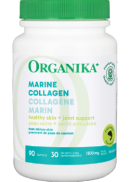
- 500mg
- Hydrolyzed Collagen (Fish Skin (Salmon))
Brown Rice Flour, Magnesium Stearate (Non-GMO Vegetable Source), Gelatin (capsule)
May cause mild gastrointestinal disturbances.
 Capsules
90 Caps
Adults take 1 capsule three times per day.
- Promotes joint health
- Maintains healthy skin
- Reduces wrinkles
- Great alternative to bovine (cow) collagen
- Derived from wild salmon

Nourishment Rooted in Nature - 12 New Added
Organika, formulators of Canada’s best-selling Collagen and marine collagen and Bone Broth supports skin and joint health. Organika's health products also include; Organika spirulina, Chlorella, Curcumin to support inflammation, Organika Enhanced Collagen Protein, and Adaptogens to provide balance. Shop Organika here at National Nutrition.ca for quality, Canadian-made supplements. Read more >- Reviews
- POST A NEW REVIEW
Reviews By Rating
helpful votes
2
2 customers found this product review helpful
ORGANIKA MARINE COLLAGEN
Derived from wild sources only, Organika's marine collagen provides the active collagen protein that your skin and joints need to maintain their flexibility and to replenish the depletion of collagen resources in the body as it ages. Often recommended by practitioners for joint health and for reducing wrinkles. Organika's marine collagen provides an alternative to the more commonly available bovine (cow) source collagen supplements in cases of allergy or for those concerned about mad cow.
Salmon Oil
Salmon oil contains EPA and DHA, two omega 3 essential fatty acids. EPA is an important fatty acid in the maintenance of cardiovascular health and the regulation of inflammation. EPA is a precursor to a series of chemicals whose job it is to regulate the inflammatory effects of arachidonic acid. Too much arachidonic acid leads to pain and inflammation in conditions such as arthritis. Arachidonic acid also causes inflammation in arteries and leads to the development of atherosclerotic plaques. Deficiency of EPA can result in cardiac arrhythmias, high cholesterol and excessive aging. EPA has been used to treat heart disease, arthritis and other inflammatory conditions. DHA is an essential component of the brain and central nervous system. It seems to concentrate in areas where there is lots of electrical activity such as the synaptosomes, where nerve cells communicate, and the photoreceptors of the eye. This is why a deficiency of DHA can result in poor brain development, attention/deficit hyperactivity disorder, learning disorders, memory problems and poor visual development. Fish oils may also support optimal cell growth.
Why Are They Essential?
Omega-3s (and omega-6s) are termed essential fatty acids (EFAs) because they are critical for good health. However, the body cannot make them on its own. For this reason, omega-3s must be obtained from food, thus making outside sources of these fats "essential."
Although the body needs both omega-3s and omega-6s to thrive, most people consume far more 6s than 3s. Hardly a day goes by, however, without reports of another health benefit associated with omega-3s. For this reason, many experts recommend consuming a better balance these two EFAs.
Skin Health
The skin is the largest organ in the body. It has several important functions. It acts as a barrier to the external environment including harmful microbes, chemicals and radiation. It allows the exchange of water and some nutrients. It can eliminate toxins, minerals and other substances that have built up inside the body.
It modifies vitamins, like vitamin D, into more active forms. It helps to regulate body temperature. It is a monitor as to the health of our internal environment because the skin is one of the last organs to be nourished. Signs of deficiency often show in the skin before other areas of the body have been affected.
Healthy skin also impacts on our mental and emotional well-being because skin is one of the first things we notice when we see someone. Skin can be used to judge a person's age, social status and health. Billions of dollars are spent each year in the cosmetics and personal hygiene industry. A great majority of this is to make our skin look healthier and more youthful. What can we do naturally to help our skin so that it will be healthy and maintain its youthful appearance?
Skin is made up of several layers. The epidermal outer layer contains keratinized skin cells. It is the fibrous, protective shield for the body. The epidermis is firmly attached to inner layers of irregular connective tissue, the dermis. The dermis contains collagen, the structural support, and elastin, the stretchy support. Only the dermis has blood supply, nutrients reach the outer skin layers only by diffusion.
A diet high in antioxidants including whole grains, raw fruits and raw vegetables decreases free radical damage. Eat foods high in zinc such as whole grains, sunflower seeds and raw nuts. Eat lots of fruit, especially mango and apricot, for its water content and alpha-hydroxy acids. Sulphur rich foods like garlic, onions, eggs and asparagus, provide raw material for building skin proteins. Essential fatty acids are a source of the good fats for the skin. Use cold pressed oils like flax, olive, sunflower and safflower. Avoid hydrogenated fats, fried foods, soft drinks, sugar, chocolate, junk foods, cigarettes and alcohol.
Drink lots of filtered water to hydrate the skin. Depending on your body size 1.5 to 2L of water daily is usually sufficient. Increase this amount if you exercise, are in a hot climate, drink alcohol or coffee or are taking medications that cause you to lose water.
Joint Health
Your cartilage acts as a living shock absorber that cushions and protects your bones from damage during the daily stresses of living, working, and playing. But, unfortunately due to age or even injury, the human body is sometimes unable to regenerate damaged soft tissue fast enough to keep your cartilage, ligaments, and tendons supple and flexible.
The result can be pain and swelling. The pain and swelling we know as arthritis occurs when these supporting tissues degenerate, allowing bone to rub against bone, which as anyone who has osteoarthritis will tell you, causes pain.
Muscles and joints can become injured whenever the body is in motion. It often occurs when doing strenuous or repetitive activities, like sports or working on an assembly line. Sprains refer to damage to a tendon or ligament. Tendons hold bone and muscle together. Ligaments hold bones together. Sprains cause sharp pain and rapid swelling of the area. Strains refer to overworking a muscle. It causes muscle cramps, localized pain during movement, swelling and loss of mobility. Another joint injury is bursitis, a swelling of the fluid-filled sac inside the joint. It usually causes localized pain on movement of the joint and swelling.
Back to Top ↑