

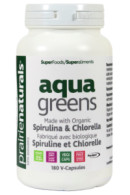
- 250mg
- Organic Broken Cell Chlorella (Chlorella vulgaris, whole plant)
- 250mg
- Organic Spirulina (Spirulina platensis, whole plant)
Capsule (Hypromellose, Water)
Free of dairy, gluten, preservatives, added sugar, artificial flavour, artificial sweetener and artificial colour. Suitable for vegans and vegetarians.
Certified organic
Consult a health care practitioner prior to use if you are pregnant or breastfeeding.
 Veggie Caps
180 V-caps
Adults: Take 4 - 6 capsules daily.
- Pure, organic chlorella and spirulina Rich in enzymes, proteins, vitamins and amino acids
- Rich in enzymes, proteins, vitamins and amino acids
- High potency of both algae
- Vegetarian capsule
- Supports over all well-being

- Reviews
- POST A NEW REVIEW
Reviews By Rating
helpful votes
0
0 customers found this product review helpful
Chlorella is an edible water-grown algae. Because of its rich nutrient composition, some consider it a complete food. In fact, vegans and strict vegetarians often use chlorella as an effective protein source. Natural health practitioners recommend chlorella for a variety of conditions including: convalescence, chemical or metal toxicity, radiation illness, malnutrition and malabsorption.
Spirulina is an edible water-grown cyanobacteria (Arthrospira species) that is often considered to be a complete food. It contains a number of vitamins and nutrients and is also a source of complete protein. Natural health practitioners recommend spirulina for a variety of conditions including: convalescence, hypoglycemia, high cholesterol, chemical or metal toxicity, malnutrition, malabsorption and healthy cell growth.
Protein
Chlorella is made up of 58% protein, which makes it a richer source of protein by weight than meat. This makes it a great alternate protein source for vegans, strict vegetarians, and those intolerant to meat. Protein has a large number of benefits in the body.
By weight, spirulina contains 60-70% protein. It is a source of complete protein because it contains all of the essential amino acids. It is actually superior to typical plant protein sources, such as legumes and because of this, it is a great addition to any vegetarian diet. Also, these proportionately high levels of protein can actually help to stabilize blood sugar when spirulina is supplemented between meals. This can help to reduce sugar fluctuations in diabetics and those with hypoglycemia.
Healthy Fats
Under the correct growing conditions, chlorella has been shown to contain relatively high levels of healthy fats. Overall by weight, it contains about 10% fat, and up to 40% of this can be EPA, an essential fatty acid that helps to reduce inflammation in the body.
By weight spirulina is approximately 7% fat, which is almost entirely healthy omega 3 and 6 fats. It is a rich source of GLA, ALA, and linoleic acid. It also contains EPA and DHA, the omega 3 fatty acids also found in fish oil. These healthy fats can help to regulate cholesterol levels, and stimulate healthy steroid hormone synthesis, including sex hormones. EPA acts as an anti-inflammatory in the body, and DHA helps to promote proper brain health.
B Vitamins
This algae is also an excellent source of vitamin B1 (thiamine), B2 (riboflavin), B3 (niacin), B5 (pantothenic acid), B6 (pyridoxine), biotin and folic acid. There are a number of forms of B12 present in chlorella and there is conflicting evidence about whether or not it is bioavailable in humans. If you do not ingest other sources of B12, it may be a good idea to supplement until research can establish chlorella as an effective source.
Spirulina contains a few different B vitamins, including: B1 (thiamine), B2 (riboflavin), B3 (niacin), B6 (pyridoxine), and B9 (folic acid). Although many companies claim that spirulina is a source of vitamin B12, the kind found in it is not active in humans, so alternate sources of vitamin B12 are still required.
Carotenoids
Some of the nutrients found in spirulina are carotenoids such as: beta-carotene, and zeaxanthin. These are strong antioxidants that can help to protect the body against free radicals.
Phycocyanin
Spirulina also contains phycocyanin, a blue-green pigment that supports healthy immune function. Further research is required to establish this effect.
Other Vitamins and Nutrients
Chlorella is also a good source of Vitamin C, Vitamin E, and Beta-carotene. Each of these is an excellent antioxidant, and also has a number of other health benefits. It is also a good source of a number of minerals including: calcium, iodine, iron, magnesium, phosphorus, and zinc.
In addition to the B vitamins, spirulina also contains vitamin C, vitamin A, vitamin E and vitamin D. These are strong antioxidants that perform a number of different functions in the body. It is also a source of important electrolytes and minerals such as: potassium, calcium, copper, iron, magnesium, manganese, phosphorus, selenium, sodium, chromium, and zinc.
Chlorophyll
Part of the green colour of chlorella and spirulina is created by the presence of chlorophyll. This nutrient is a potent detoxifier that can help to speed the release of toxins from the blood stream by binding them in the intestines. Chlorophyll can also help to increase the oxygenation of tissues by nourishing red blood cells. Interestingly, it has also been shown to do the work of hemoglobin in the blood, which is thought to be due to it resembling the human hemoglobin (oxygen-carrying) molecule.
Detoxification
Chlorella has a unique ability to bind lead, mercury, and cadmium, causing it to become a popular heavy metal detoxifying agent. It is also able to bind PCB's in the gut and prevent their absorption, and potentially help to promote its release from the tissues. Some research has also found that chlorella can help to promote healing from radiation exposure in animals. Further research is required before we can be sure of these effects.
Back to Top ↑
-

Trek Socks (Crew Height, Black, XL) - 1 Pair
Sale: $24.64
Reg.: $28.99 (Save $4.35)












