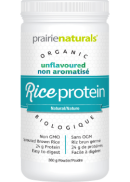
30 g serving (approx. 2 scoops):
- 110
- Calories
- 0g
- Fat
- 0g
- Saturated Fat
- 0g
- Trans Fat
- 0mg
- Cholesterol
- 0mg
- Sodium
- 3g
- Carbohydrate
- 2g
- Fibre
- 0g
- Sugers
- 24g
- Protein
- 30%
- Iron
Oryzatein Silk Certified Organic
Sprouted Whole-Grain Brown Rice Protein Powder Concentrate (80% protein content)
Sprouted Whole-Grain Brown Rice Protein Powder Concentrate (80% protein content)
Important Information:
Free of dairy, gluten, preservatives, added sugar, artificial flavour, artificial sweetener and artificial colour. Suitable for vegans and vegetarians.
Format
 Powder
360g
Dosage
Mix two scoops (30g) of powder in 250mL of water or beverage of choice. Perfect for smoothies, in soups or baking.
Product Information:
- Source of balanced complete protein
- Perfect for smoothies, yogurt & baking
- No Grittiness
- 100% Vegan
- Hypoallergenic

Prairie Naturals, leading Canadian formulators of popular products like Digest Force for digestive disturbances, Germ Force for natural hand sanitizing, bone broth, Multiforce Vegan, Prairie Naturals vitamin d3, b complex and many more! Prairie Naturals believes in quality and natural ingredients to keep you healthy. Shope their full line-up with us at National Nutrition.ca Read more >
What People Are Saying:
- Reviews
- POST A NEW REVIEW
Reviews for:
Organic Rice Protein (Natural) - 360g
(4 reviews)
Reviews By Rating
helpful votes
2
2 customers found this product review helpful
More Info
Prairie Naturals Organic RICE PROTEIN - Simply Natural
Prairie Naturals Organic RiceProtein Sprouted Brown Rice Protein Concentrate Powder. Three delicious, organic flavours: French Vanilla. Cafe Caramel.
ReThink Protein! Think Green!
Prairie Naturals is the first in Canada to introduce Oryzatein Silk, the only concentrated protein made entirely from organically grown and sprouted brown rice. Prairie Naturals RiceProtein Powder is a balanced, complete protein containing all the essential amino acids. It has a Protein Digestibility Corrected Amino Acid Score (PDCAAS) of 1, which is the same protein quality rating as whey, egg white and milk.
Purely vegan!
Prairie Naturals RiceProtein Powder is derived entirely from organic brown rice. Using a proprietary, low-heat, chemical-free process every part of the sprouted, organic brown rice grain is utilized and naturally concentrated to yield 80% protein. With a silky smooth texture and rich creamy taste, RiceProtein is a versatile, complete, instant vegan protein powder providing all the essential amino acids. RiceProtein is lightly sweetened with stevia.
10 Reasons to Choose RiceProtein Powder
PROTEIN
Protein slows the rate at which sugar enters the body ...
Protein is second most abundant substance in our body, only water is more plentiful. Protein makes up our muscles, ligaments, tendons, organs, glands, nails, hair and body fluids. Bone growth is dependent on protein. The chemical messengers that coordinate our body's activities, hormones, and the chemicals that speed up physiological reactions, enzymes, are made of protein.
Our genetic material is the blueprint that instructs the cell how to produce the proteins that make life possible. Proteins are composed of amino acids, linked together by peptide bonds. When we eat protein the body must break these bonds in the digestive tract. Then single amino acids, or amino acids in short chains, are absorbed into the body, where they are reassembled into whatever substance the body needs.
Some amino acids can be manufactured in the body from other amino acids and are thus called non-essential. The amino acids that the body cannot produce and need to be taken in through the diet are called essential.
Protein powders can be used for many different health and performance enhancing purposes. Recently high protein diets have made protein a popular supplement for weight loss. Protein slows the rate at which sugar enters the body. By avoiding spikes in blood sugar protein minimizes the storage of sugar as fat. Individuals with blood sugar imbalances, like diabetes and hypoglycemia, will benefit from protein's regulation of blood sugar. Protein also builds muscle tissue, which burns more energy than other body tissue and can lead to weight loss.
Athletes, people who perform physical labour and anyone who is physically active requires protein to repair their tissue and build more lean tissue. People who are recovering from illness or long periods of inactivity require protein to rebuild their body tissue. The immune system is dependent on protein to make cells that protect our body. Frequent colds and flus and chronic infections are signs that the body may need more protein.
There are a large variety of readily available protein supplements and protein processing techniques. The five main supplemental sources are whey, egg, soy, rice and pea, although other seeds and legumes are occasionally used in some supplements. The quality of a protein is apparent in its price. Higher quality formulas use superior processing techniques, and avoid binders, fillers, artificial flavorings and sweeteners. How do you determine the appropriate protein for you? Consider these factors:
Amino acid content Animal product protein powders (whey, egg) and soy protein powders contain a complete range of all the amino acids. Rice and pea protein are missing a few amino acids, like taurine.
Bioavailability or BV- It is a measure of a protein's ability to be used by the body and is stated as a percentage of the absorbed protein that your body actually uses. Whey protein isolate has the highest BV at 100-159, whey concentrate is next at 104, followed by whole egg (100), egg white (88), rice (74), soy and pea(59).
Protein manufacturing technique Whey protein isolates contain isolated amino acids that the body does not have to digest before absorbing them. These supplements tend to be costly but are easy for the body to use. Manufacturers claim that most individuals who have an inability to digest dairy products will be able to tolerate the amino acids found in isolate powders. Hydrolyzed supplements like whey concentrates are predigested make amino acid chains smaller. The body still has to digest some chains but it is absorbed more quickly and used more effectively by muscle. Egg, rice and pea protein are not usually altered by manufacturing techniques to make them more absorbable. Fermenting soy protein makes it easier to digest.
Protein supplements can be used daily for individuals who do not meet their protein requirement through food intake, for individuals who suffer from blood sugar fluctuations or for athletes who need to take in large amounts of protein. Protein supplements can also be used occasionally, when food is not readily available. Meal replacement protein supplements are strictly regulated by the government. They conform to regulations to ensure that the proper amount of vitamins and minerals are present in the formula. Choose a meal replacement that does not contain artificial sweeteners, colourings or flavours. The strategy behind using protein for optimal uptake into the muscles is a science unto its own. If you are interested in optimizing your athletic performance obtain more information about protein from reputable fitness sources.
Do not take high amounts of supplemental protein if you have impaired kidney function. High protein intake can deplete calcium from the bones. High protein intake and low fiber intake increases the risk of unhealthy cell growth. Choose rice or pea protein if you are sensitive to dairy products, whey, egg and soy.
Prairie Naturals Organic RiceProtein Sprouted Brown Rice Protein Concentrate Powder. Three delicious, organic flavours: French Vanilla. Cafe Caramel.
ReThink Protein! Think Green!
Prairie Naturals is the first in Canada to introduce Oryzatein Silk, the only concentrated protein made entirely from organically grown and sprouted brown rice. Prairie Naturals RiceProtein Powder is a balanced, complete protein containing all the essential amino acids. It has a Protein Digestibility Corrected Amino Acid Score (PDCAAS) of 1, which is the same protein quality rating as whey, egg white and milk.
Purely vegan!
Prairie Naturals RiceProtein Powder is derived entirely from organic brown rice. Using a proprietary, low-heat, chemical-free process every part of the sprouted, organic brown rice grain is utilized and naturally concentrated to yield 80% protein. With a silky smooth texture and rich creamy taste, RiceProtein is a versatile, complete, instant vegan protein powder providing all the essential amino acids. RiceProtein is lightly sweetened with stevia.
10 Reasons to Choose RiceProtein Powder
- Nutritionists recommend eating more plant source proteins.
- Environmentalists consider plant-source proteins to be "greener."
- Plant-source proteins contain phytonutrients and fibre.
- Rice-Protein is a deliciously nutritious "Green Protein" for the whole family.
- Rice-Protein is a hypoallergenic protein source.
- Rice-Protein is well-tolerated by people with food allergies and sensitivities.
- Sweetened only with stevia, Rice-Protein is a low-glycemic plant protein source.
- Every 30 gram serving of Rice-Protein provides 24 grams of complete protein.
- There are no trans fats, saturated fats or cholesterol in Rice-Protein.
- Low in calories, yet high in protein, Rice-Protein quickly satisfies appetite.
PROTEIN
Protein slows the rate at which sugar enters the body ...
Protein is second most abundant substance in our body, only water is more plentiful. Protein makes up our muscles, ligaments, tendons, organs, glands, nails, hair and body fluids. Bone growth is dependent on protein. The chemical messengers that coordinate our body's activities, hormones, and the chemicals that speed up physiological reactions, enzymes, are made of protein.
Our genetic material is the blueprint that instructs the cell how to produce the proteins that make life possible. Proteins are composed of amino acids, linked together by peptide bonds. When we eat protein the body must break these bonds in the digestive tract. Then single amino acids, or amino acids in short chains, are absorbed into the body, where they are reassembled into whatever substance the body needs.
Some amino acids can be manufactured in the body from other amino acids and are thus called non-essential. The amino acids that the body cannot produce and need to be taken in through the diet are called essential.
Protein powders can be used for many different health and performance enhancing purposes. Recently high protein diets have made protein a popular supplement for weight loss. Protein slows the rate at which sugar enters the body. By avoiding spikes in blood sugar protein minimizes the storage of sugar as fat. Individuals with blood sugar imbalances, like diabetes and hypoglycemia, will benefit from protein's regulation of blood sugar. Protein also builds muscle tissue, which burns more energy than other body tissue and can lead to weight loss.
Athletes, people who perform physical labour and anyone who is physically active requires protein to repair their tissue and build more lean tissue. People who are recovering from illness or long periods of inactivity require protein to rebuild their body tissue. The immune system is dependent on protein to make cells that protect our body. Frequent colds and flus and chronic infections are signs that the body may need more protein.
There are a large variety of readily available protein supplements and protein processing techniques. The five main supplemental sources are whey, egg, soy, rice and pea, although other seeds and legumes are occasionally used in some supplements. The quality of a protein is apparent in its price. Higher quality formulas use superior processing techniques, and avoid binders, fillers, artificial flavorings and sweeteners. How do you determine the appropriate protein for you? Consider these factors:
Amino acid content Animal product protein powders (whey, egg) and soy protein powders contain a complete range of all the amino acids. Rice and pea protein are missing a few amino acids, like taurine.
Bioavailability or BV- It is a measure of a protein's ability to be used by the body and is stated as a percentage of the absorbed protein that your body actually uses. Whey protein isolate has the highest BV at 100-159, whey concentrate is next at 104, followed by whole egg (100), egg white (88), rice (74), soy and pea(59).
Protein manufacturing technique Whey protein isolates contain isolated amino acids that the body does not have to digest before absorbing them. These supplements tend to be costly but are easy for the body to use. Manufacturers claim that most individuals who have an inability to digest dairy products will be able to tolerate the amino acids found in isolate powders. Hydrolyzed supplements like whey concentrates are predigested make amino acid chains smaller. The body still has to digest some chains but it is absorbed more quickly and used more effectively by muscle. Egg, rice and pea protein are not usually altered by manufacturing techniques to make them more absorbable. Fermenting soy protein makes it easier to digest.
Protein supplements can be used daily for individuals who do not meet their protein requirement through food intake, for individuals who suffer from blood sugar fluctuations or for athletes who need to take in large amounts of protein. Protein supplements can also be used occasionally, when food is not readily available. Meal replacement protein supplements are strictly regulated by the government. They conform to regulations to ensure that the proper amount of vitamins and minerals are present in the formula. Choose a meal replacement that does not contain artificial sweeteners, colourings or flavours. The strategy behind using protein for optimal uptake into the muscles is a science unto its own. If you are interested in optimizing your athletic performance obtain more information about protein from reputable fitness sources.
Do not take high amounts of supplemental protein if you have impaired kidney function. High protein intake can deplete calcium from the bones. High protein intake and low fiber intake increases the risk of unhealthy cell growth. Choose rice or pea protein if you are sensitive to dairy products, whey, egg and soy.
Back to Top ↑