- 72.5mg
- Japanese Knotweed (Fallopia joponica) 290mg providing 50% trans-resveratrol
- 15mg
- BioVin Advanced, French Red Wine (vitis vinifera) extract 100mg providing 5% trans-resveratrol & 25% polyphenols
- 45mg
- Japanese Green Tea (Camelia sinensis) 100mg 100:1 P.E. equivalent to 10,000 mg of dried plant providing 90% polyphenols
Microcrystalline, magnesium stearate, cellulose, vegetable cellulose, purified water.
If pregnant, nursing, have a liver disorder or are taking perscription medication, consult your healthcare practitooner prior to use.
 Veggie Caps
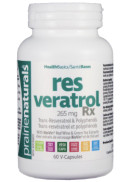
60 V-caps
For healthy aging and heart health take 2 capsules daily.
- 265 mg of trans-resveratrol & polyphenol
- All-natural plant sources
- BioVin French Red Wine & Japanese Knotweed Extracts
- 100% vegetarian

- Reviews
- POST A NEW REVIEW
Reviews By Rating
helpful votes
0
0 customers found this product review helpful
Resveratrol Rx - V-Capsules
Prairie Naturals Resveratrol Rx combines two all-natural plant sources of resveratrol - BioVin Advanced French Red Wine Extract and Japanese Knotweed Extract with a third potent polyphenolic antioxidant and anti-aging phytochemical - green tea extract. Acting together, this high potency, synergistic formulation provides 265 mg of trans-resveratrol and polyphenol complex per daily dose (2 V-caps), ensuring the strongest foundation for healthy aging and cardiovascular health. Trans-resveratrol may be a key component of the famous "French Paradox"; each Resveratrol Rx capsule contains 75 mg of this potent form of resveratrol.
- Provides 265 mg of trans-resveratrol & polyphenol complex per daily dose (2 V-caps)
- Combines two all-natural plant sources of resveratrol - BioVin French Red Wine & Japanese Knotweed Extracts
- Contains a potent anti-aging phytochemical - Green Tea Extract with 90% polyphenols
- A potent antioxidant complex for healthy aging and cardiovascular health.
- Trans-resveratrol may be a key component of the famous "French Paradox".
- Each V-capsule contains 75 mg of trans-resveratrol.
RESVERATROL
Resveratrol is a polyphenolic nutrient found in common foods such as red wine, grapes, peanuts and some berries, including blueberries, bilberries and cranberries...
Resveratrol is well absorbed orally, but due to very rapid metabolism and elimination, it has a low bioavailability, compromising its medicinal properties to some extent. It naturally occurs in both a cis and trans from, although most of the recorded health benefits seem to be based on the trans form.
Resveratrol can also protect the heart and cardiovascular system. Its cardiovascular protecting effects come from it's ability to maintain the integrity of artery walls and to reduce viscosity of the blood, as shown in animal studies. It has been shown to reduce the risk of thrombosis or clot formation, as well as promote vasodilation. It has also been shown to possess significant anti-inflammatory properties, making it a promising option in atherosclerosis prevention. Some researchers believe that Resveratrol is responsible for the "French Paradox", explaining why many French people can eat more fatty foods than North Americans, but suffer from heart attack and stroke less often. The thinking is that is may be due in part to a higher red wine consumption.
Resveratrol has also been shown to possess both estrogenic and anti estrogenic properties, based on the body's own levels and need. Similar to soy products, this may have an application in both estrogen dominant pathologies, as well as in such conditions as menopause, in which estrogen levels are low. There is also some promising research to suggest that Resveratrol may inhibit viruses, such as herpes simplex, varicella, influenza and others. Although animal studies have confirmed that Resveratrol can prevent and help to reverse free radical damage, since it is metabolized so quickly and there is no research currently suggesting that its metabolites have any medicinal properties, the powerful antioxidant claims may be slightly exaggerated. The antioxidant effect of Resveratrol is stronger when stabilized in supplement form.
The levels of Resveratrol used in all of these animal studies are far beyond levels that can be naturally reached through diet, nor is it safe or practical for people to drink enough red wine on a daily basis to have a significant health enhancing effect. It is for these reasons that supplementation is recommended. Nutritional supplements are usually made from Japanese knotweed, a concentrated plant source of Resveratrol. Many supplement companies will advertise that their Resveratrol products contain the equivalent of at least 20+ glasses of red wine. It is also important to note that currently there is very little research, based on clinical trials, supporting the efficacy of Resveratrol in humans.
Resveratrol supplementation should be avoided during pregnancy, although food based amounts are okay. Individuals taking anti-coagulation medications may have a higher risk of bleeding due to exaggerated anti-platelet activity when taken with Resveratrol. Use under the guidance of a healthcare practitioner. Resveratrol can be found as a supplement in both capsule and liquid form, in varying concentrations.
Back to Top ↑
-
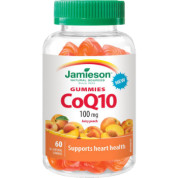
CoQ10 Gummies 100mg (Juicy Peach) - 60 Gummies
Sale: $28.99
Reg.: $33.99 (Save $5.00)
-

Bilberry Fruit (Organic Whole) - 454g
Sale: $84.99
Reg.: $105.51 (Save $20.52)
-

Hair, Skin & Nails Gummies (Peach-Mango) - 60 Gummies
Our Price: $35.50