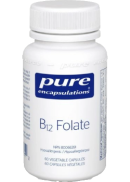
- 800mcg
- Folate (Calcium L-5-methyltetrahydrofolate, Metafolin®
- 800mcg
- Vitamin B12 (Methylcobalamin)
Cellulose, Ascorbyl palmitate, Hydroxypropyl methylcellulose, Purified water
Store sealed in a cool dry area. Use only if safety seal is intact. Keep out of the reach of children.
 Capsules
60 Caps
Adults: Take 1 capsule daily or as directed by a healthcare practitioner
- Helps Prevent Vitamin B12 Deficiency
- Helps to reduce the risk of neural tube defects
- Supports nutrient metabolism and red blood cell formation
- Highly bioavailable form of vitamin B12
- Gluten & GMO Free. Vegan

Quality Vitamins Trusted by Healthcare Professionals
Pure Encapsulations offers hypoallergenic natural health supplements that undergo third-party testing for purity and potency. Pure Encapsulations is a leading brand among healthcare practitioners and is free from gluten, GMO, fillers and preservatives. Top-selling vitamins and minerals include; Magnesium Glycinate and B-Complex Plus. With Pure Encapsulations you have quality assurance. Read more >- Reviews
- POST A NEW REVIEW
WHAT IS FOLIC ACID?
Folic acid also called Folate, or Folacin is probably best known for its crucial importance in prenatal health and the proper development of the fetal neural tube. However, did you know that folic acid is also integral to heart health and brain function throughout life?
Folic acid, like the other B family of vitamins, has a number, B9, though most supplements are labeled as folic acid or folate. Like the other B’s, folic acid is water-soluble; meaning that it cannot be stored inside the body, so must be supplied consistently through diet and or supplementation. Foods rich in Folic acid include; meats and organ meats, eggs, fish, seeds, nuts, and certain vegetables like spinach, asparagus, avocados, and sweet potatoes.
Folic acid is considered brain food and is critical to health because it is required for healthy cell division and replication (through its role as a coenzyme in DNA and RNA synthesis), as well as for the production of red blood cells, and the maintenance of cognitive function, and immunity.
Benefits Of Folic Acid
- Improves Cognitive Function
- Prevents Neural Tube Defects
- Promotes Healthy Pregnancy
- Supports Heart Health
Who Needs Folic Acid?
Folic acid deficiency is associated with neural tube defects, cardiovascular disease, abnormal cell replication, and cognitive dysfunction. Supplementation is recommended by natural health care practitioners and conventional doctors alike for a variety of different applications including the prevention of neural tube defects, anemia and healthy mood balance. Folic acid supplements may also be suggested to help prevent memory loss, age-related macular degeneration, osteoporosis, restless leg syndrome, and nerve pain.
FOLIC ACID POTENCY, FORMS & FORMATS
Folic Acid Potency
As a standalone supplement, folic acid can be found in a potency range of 400 to 1,000 mcg.
The most common recommended dose being 400 mcg daily; however, certain conditions may call for a higher dose.
Folic Acid Forms
Although folic acid and folate are often used interchangeably, folate is the form naturally found in food, while folic acid, is the man-made form found in supplements and fortified foods such as enriched cereal, flour, bread, and pasta. Interestingly, the folic acid form is thought to be better absorbed than that from food sources.
Folic acid supplements are available as simply Folic acid, or L-5 Methyltetrahydrofolate (5-MTHF), which is considered a superior, biologically active, coenzyme form of folic acid, that provides optimal absorption. Supplements are also found in (6S)-5-methyltetrahydrofolic acid form (as Metafolin®), and some research says this form may offer even better absorption because it does not need to be reduced in the small intestine.
Folic Acid Formats
Folic acid supplements abound and can be purchased in capsules, tablets, and lozenges, as well as in drop form. Folic acid is also frequently included in prenatal formulas and B complex blends.
Getting The Most Out Of Your Folic Acid Supplement
According to the World Health Organization (WHO), over two-thirds of women worldwide do not get adequate folic acid during pregnancy, most notably during the critical three first months of pregnancy; putting them at high risk for neural tube defects, which are serious birth defects that affect the spine, spinal cord (spina bifida), or brain and may result in death. This is why supplementing with folic acid is crucial throughout preconception, and at least the first three months of pregnancy, and ideally through to childbirth.
Folic acid supplementation is also important for women taking birth control pills, for those with conditions that affect absorption in the gastrointestinal tract, as well as for anyone with heavy alcohol intake, or liver, and kidney disease.
Back to Top ↑