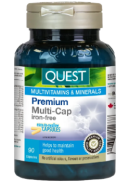
Each capsule contains:
- 3000mcg
- Vitamin A (Beta Carotene)
- 25mg
- Thiamine
- 25mg
- Riboflavin
- 25mg
- Niacinamide
- 25mg
- Pantothenic acid (d-calcium pantothenate)
- 25mg
- Vitamin B6 (pyridoxine HCl)
- 25mcg
- Vitamin B12 (cyanocobalamin)
- 500mcg
- Folate (folic acid)
- 75mg
- Vitamin C (sodium ascorbate)
- 200IU
- Vitamin D (cholecalciferol)
- 50IU
- Vitamin E (d-alpha-tocopheryl succinate)
- 125mg
- Calcium (citrate, carbonate)
- 50mcg
- Chromium (HVP* chelate)
- 50mcg
- Iodine (potassium iodide)
- 500mg
- Magnesium (oxide)
- 1.5mg
- Manganese (gluconate)
- 25mcg
- Molybdenum (HVP* chelate)
- 25mg
- Potassium (carbonate)
- 50mcg
- Selenium (HVP* chelate)
- 25mcg
- Vanadium (vanadyl sulfate)
- 5mg
- Zinc (citrate)
* Hydrolyzed Vegetable Protein
Non-medicinal Ingredients:
Cellulose, Magnesium Stearate, Silicon Dioxide, Gelatin
Non-medicinal Ingredients:
Cellulose, Magnesium Stearate, Silicon Dioxide, Gelatin
Important Information:
For adult use only. consult a health care practitioner prior to use if you are pregnant or breastfeeding. Folate supplementation can mask vitamin B12 deficiency, consult a health care practitioner prior to use if you have concerns. Store in a cool, dry place. Keep out of reach of children.
Format
 Capsules
90 Caps
Dosage
Take 1 capsule daily with food. Take a few hours before or after taking medication or natural health products. Formulated to release gradually over a six-hour period.
Product Information:
- Iron-Free
- Contains a full array of vitamins and amino acid minerals
- Strong eyes, skin & bones
- Contains all nutrients for over all good health
- Easy to swallow capsules
- Does not contain dairy, egg, gluten or shellfish

Quest, top quality health company and makers of Kids Chewable Multi’s and Adult Chewable Mult’si; great for overall health plus Niacin Flush- Free, Super Stress B Complex and Triple Fish Oil offer excellence in vitamins and omegas. Quest supplements receive rigorous testing; their top-selling Super Once a Day receives 300 tests alone. With Quest, you know you’re getting quality in every bottle. Read more >
What Customers Are Saying:
- Reviews
- POST A NEW REVIEW
More Info
Why Should I Take a Multi-vitamin?
Multiple vitamins help to bridge the nutrient gap in our daily diets. In today's world of processed foods and fast-paced lifestyles, many of us do not get the daily recommended allowance of vitamins, minerals and other nutrients. Multiple vitamins can help fill in the areas lacking in our diets, and are formulated to provide a broad range of nutrition in a synergistic manner.
Beta Carotene: Orange/red fruits and vegetables such as carrots, winter squash, sweet potatoes, beets, tomatoes, peaches, cantaloupe, and dark green leafy vegetables such as spinach and collards.
Vitamin A: Liver, eggs, butter, dairy products.
Thiamine (vitamin B1): Organ meats, pork, legumes, whole grains, eggs, poultry, fish.
Riboflavin (vitamin B2): Liver, dairy products, eggs, meat, poultry, fish, legumes, spinach.
Niacinamide (vitamin B3): Organ meats, meat, poultry, fish, legumes, dairy products, eggs, whole grains.
Pantothenic acid (vitamin B5): Organ meats, milk, fish, poultry, eggs, whole grains, legumes, broccoli, sweet potatoes, avocados, cauliflower.
Folate (folic acid): Dark green leafy vegetables, liver, brewer's yeast, legumes, asparagus, broccoli, wheat germ, whole grains.
Vitamin B6: Nuts and seeds, legumes, wheat germ, whole grains, bananas, potatoes, salmon, herring, liver,
meat, poultry, eggs. Vitamin B12: Liver, kidney, beef, herring, mackerel, eggs, fish, cheese.
Vitamin C: Fruits and vegetables, especially Brussels sprouts, collards, kale, parsley, tomatoes, sweet peppers, watercress, black currants, oranges, lemons, strawberries.
Vitamin D: Sunlight, fatty fish, eggs, fortified milk
Vitamin E: Vegetable oils, nuts, whole grains, wheat germ, eggs, butter, liver, dark green leafy vegetables.
Biotin: Egg yolks, liver. Iodine: Sea vegetables, fish, shellfish, iodized salt.
Calcium: Dairy products, legumes, dark green leafy vegetables, wheat bran, sea vegetables, almonds, Brazil nuts, figs.
Chromium: Meat, liver, whole grains, brewer's yeast, cheese.
Magnesium: Legumes, nuts and seeds, whole grains, dark green leafy vegetables, blackstrap molasses, wheat germ.
Manganese: Nuts and seeds, whole grains, dried fruits, dark green leafy vegetables.
Potassium: Dairy products, fruits and vegetables.
Selenium: Whole grains and vegetables, depending on the selenium content of the soil. Liver, kidney, meats, seafood.
Zinc: Oysters and other shellfish, fish, red meat, dark meat of poultry, whole grains, legumes, nuts and seeds
Healthy Energy
Picture your body as a machine. In order to get your body to work your body needs fuel or food. It then transports that fuel to each cell. Inside each cell are little engines called mitochondria. They take in the fuel and process it to release energy. The energy is used to power all cell processes and is the ultimate source of your body's energy. Another body system that impacts on energy is the glandular system. Picture it as the fuel injector of your body. It regulates what fuel gets into the body, which cells get the fuel and in what amounts. The blood cells are also a critical component of the body's energy system. They carry oxygen, a catalyst for many cell activities, around the body.
Poor nutrition impacts on energy in obvious ways. If your body does not have enough raw materials to provide for it's functioning than you will feel fatigued.The standard North American diet is deficient in vitamins, minerals and essential fatty acids. It is high in saturated fat, refined carbohydrates and chemical additives and preservatives. These substances not only do not give your body usable energy, but they also inhibit the use of good quality food by depleting enzymes and hormones necessary for energy conversion. The body must also deal with the toxic by-products of foods like bleached flour and sugar, artificial sweeteners and flavours and trans-fatty acids. Energy expenditure is funnelled towards detoxification of these substances instead of growth, cell replication and metabolism.
Stress
Stress is usually thought of as a negative factor in our daily lives but it is necessary part of life. Without stress life becomes boring. The key to stress, as with everything else in life, is balance. Enough to keep you interested but not enough to become overwhelmed. Individuals have different thresholds for stress. What is seen as stressful to one person may not be stressful to another.The stress response is the body's way of preparing for action. As our species evolved it kept us safe, allowing us to fight for survival, or to flee from dangerous situations. The sympathetic nervous system response involves increased heart rate, blood pressure and adrenal output, as well as increased blood flow to the brain, muscles, lungs and heart. Those organs that are not needed to fight or flee receive less blood flow, for example, the digestive organs. This response is very efficient for a short period of time but it is meant to be used sparingly.
Irregular eating patterns stress the body by not providing nutrients at regular intervals. When the body is lacking nutrients it compromises the body's functioning. When an individual finally does eat the body rushes to use the nutrients and store whatever it does not need, in anticipation that the next meal may not come for a while. Regular supplementation with a good quality multivitamin can help reduce stress by supplying important nutrients.
Multiple vitamins help to bridge the nutrient gap in our daily diets. In today's world of processed foods and fast-paced lifestyles, many of us do not get the daily recommended allowance of vitamins, minerals and other nutrients. Multiple vitamins can help fill in the areas lacking in our diets, and are formulated to provide a broad range of nutrition in a synergistic manner.
Beta Carotene: Orange/red fruits and vegetables such as carrots, winter squash, sweet potatoes, beets, tomatoes, peaches, cantaloupe, and dark green leafy vegetables such as spinach and collards.
Vitamin A: Liver, eggs, butter, dairy products.
Thiamine (vitamin B1): Organ meats, pork, legumes, whole grains, eggs, poultry, fish.
Riboflavin (vitamin B2): Liver, dairy products, eggs, meat, poultry, fish, legumes, spinach.
Niacinamide (vitamin B3): Organ meats, meat, poultry, fish, legumes, dairy products, eggs, whole grains.
Pantothenic acid (vitamin B5): Organ meats, milk, fish, poultry, eggs, whole grains, legumes, broccoli, sweet potatoes, avocados, cauliflower.
Folate (folic acid): Dark green leafy vegetables, liver, brewer's yeast, legumes, asparagus, broccoli, wheat germ, whole grains.
Vitamin B6: Nuts and seeds, legumes, wheat germ, whole grains, bananas, potatoes, salmon, herring, liver,
meat, poultry, eggs. Vitamin B12: Liver, kidney, beef, herring, mackerel, eggs, fish, cheese.
Vitamin C: Fruits and vegetables, especially Brussels sprouts, collards, kale, parsley, tomatoes, sweet peppers, watercress, black currants, oranges, lemons, strawberries.
Vitamin D: Sunlight, fatty fish, eggs, fortified milk
Vitamin E: Vegetable oils, nuts, whole grains, wheat germ, eggs, butter, liver, dark green leafy vegetables.
Biotin: Egg yolks, liver. Iodine: Sea vegetables, fish, shellfish, iodized salt.
Calcium: Dairy products, legumes, dark green leafy vegetables, wheat bran, sea vegetables, almonds, Brazil nuts, figs.
Chromium: Meat, liver, whole grains, brewer's yeast, cheese.
Magnesium: Legumes, nuts and seeds, whole grains, dark green leafy vegetables, blackstrap molasses, wheat germ.
Manganese: Nuts and seeds, whole grains, dried fruits, dark green leafy vegetables.
Potassium: Dairy products, fruits and vegetables.
Selenium: Whole grains and vegetables, depending on the selenium content of the soil. Liver, kidney, meats, seafood.
Zinc: Oysters and other shellfish, fish, red meat, dark meat of poultry, whole grains, legumes, nuts and seeds
Healthy Energy
Picture your body as a machine. In order to get your body to work your body needs fuel or food. It then transports that fuel to each cell. Inside each cell are little engines called mitochondria. They take in the fuel and process it to release energy. The energy is used to power all cell processes and is the ultimate source of your body's energy. Another body system that impacts on energy is the glandular system. Picture it as the fuel injector of your body. It regulates what fuel gets into the body, which cells get the fuel and in what amounts. The blood cells are also a critical component of the body's energy system. They carry oxygen, a catalyst for many cell activities, around the body.
Poor nutrition impacts on energy in obvious ways. If your body does not have enough raw materials to provide for it's functioning than you will feel fatigued.The standard North American diet is deficient in vitamins, minerals and essential fatty acids. It is high in saturated fat, refined carbohydrates and chemical additives and preservatives. These substances not only do not give your body usable energy, but they also inhibit the use of good quality food by depleting enzymes and hormones necessary for energy conversion. The body must also deal with the toxic by-products of foods like bleached flour and sugar, artificial sweeteners and flavours and trans-fatty acids. Energy expenditure is funnelled towards detoxification of these substances instead of growth, cell replication and metabolism.
Stress
Stress is usually thought of as a negative factor in our daily lives but it is necessary part of life. Without stress life becomes boring. The key to stress, as with everything else in life, is balance. Enough to keep you interested but not enough to become overwhelmed. Individuals have different thresholds for stress. What is seen as stressful to one person may not be stressful to another.The stress response is the body's way of preparing for action. As our species evolved it kept us safe, allowing us to fight for survival, or to flee from dangerous situations. The sympathetic nervous system response involves increased heart rate, blood pressure and adrenal output, as well as increased blood flow to the brain, muscles, lungs and heart. Those organs that are not needed to fight or flee receive less blood flow, for example, the digestive organs. This response is very efficient for a short period of time but it is meant to be used sparingly.
Irregular eating patterns stress the body by not providing nutrients at regular intervals. When the body is lacking nutrients it compromises the body's functioning. When an individual finally does eat the body rushes to use the nutrients and store whatever it does not need, in anticipation that the next meal may not come for a while. Regular supplementation with a good quality multivitamin can help reduce stress by supplying important nutrients.
Back to Top ↑