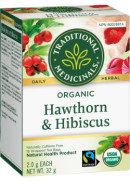
- 1000mg
- Organic Hawthorn Leaf and Flower
- 500mg
- Organic Hawthorn Fruit
Organic Hibiscus Flower
Consult your healthcare practitioner prior to use if you have a serious heart condition; if you are taking cardiac glycosides such as digoxin or blood pressure medication, or if you are pregnant or breastfeeding
 Tea Bags
16 Tea Bags
Adults: Drink 1 cup (1 tea bag) three times daily.
Directions for use: Pour 240 ml of freshly boiling water over 1 teabag in a cup and steep, covered, for 10-15 minutes. Gently squeeze the teabag to release any remaining extractive.
- Helps Maintain & support cardio health.
- Contains hawthorn flower leaves and fruit
- 100% Organic
- Caffeine free

- Reviews
- POST A NEW REVIEW
Reviews By Rating
helpful votes
0
0 customers found this product review helpful
Hawthorn is a cardiotonic herb which means that it supports the functioning of the heart and vascular system. It is a unique herb because it can be used for both high and low blood pressure. Its blood pressure regulating effect is mediated by several components of the herb. Hawthorn, especially the berries, contains bioflavinoids.
Bioflavinoids repair damaged vessels and dilate vessels in the heart and extremities. This regulates blood pressure and also improves heart pain (angina) and leg pain (peripheral vascular disease) that are due to lack of blood flow.
Hawthorn also influences the angiotensin-converting enzyme, an enzyme that regulates blood pressure by balancing the amount of fluid in the vessels. Other antioxidants in hawthorn, called proanthocyanidins, decrease spasms in the blood vessels and reduce the build up of plaque in the arteries. Finally hawthorn improves heart functioning without altering the amount of blood going through the heart. This makes hawthorn a good choice for the treatment of mild heart failure.
Hawthorn supplements are found as loose herb, encapsulated herb, tincture and liquid extract. Hawthorn products should be standardized as an assurance that they contain hawthorn and that there are some active ingredients present at the time of processing. Hawthorn can be found in combination products for cardiovascular health.
Everyone who takes hawthorn should watch for signs of low blood pressure such as faintness, dizziness and headache. Due to hawthorn's cardiovascular effects, individuals who use heart medication or blood pressure regulating medication should use hawthorn with caution. Pregnant women due to the risk of hypotension should not use hawthorn.
CARDIOVASCULAR HEALTH: GETTING TO THE HEART OF HEART HEALTH
The cardiovascular system consists of the heart, which pumps blood around the body through approximately 60 thousand miles of blood vessels. These vessels are divided by function into two types. There are the arteries, which carry blood from the heart to the body and the veins, which drain blood from the body back to the heart. Blood nourishes the cells of the body by transporting nutrients like oxygen and food to the cells.
It also removes waste products from the cells for filtering by organs like the liver, kidneys and spleen. Any interruption in blood supply causes cell and tissue death, like those caused by heart attack and stroke. Because of this, the maintenance of a healthy cardiovascular system is essential.
Any interruption in blood supply, for example a heart attack or stroke, causes tissue death so the maintenance of a healthy cardiovascular system is essential.
CAUSES OF CARDIOVASCULAR DISEASE
Lifestyle factors such as smoking, obesity, improper diet, stress and lack of exercise are bigger indicators of your heart disease risk than your family history. Common lifestyle contributors are: obesity, poor nutrition, medications, free radical damage, lack of exercise, poor emotional processing, and stress.
Obesity
Being overweight is detrimental to cardiovascular health for several reasons. Excess weight increases the force of gravity acting on the body. The heart is forced to respond by working harder and increasing blood pressure to ensure all of the body cells still receive nourishment. Excess intake of food causes the body to increase the amount of cholesterol and triglycerides in the blood. Cholesterol shuttles fat around the body and is implicated in the formation of plaque in arterial walls. For more information on this process, please see our Cholesterol and Arteriosclerosis articles.
Poor Diet
Failing to eat a varied and nutritious diet means that the body cannot supply the heart muscle with the constant supply of nutrients that it requires to keep pumping. The standard North American diet contains a large number of processed foods, and is deficient in vitamins, minerals and essential fatty acids. It is high in saturated fat, refined carbohydrates and chemical additives and preservatives. Not only do these substances not give your heart usable energy, they also contain high amounts of vessel-damaging materials like trans-fatty acids and toxic additives.
Medications
Some medications deplete heart-supporting nutrients like Coenzyme Q10, Magnesium, Potassium and Zinc. Ironically, several of these medications are those used to treat cardiovascular disease. Cholesterol lowering medications, such as statins can deplete Coenzyme Q10. Diuretics, used to treat high blood pressure, increase the excretion of minerals like Magnesium and Potassium. This can cause problems maintaining heart rhythm and can lead to muscle spasms and lightheadedness. ACE inhibitors deplete Zinc, and beta-blockers deplete coenzyme Q10. It is important to replenish these minerals and nutrients if you are on these medications to avoid deficiencies.
Free Radical Damage
We encounter free radicals through environmental exposures, such as cigarette smoke, air pollution, processed foods, and ultraviolet radiation from the sun (UV rays). Free radicals are unstable molecules with an unpaired electron that are extremely reactive, and damage surrounding cell membranes, fats, and fat-soluble vitamins and nutrients. When free radicals damage the smooth inner lining of the blood vessels, this leads to inflammation, and causes a raw region to form (like a cut) that makes the area susceptible to further damage, and clot or plaque formation.
Back to Top ↑