

For external use only. Keep out of reach of children. Persons with Wilson's Disease or impaired liver function should consult a physician before use.
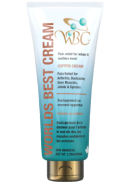
 Cream
Cream
65ml
Directions: Use 3 times daily for 7 days, then 2 times daily for 7 days, then 1-2 times daily or as required.
- Made with Copper
- Unique formulation allows cream to penetrate skin
- Uses essential Oils to enhance pain relief benefits
- Natural ingredients and colour
- Made in Canada

- Reviews
- POST A NEW REVIEW
Reviews By Rating
helpful votes
5
5 customers found this product review helpful
LAVENDER
This herb has been used for centuries as a perfume agent that repels insects, promotes relaxation, healing of the skin, and even hair regrowth!
Lavender is a group of plants in the Lavandula family. It is often grown as an ornamental plant in gardens, although it also has culinary, aromatherapeutic and medicinal properties.
Lavender can be used to repel insects and heal bites and stings.
Lavender Oil
The essential oil of lavender is extracted from the lavender plant and used for a variety of health benefits. It is antiseptic and anti-inflammatory, making it useful in topical inflammatory conditions like eczema and acne. For more information, please see our Essential Oil article.
Aromatherapy
The scent of lavender can be of great benefit in cases of anxiety and stress by promoting relaxation. For more information, please see our Stress and Anxiety articles. The calming properties of lavender are also beneficial in promoting sleep in cases of insomnia. For more information, please see our Insomnia article. It may help to relieve tension headaches when rubbed on the skin and inhaled as a vapour. When vaporized, lavender oil can help treat respiratory infections and soothe a cough. For more information, please see our Cold and Flu article.
Topical Use
Lavender oil is frequently added to skin products like balms, salves, perfumes, and cosmetics. It can be used as an antiseptic to clean minor injuries and burns. It is also a pain reliever and can be applied topically to treat insect bites and stings. When added to massage oil, lavender can help to relieve joint and muscle pain. It has also been shown to be helpful in healing episiotomy wounds after childbirth. As with most essential oils, lavender oil should be diluted in a carrier oil to reduce the risk of damage to the skin.
TEA TREE OIL
Tea tree oil is a must for your medicine cabinet, but beware, its powers are limited to topical applications only. It’s time to pack your bag for that well deserved holiday – bathing suit, sunscreen, toothbrush and tea tree oil?
Tea Tree Oil is one of the strongest and most effective natural antiseptics. It may not be the first thing you think of, but it’s an essential addition to any first aid bag or suitcase. Tea tree oil is one of the strongest and most effective natural antiseptics; killing bacteria, viruses, and fungi upon contact.
Australian Aboriginals have been using Malaleuca alternifolia, aka Tea tree, for centuries. They used to brew the leaves and apply the pulp on a variety of ailments and to repel insects. When samples of Tea Tree were brought to England for study, its anti-fungal, antibacterial and anti-inflammatory effects were confirmed. It is now well-known and commonly used to treat acne, cuts, wounds, sore throat, ringworm, athlete’s foot, vaginal infections, hemorrhoids, insect bites and dandruff.
It is important to note that Tea Tree oil is toxic when ingested. It can cause vomiting, diarrhea, severe rash, confusion and even coma. Be cautious or refrain from using Tea Tree topically on pets, as they may ingest the tea tree while grooming. A small number of patients also experience contact dermatitis when using Tea Tree oil topically. Using a diluted concentration may help to decrease the incidence of any skin reaction.
Tea Tree can be applied directly to an acne lesion.
EUCALYPTUS
Eucalyptus essential oil is used for respiratory infections and asthma...
Essentials oils have been used around the globe for centuries. They are used for both pleasure and medicinal purposes. Medicinally, certain essential oils can be ingested orally to have a biochemical effect on your body. Because essential oils are volatile, meaning they can evaporate into the air especially when added to hot water, they can be breathed in through your respiratory system.
Eucalyptus has been used by indigenous cultures globally
This can have a local effect on your sinuses, nasal passages and lungs. They can even enter your blood circulation through being inhaled which will then have a biochemical effect on your entire body. Topically essential oils work by penetrating your skin to affect an area locally and by penetrating your skin a small amount can enter your blood stream affecting your whole body. Applied topically, essential oils are absorbed through your olfactory nerve in your nose affecting your brain and nervous system. These various pathways can affect your health both mentally and physically. The study of Aromatherapy – the medicinal use of essential oils – falls under the new science called Psychoneuroimmunology, which is the study of the interaction of your psyche, nervous system and immune system. Science has shown that when you have a positive outlook and feel relaxed your immune system works better.
What Is Eucalyptus Essential Oil Used For?
Today Eucalyptus oil is used in many applications and in commercial over the counter medicinal products like vapor rubs for colds and flues and in topical pain medication.
Works Synergistically With:
*Muscular Pain: Ginger, lavender, Peppermint and Frankincense
Back to Top ↑
-

1000 Roses Color + Correct Sheer Tan SPF30 (Sensitive) - 58ml
Sale: $21.99
Reg.: $25.99 (Save $4.00)
-

Sale: $13.99
Reg.: $15.99 (Save $2.00)












