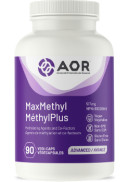
1 capsule contains:
- 500mg
- Trimethylglycine (betaine anhydrous)
- 267mg
- Folate (calcium L-5-methyltetrahydrofolate)
- 17mg
- Vitamin B6 (pyridoxal-5-phosphate)
- 216mg
- Vitamin B12 (methylcobalamin)
Non-medicinal Ingredients:
sodium stearyl fumarate. Capsule: hypromellose.
sodium stearyl fumarate. Capsule: hypromellose.
Important Information:
Contains no wheat, gluten, corn, nuts, peanuts, sesame seeds, sulphites, mustard, soy, dairy, eggs, fish, shellfish or any animal byproduct. Consult a health care practitioner prior to use if you are pregnant, breastfeeding, or if you have liver or cardiovascular disease.
Format
 Veggie Caps
90 V-caps
Dosage
Take one capsule three times daily with or without food, or as directed by a qualified health care practitioner.
Product Information:
- Suports treatment of Cardiovascular disease
- Supports treatment of Hypertension
- Contains B6 & B12 & folic acid
- Vegetarian Formula
- Easy to swallow vcaps

Innovative Formulas by AOR Canada found at National Nutrition
AOR Canada is the innovative formulators of Canada’s best-selling antioxidant support, AOR Advanced B Complex and AOR Tri-B12. They are also known for their top bone health supplements, Ortho Adapt and Bone Basics. You can also SHOP AOR's Nattokinase, and trusted Curcumin Ultra, Curcumin Active and Curcumin95 inflammation support at National Nutrition.ca. AOR are leaders in natural health with innovative product development. Read more >What Customers Are Saying:
- Reviews
- POST A NEW REVIEW
More Info
Protect yourself against elevated homocysteine levels
Homocysteine is a toxic amino acid. It is naturally produced in the body as a byproduct of several metabolic pathways, such as the metabolism of the amino acid methionine to produce essential nucleic acids, fats and high-energy bonds. When methionine loses a methyl group, homocysteine is produced. If homocysteine levels increase, blood vessels are damaged and collagen formation is impeded. There are two pathways in the human body that can lead to the elimination of homocysteine: it can be methylated to methionine or condensed into cysteine. The former process requires folate and vitamin B12, while the latter is vitamin B6 dependant.
Why is Homocysteine harmful?
Elevated blood levels of homocysteine (Hyperhomocysteinemia) have been associated with higher incidences of coronary artery disease and increased risk of mortality from cardiovascular diseases. Hyperhomocysteinemia is an independent factor for peripheral vascular, cerebrovascular and coronary heart disease. High homocysteine levels have a variety of injurious effects and are thought to damage blood vessel walls and lead to cardiovascular complications. Impairment in the conversion of homocysteine to cysteine might also lead to higher blood cholesterol levels because cysteine is required for the metabolism of cholesterol. It is also possible that the amino acid affects blood coagulation.
What causes elevated homocysteine levels?
Elevations can arise from genetic defects, or from poor consumption of nutritional factors involved in homocysteine metabolism, particularly vitamins B12, B6 and folic acid. Insufficient intake of folate, vitamin B12 and B6 are common in the elderly. However, even young, healthy adults who exercise have been found to have elevated levels of homocysteine.
Folic Acid
Folic acid is a water-soluble member of the B complex. It is also known as folate and folacin. This vitamin is needed for energy production, cell replication and the formation of red and white blood cells. It plays an important role in the conversion of homocysteine into harmless substances. Homocysteine damages the inner lining of arteries and high levels of homocysteine are correlated to an increased risk of atherosclerosis.
Folic acid is especially needed in areas where there is high cell turnover. Therefore it is an essential component of normal fetal development, especially in the first trimester when most of the neural network is laid down.
It is commonly recommended by natural health care practitioners for a variety of different therapeutic applications including: cervical dysplasia, depression, anxiety, anemia and atherosclerosis.
All of the B vitamins work together and are best used by the body in a B complex, which is why many B complex supplements include a small dose of folic acid in them. If additional supplementation of folic acid is needed it should be taken in addition to a good B complex. Most B vitamins are water-soluble and any extra from large doses is flushed out of the body easily, therefore it's best to take lower dosages of the B complex several times a day than one larger dose. Spray or sublingual forms of B vitamins are easily absorbed, as are capsules - if your digestion is healthy, then the tablet form is usually suitable for most people.
Folic acid is depleted by oral contraceptives and many other types of medication. Alcohol blocks the absorption of folic acid. High doses of folic acid can also change the way your body uses certain medications. Check with your health practitioner before taking large doses of folic acid. Cooking or microwaving destroys folic acid. Pregnant women should begin supplementation before they become pregnant because folic acid is most needed during the first six weeks of fetal life. This is often when a woman does not know she is pregnant.
Hypertension
Hypertension or high blood pressure is known as a silent killer because people often do not know that they have it until the body is already damaged. If you think that you are at risk, it is important to have your blood pressure monitored regularly, because hypertension can lead to heart attacks, strokes, kidney failure and retinal (eye) damage.
The most common causes of hypertension are narrowed arteries or a decrease in arterial elasticity. Narrowing and hardening of the arteries are primarily caused by eating too much of the wrong types of fats. It is important that you get enough of the right kinds of fats to limit this damage and to promote health. Other causes are kidney disease, heavy metal toxicity, obesity, stress and poor diet. Some of these factors are beyond our control, but many can be changed through diet, lifestyle changes, detoxification, and a combination of the right supplements and complimentary therapies.
Most people are do no have symptoms because their blood pressure rises slowly over many years. Symptoms of fluctuating blood pressure may be present and include headaches, dizziness, fatigue, nosebleeds and flushed cheeks. Symptoms of decreased circulation can accompany high blood pressure and include angina, leg pain, forgetfulness and ringing in the ears. Official diagnosis of hypertension is made when blood pressure readings over 140/90 are found on at least three occasions. In people over 50 the exact reading necessary to diagnose hypertension can be variable. A single reading of high blood pressure is generally not accepted as official because environmental factors such as stress and the amount of salt recently eaten can skew the reading.
Homocysteine is a toxic amino acid. It is naturally produced in the body as a byproduct of several metabolic pathways, such as the metabolism of the amino acid methionine to produce essential nucleic acids, fats and high-energy bonds. When methionine loses a methyl group, homocysteine is produced. If homocysteine levels increase, blood vessels are damaged and collagen formation is impeded. There are two pathways in the human body that can lead to the elimination of homocysteine: it can be methylated to methionine or condensed into cysteine. The former process requires folate and vitamin B12, while the latter is vitamin B6 dependant.
Why is Homocysteine harmful?
Elevated blood levels of homocysteine (Hyperhomocysteinemia) have been associated with higher incidences of coronary artery disease and increased risk of mortality from cardiovascular diseases. Hyperhomocysteinemia is an independent factor for peripheral vascular, cerebrovascular and coronary heart disease. High homocysteine levels have a variety of injurious effects and are thought to damage blood vessel walls and lead to cardiovascular complications. Impairment in the conversion of homocysteine to cysteine might also lead to higher blood cholesterol levels because cysteine is required for the metabolism of cholesterol. It is also possible that the amino acid affects blood coagulation.
What causes elevated homocysteine levels?
Elevations can arise from genetic defects, or from poor consumption of nutritional factors involved in homocysteine metabolism, particularly vitamins B12, B6 and folic acid. Insufficient intake of folate, vitamin B12 and B6 are common in the elderly. However, even young, healthy adults who exercise have been found to have elevated levels of homocysteine.
Folic Acid
Folic acid is a water-soluble member of the B complex. It is also known as folate and folacin. This vitamin is needed for energy production, cell replication and the formation of red and white blood cells. It plays an important role in the conversion of homocysteine into harmless substances. Homocysteine damages the inner lining of arteries and high levels of homocysteine are correlated to an increased risk of atherosclerosis.
Folic acid is especially needed in areas where there is high cell turnover. Therefore it is an essential component of normal fetal development, especially in the first trimester when most of the neural network is laid down.
It is commonly recommended by natural health care practitioners for a variety of different therapeutic applications including: cervical dysplasia, depression, anxiety, anemia and atherosclerosis.
All of the B vitamins work together and are best used by the body in a B complex, which is why many B complex supplements include a small dose of folic acid in them. If additional supplementation of folic acid is needed it should be taken in addition to a good B complex. Most B vitamins are water-soluble and any extra from large doses is flushed out of the body easily, therefore it's best to take lower dosages of the B complex several times a day than one larger dose. Spray or sublingual forms of B vitamins are easily absorbed, as are capsules - if your digestion is healthy, then the tablet form is usually suitable for most people.
Folic acid is depleted by oral contraceptives and many other types of medication. Alcohol blocks the absorption of folic acid. High doses of folic acid can also change the way your body uses certain medications. Check with your health practitioner before taking large doses of folic acid. Cooking or microwaving destroys folic acid. Pregnant women should begin supplementation before they become pregnant because folic acid is most needed during the first six weeks of fetal life. This is often when a woman does not know she is pregnant.
Hypertension
Hypertension or high blood pressure is known as a silent killer because people often do not know that they have it until the body is already damaged. If you think that you are at risk, it is important to have your blood pressure monitored regularly, because hypertension can lead to heart attacks, strokes, kidney failure and retinal (eye) damage.
The most common causes of hypertension are narrowed arteries or a decrease in arterial elasticity. Narrowing and hardening of the arteries are primarily caused by eating too much of the wrong types of fats. It is important that you get enough of the right kinds of fats to limit this damage and to promote health. Other causes are kidney disease, heavy metal toxicity, obesity, stress and poor diet. Some of these factors are beyond our control, but many can be changed through diet, lifestyle changes, detoxification, and a combination of the right supplements and complimentary therapies.
Most people are do no have symptoms because their blood pressure rises slowly over many years. Symptoms of fluctuating blood pressure may be present and include headaches, dizziness, fatigue, nosebleeds and flushed cheeks. Symptoms of decreased circulation can accompany high blood pressure and include angina, leg pain, forgetfulness and ringing in the ears. Official diagnosis of hypertension is made when blood pressure readings over 140/90 are found on at least three occasions. In people over 50 the exact reading necessary to diagnose hypertension can be variable. A single reading of high blood pressure is generally not accepted as official because environmental factors such as stress and the amount of salt recently eaten can skew the reading.
Back to Top ↑