

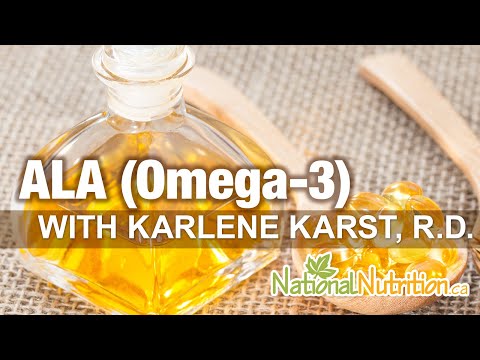
Ala Supplements (Omega 3): A Nutrient For Brain Health
Updated Aug. 30th, 2024 | Read Time: 2 Minutes | What You Will Learn:
- How Can ALA Supplements Benefit Your Health?
- Shopping For A Quality Omega 3 Supplements
- Nutritional Information
- Reader Comments (6)
Alpha-linolenic acid (ALA) is an omega 3 essential fatty acid. “Essential” means that the body does not produce the fatty acids on its own and therefore they must be taken in through the diet. Most North American and Western diets are very low in Omega-3 and extremely high in Omega-6, which is why omega supplements like ALA are often beneficial.
Too many saturated fats are consumed and the ratio of ingested EFA's averages more like 20:1 Omega-6's to Omega-3's instead of the recommended 4:1. ALA is found in vegetable oils like canola, flaxseed, soybean and walnut.
How Can ALA Supplements Benefit Your Health?
ALA supplements help maintain cholesterol levels because healthy fats build HDL cholesterol. HDL cholesterol is responsible for moving fat, from storage or plaques, into the liver where processing and excretion of fat occurs. By decreasing fatty buildup on arteries it helps to regulate blood pressure. It also provides valuable support for immune system function because many immune cells use omega 3 fats in their cell membrane. Having a properly functioning membrane allows the cells to do things like release packets of chemicals when they come in contact with foreign invaders. Since healthy fats play a large role in hormone formation, ALA can thus help optimize hormone levels and strengthen male fertility.
Shopping For A Quality Omega 3 Supplements
Ensure your ALA supplement is not processed with heat because it damages the acids and creates free radicals. Some of the damaged fats turn into trans-fatty acids, which are well known for their promotion of cardiovascular disease. Refrigerate all liquid ALA supplements and keep capsules away from heat because they can become rancid. Using liquid ALA, in the form of flaxseed oil is much more cost effective than capsules because numerous capsules must be taken to make an equivalent amount of liquid oil. Ground flaxseeds also contain some EFAs along with fiber. Golden flaxseed contains more ALA than the same amount of brown flaxseed.













It is so cool to find out the different names for words that we hear often. Alpha-linolenic acid for example, is not a word I would commonly hear but when I hear Omega 3 fatty acid, I can understand it. I think it is cool to know that it is an essential fatty acid and that it means that we do not produce it but rather need to get it from our diet. It was helpful to know that it can come from plant-based options such as flaxseeds and walnuts too!
Hello, O,
It's great to hear that you found the information about alpha-linolenic acid and Omega 3 fatty acids interesting. It's always cool to learn new things, especially when it comes to understanding the fancy names for everyday nutrients. And yes, it's pretty neat that alpha-linolenic acid is an essential fatty acid that our bodies don't produce; therefore we have to get it from our diet. Plant-based options like flaxseeds and walnuts are definitely great sources for it, as are supplements. If you'd like to learn about more omega fatty acids, check out this article on omega 6: https://www.nationalnutrition.ca/articles/supplements/omega-6/
I didn't realize that the ratio of ingested EFA's averages more like 20:1 Omega-6's to Omega-3's as opposed to the recommended 4:1; I thought that it averaged more like 16:1 so that is definitely a yikes that makes me happy that I supplement with plant-based (microalgae)-dervived DHA and flax seed meal daily! The brain is argueably our most important organ in the body and it is amazing how ALA can act in order to support long term brain health and cognitive function
Hello Rachel,
Thank you for sharing your experience with ALA and how it's helped your health. Indeed, being proactive about your cognitive health is a key factor in living a healthy and happy life. Taking adequate amounts of healthy omega's plays a big part of cognitive health and protecting your brain.
Stay healthy and well
I eat a lot of Golden flax and walnuts. I also take Salmon oil. for the omegas. I also take hemp seed oil. I pour it over sushi. It's in a fatty meal like that when I take my omega supplements. I have a few different ones, but the best ones are those without fishy aftertaste. Also, better with Salmon oil, rather than anchovies. I read Omega 3 was the healthy one, and too much of Omega 6 is not a good thing? Is that true?
Hello,
Thank you for sharing all the different ways you get your omega 3 intake! Indeed you can get it through fish sources and plant based alternatives as you mentioned. Learn more about the different omegas, including omega 6, here: https://www.nationalnutrition.ca/articles/supplements/omega-6/ & https://www.nationalnutrition.ca/articles/supplements/omega-3-6-9-blend/