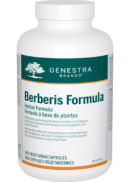
- 200 mg
- Barberry (Berberis vulgaris) Root Extract (4:1) 800 mg Dried Equivalent
- 200 mg
- Oregon Grape (Mahonia aquifolium) Root Extract (4:1) 800 mg Dried Equivalent
- 50 mg
- Goldenseal (Hydrastis canadensis) Root Std. Extract (5% Alkaloids)
- 25 mg
- Barberry (Berberis vulgaris) Root
- 25 mg
- Oregon Grape (Mahonia aquifolium) Root
Hypromellose, cellulose, silica
If you are pregnant or breastfeeding, do not use. If symptoms persist or worsen, consult your healthcare practitioner. If you have a kidney disorder, blood pressure problems, heart or respiratory condition, consult your healthcare practitioner prior to use. Consumption with alcohol, other medications and/or natural health products with sedative properties is not recommended. Do not exceed the recommended dose. Discontinue use and consult your healthcare practitioner if the following symptoms occur: nausea, vomiting, drop in blood pressure and/or difficulty breathing. High dosages of berberine can depress respiration, stimulate intestinal smooth muscle and reduce bronchial constriction. Guaranteed to contain no added wheat, starch, yeast, gluten, corn, soy, sodium, sugar, artificial colouring or flavouring, antimicrobial preservatives, dairy or animal products. Ideal for vegans
 Veggie Caps
180 V-caps
Adults (19 years and older): Take one capsule two times daily with meals or as recommended by your healthcare practitioner. May take up to one week to produce beneficial effects.
- High alkaloid content
- Convenient capsule format increases patient compliance
- Unique combination of synergistic herbs and the capsules are 100% pure vegetable-sourced.
- Recommended for parasitic, bacterial and viral infections, including candidiasis, and yeast, urinary tract and bladder infections, intestinal flu, streptococcus and staphylococcus.

Evidence-Based Natural Health Supplements for Optimal Wellness
Genestra delivers professional-grade products that are offered in a variety of formats. Genestra natural health products have been proven safe, effective and reliable for over 30 years, and are backed by clinical evidence. Genestra brings you HMF Forte, HMF Immune, HMF UTI, Digest Plus, Probiotics, D-Mulsion and Super EFA Liquid. Read more >- Reviews
- POST A NEW REVIEW
You might only notice healthy digestion when you don't have it. Most people don't even think about their digestion until symptoms start. Enzyme supplements & probiotics can make a significant difference for you digestive health..
The digestive process takes food material, breaks it down into absorbable pieces and transports it into the body. It is a complex process, involving many organs. Digestion begins with the scent of food stimulating the secretion of saliva. When food enters the mouth enzymes in the saliva begin to break it down. Chewing physically breaks down food pieces and stimulates saliva production. The mucus membranes of the mouth can absorb some nutrients.Swallowed food travels don the esophagus and into the stomach. The stomach uses muscular contractions to mix the food with digestive enzymes and hydrochloric acid. High acid levels kill germs that may be in the food. Food stays in the stomach longer if it contains more fat and shorter if it contains more sugar.
The small intestine attaches to the stomach. Near it's beginning, ducts from the liver and pancreas release digestive juices. Nutrients are absorbed through the thin intestinal wall and transported via the bloodstream, to where they are needed. The remainder of the food is pushed through into the large intestine where water is absorbed. The remaining food is compacted and prepared for excretion as stool.
The liver produces bile, which metabolizes fats and proteins. It also takes the toxic material from food substances, like medications, alcohol, and hormones, and processes them to make them harmless. The liver produces factors for blood clotting and the immune system. The gallbladder is a storage area for bile from the liver. The pancreas manufactures enzymes and hormones, like insulin. Insulin allows cells to take in sugar to burn as fuel.
Many foods that we eat, other substances we consume and our lifestyles contribute to digestive disorders. Highly processed foods, alcohol, medications and tobacco are difficult for our body to break down and cause great strain on our organs, such as the liver and pancreas. They may also physically damage the digestive lining. Processed foods are also deficient in nutrients so not only does the body have to work extra hard to digest the food, but it also gets depleted of the things it needs to do its work. Water and fibre intake is important to have proper moisture and bulk in the stool and make bowel movements regular.
WHAT YOU CAN DO:
DID YOU KNOW?
(DIGESTIVE HEALTH FACTS)
Stress, anxiety and other emotional concerns put our nervous system in an excited state. Our digestive processes are only fully functional when our nervous system is relaxed. Sedentary lifestyles decrease movement throughout the digestive tract. As our transit time slows there is more opportunity for the resorption of processed toxins from our food and greater chance of microbial overgrowth. Slow transit time also dries the stool and makes it more difficult to pass. Our body is designed so that each time we eat a meal we have a bowel movement. Many individuals can be considered constipated and have bowel movements less than once daily.
Some of the most important players in digestion are not part of our own body.
Friendly intestinal bacteria, often called probiotics, are an essential part of digestion. They break down food particles, manufacture vitamins and prevent the infection of the tract with other microbes.
Each bowel movement actually contains millions of these friendly bacteria; they are in a constant state of renewal. Many concerns like indigestion, gas, bloating and constipation can be due to an imbalance of the intestinal bacteria. It is easy to upset this balance by improper diet or taking medications like antibiotics.
The health of our teeth and gums is often overlooked as a factor in digestive concerns. Problems in the mouth can lead to malnutrition when foods are avoided due to pain or the inability to chew them correctly. To maintain dental health:
The stomach can be afflicted with several common digestive concerns. Indigestion is caused by an inability to breakdown and absorb food. It is usually directly related to the type of food eaten and poor eating habits. Chronic indigestion may be related to lack of bile, stomach acid and enzymes, or food sensitivities. Gastric and peptic ulcers are erosions of the mucus membrane that line the stomach and upper intestine. Excess digestive juices, deficient digestive juices, bacteria, poor diet, caffeine, alcohol, tobacco, anti-inflammatory medication, cortisone and stress can cause ulcers. Hiatal hernias are a bulge of stomach tissue that have gone through the diaphragm and sit around the esophagus. It is associated with poor eating habits, obesity and the use of estrogen medications. Optimize the health and functioning of your stomach by:
One can eat the most nutritious food but if the intestinal membrane is not in good working order the body will not be able to absorb the nutrients. Diverticulitis occurs when the intestinal muscle tissue weakens, forms pouches and becomes inflamed. Crohn's Disease is an inflammation of the small intestine, but it can also affect the mouth and stomach. Ulcerative colitis occurs when small ulcers develop on the mucous lining of the large intestine. Irritable bowel syndrome mimics Crohn's disease and ulcerative colitis but does not make visible lesions in the bowel. Support the intestine by:
Toxins, microbes or other medical conditions can compromise pancreatic and liver function. Diabetes occurs when a person's pancreas is unable to produce enough insulin to metabolize the amount of sugar that they are ingesting. A diet high in refined carbohydrates and nutrient deficiency are large contributing factors to "age onset diabetes", as it is often called; excess body weight, lack of exercise, and heredity also often play significant roles when a person develops diabetes. Hepatitis is an inflammation of the liver that is caused by the hepatitis virus, medications or toxins. Gallstones are precipitates, made mostly of cholesterol, that form as a result of a lack of fibre, excess cholesterol, decreased liver function, lack of bile and lack of bile movement. Functioning of the digestive glands can be optimized using natural treatments such as:
Listed below are some of the nutrients and supplements that support digestion.
SUPPLEMENT DOSAGE THERAPEUTIC EFFECT
GLUTAMINE
As directed on the label
Helps repair damage to the intestinal and stomach lining.
Take on an empty stomach.
PROBIOTICS / ACIDOPHILUS
1-2 capsules daily
Helps to regulate the bacteria in the digestive tract. Ensures proper food breakdown by bacteria.
MULTI ENZYMES OR BROMELAIN
With meals. As directed on the label
To efficiently breakdown food. Some enzymes contain ox bile to replace bile acids or HCl to replace stomach acid.
DGL
1 or 2 tablets before meals
Helps reduce irritation of the digestive tract. Especially good for irritation from acid.
ALOE VERA
As directed on the label
Helps reduce irritation of the gut.
BETAINE HCL
As directed on the label A digestive acid.
Helps break down food so that enzymes can work better. Do not use if you have ulcers.
B COMPLEX
50-100mg 3 times/ day
The body's digestive processes and glands need B vitamins. Some intestinal conditions compromise B vitamin absorption.
FREE FORM AMINO ACIDS
As directed, twice daily on an empty stomach
Pre-digested proteins that are easily used by the body.
N-ACETYL-GLUCOSAMINE
As directed
Makes a barrier to protect the fragile intestinal lining and allows healing.
CHROMIUM
200-600mcg /day with meals
Potentizes insulin, making it stronger and function effectively in metabolizing sugars in the body. Eating sugar depletes chromium.
DIGESTIVE BITTERS (SWEDISH BITTERS)
As directed, before meals
Causes a release of digestive juices. Supports the liver and gallbladder.
Also beneficial for HEALTHY DIGESTION:
Multivitamins, vitamin C, vitamin A, vitamin E, essential fatty acids, lecithin, betonite, pancreatin, bromelain, chlorophyll, chamomile, fennel, gymnema, milk thistle, enteric-coated peppermint, psyllium, slippery elm, and lemon balm.
Back to Top ↑