

Indian Ginseng (Ashwagandha)
Indian Ginseng Benefits
Ashwagandha, Withania somnifera, is an ancient medicinal herb deeply rooted in Ayurvedic medicine, one of the world's oldest holistic healing systems originating in India over 3,000 years ago. Ashwagandha is also referred to as "Indian Ginseng" or "winter cherry" and has long been prized for its wide array of health benefits and its remarkable adaptogenic properties. Read more >-
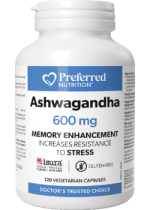
Preferred Nutrition Ashwagandha 600 mg offers a simple, once-daily way to incorporate this respected Ayurvedic herb into your wellness routine. Each vegetarian capsule contains a concentrated 10:1 extract, providing the equivalent of 6000 mg of dried ashwagandha root. Traditionally valued in Ayurveda as a rejuvenating tonic and nervine, ashwagandha is also used in herbal medicine as an adaptoge...
+ Earn 23 Reward PointsOur Price: $23.97In Stock
Explore the Benefits of Indian Ginseng (Ashwagandha)
Ashwagandha, Withania somnifera, is an ancient medicinal herb deeply rooted in Ayurvedic medicine, one of the world's oldest holistic healing systems originating in India over 3,000 years ago. Ashwagandha is also referred to as "Indian ginseng" or "winter cherry" and has long been prized for its wide array of health benefits and its remarkable adaptogenic properties.
Traditional Uses and Historical Significance of Ashwagandha
Ashwagandha's history can be traced back to the Indian subcontinent, where it has been used for millennia to promote vitality, longevity, and overall well-being. In Ayurveda, it is categorized as a "Rasayana," which means a rejuvenating herb, and it has been traditionally prescribed to address various health conditions, including stress, anxiety, insomnia, andimmune-related disorders.
Ancient Ayurvedic texts praised Ashwagandha for its benefits to provide strength and stamina, enhance mental clarity, and restore balance in the body. Over the centuries, it was also utilized to support reproductive health, thanks to its testosterone-boosting, fertility-enhancing, and aphrodisiac properties.
Comprehensive Health Benefits of Ashwagandha
The primary active compounds in Ashwagandha are withanolides – a class of naturally occurring steroids found in the roots and leaves of the plant. Among their numerous health benefits, they have been shown to offer:
- Adaptogenic Properties – The most renowned characteristic of Ashwagandha is its adaptogenic nature. Adaptogens are substances that help the body adapt to stress and maintain physiological equilibrium. Regular supplementation with Ashwagandha has been shown to reduce cortisol levels (the body’s primary stress hormone), improve resilience to stress, and boost overall mental and physical well-being.
- Stress and Anxiety Relief – Studies have confirmed that Ashwagandha helps alleviate symptoms of stress (mental, physical, and even environmental) and temper anxiety by regulating essential neurotransmitters like serotonin, which plays a key role in mood regulation.
- Enhanced Physical Performance – research has shown that Ashwagandha supplementation benefits strength and increases muscle mass, making it beneficial for athletes and individuals engaged in resistance training and weightlifting. Moreover, because Ashwagandha has antioxidant properties, supplementation helps reduce exercise-induced muscle damage and inflammation, leading to faster post-exercise recovery.
- Cognitive Function – Ashwagandha benefits brain health by promoting antioxidant activity and enhancing memory and cognition. Research, in fact, indicates that it has neuroprotective properties, thus benefiting individuals with or at risk of neurodegenerative conditions, including Alzheimer's disease.
- Improved Immune Function – This powerful plant has demonstrated potent immunomodulatory effects by boosting immune cell activity. Indeed, research has shown Ashwagandha stimulates the activity of immune cells, such as lymphocytes (including T cells and B cells) and macrophages, which play crucial roles in fighting infections and disease.
- Anti-Inflammatory Effects – Ashwagandha contains compounds that have been shown to possess marked anti-inflammatory effects – notably by reducing levels of inflammatory proteins such as interleukin -6 (IL-6), interleukin-10 (IL-10), C-reactive protein (CRP), and Tumor necrosis factor alpha (TNF-α).
- Hormone Balance – Ashwagandha has been demonstrated to positively impact hormonal balance in both men and women, which is why it is often recommended to support reproductive health and address disorders associated with hormonal imbalances.
Forms and Benefits of Ashwagandha Supplements
As awareness of Ayurvedic practices and herbal remedies has grown, Ashwagandha has become increasingly popular around the world. It is available in a variety of different forms, including capsules, powders, teas, and tinctures. Supplements often feature a standardized withanolides content to ensure a standard potency across dosages. Look for supplements that offer 5% or more withanolides concentration for optimal strength and efficacy.
Supplements typically come in a dosage range between 300 mg to 1,000 mg per serving. The recommended daily dose of Ashwagandha will vary based on age, health status, and the supplement formulation. Generally, however, a daily dose of Ashwagandha root extract is around 300 mg to 600 mg, taken with or without food two times daily.
Final Considerations for Using Ashwagandha Supplements
Ashwagandha is among the most well-tolerated medicinal plants but can occasionally cause a few side effects in certain individuals. Symptoms may include mild gastrointestinal discomforts, such as upset stomach, nausea, diarrhea, and drowsiness, especially in higher doses. Allergic reactions such as skin rash, itching, or difficulty breathing may also occasionally occur. Ashwagandha can interact with medications that have sedative properties or affect the central nervous system, so they should not be combined.
Due to its potential sedative effects, it's recommended to discontinue Ashwagandha use at least two weeks before any scheduled surgery to avoid complications with anaesthesia.
Back to Top ↑








