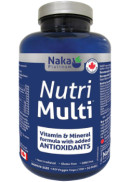
Each vcap contains:
- 5000IU
- Vitamin A (Acetate)
- 200IU
- Vitamin D3 (cholecalciferol)
- 25IU
- Vitamin E (d-alpha tocopheryl acetate)
- 75mg
- Vitamin C (Calcium ascorbate)
- 25mg
- Vitamin B1 (Thiamine Hydeochloride)
- 25mg
- Vitamin B2 (Riboflavin)
- 25mg
- Vitamin B6 (Pyridoxine Hydrochloride)
- 25mcg
- Vitamin B12 (Cyanocolbalamin)
- 25mg
- Niacinamide
- 25mcg
- Biotin
- 500mcg
- Folic Acid (Folate)
- 25mg
- Pantothenic Acid (Calcium d-pantothenate)
- 25mg
- Choline Bitartrate
- 25mg
- Inositol
- 62.5mg
- Calcium (Calcium carbonate, phosphate dibasic)
- 50mg
- Magnesium (Magnesium oxide, gluconate)
- 5mg
- Potassium (Potassium citrate)
- 5mg
- Iron (Ferrous fumarate)
- 5mg
- Zinc (Zinc Citrate)
- 500mcg
- Manganese (Manganese citrate)
- 50mcg
- Iodine (Potassium iodide)
- 12.5mcg
- Chromium (HVP Chelate)
- 12.5mcg
- Selenium (HVP Chelate)
- 12.5mcg
- Molybdenum(HVP Chelate)
Non-medicinal ingredients:
PABA, Citrus Bioflavonoids, Lecithin, Betaine Hydrochloride, Hesperidin, Papain, Rutin, L-Cysteine, Lipoic Acid, Grape Seed Extract, Reishi Mushroom Extract, Shiitake Mushroom Extract, Magnesium Stearate (vegetable source) and hypromellose with natural chlorophyll colour.
PABA, Citrus Bioflavonoids, Lecithin, Betaine Hydrochloride, Hesperidin, Papain, Rutin, L-Cysteine, Lipoic Acid, Grape Seed Extract, Reishi Mushroom Extract, Shiitake Mushroom Extract, Magnesium Stearate (vegetable source) and hypromellose with natural chlorophyll colour.
Important Information:
Keep out of the reach of children. There is enough iron in the package to seriously harm a child.
Format
 Veggie Caps
150 V-caps
Dosage
Take two capsules daily. Take a few hours before or after taking other medications. Take with food.
Product Information:
- Helps with general protection & overall health
- Supports treatment fatigue & low energy
- Healthy skin, hair & nails
- Great for arthritis & joint support
- Helps with digestion

Premium Quality & Canadian Made - 12 New Added
Founded in 1991, Naka’s success has been built upon introducing innovative supplements in liquid or easy-to-swallow capsule forms designed to meet the better health needs of consumers worldwide. Their most popular supplements include: Naka Pro Collagen, Naka Vital Greens, Naka Magnesium Bisglycinate, Naka Nutri Flex, Naka Vital Greens and Naka Probiotics.You can find Naka herbs and buy Naka supplements at NationalNutrition.ca Read more >What People Are Saying:
- Reviews
- POST A NEW REVIEW
Reviews for:
Nutri Multi - 120 + 30 V-Caps BONUS
(9 reviews)
Reviews By Rating
helpful votes
4
4 customers found this product review helpful
More Info
Naka's premium quality Nutri Multi is a new vitamin and mineral supplement with the added health benefit of antioxidants. Along with vitamins and minerals, antioxidants in medicinal mushrooms can scavenge free-radicals in the body that can cause cell damage and degenerative diseases. Nutri Multi from Naka comes in an easy-to-swallow capsule form with no binders or fillers added.
Energy
Picture your body as a machine. In order to get your body to work your body needs fuel or food. It then transports that fuel to each cell. Inside each cell are little engines called mitochondria. They take in the fuel and process it to release energy.
The energy is used to power all cell processes and is the ultimate source of your body's energy. Another body system that impacts on energy is the glandular system. Picture it as the fuel injector of your body. It regulates what fuel gets into the body, which cells get the fuel and in what amounts. The blood cells are also a critical component of the body's energy system. They carry oxygen, a catalyst for many cell activities, around the body.
Lack of energy can be attributed to many causes. All of these causes must negatively impact on our body's ability to get fuel into the body, inhibit the mitochondria's ability to turn it into energy or alter the functioning of the hormonal and blood system. Some of these factors are:
Poor nutrition impacts on energy in obvious ways. If your body does not have enough raw materials to provide for it's functioning than you will feel fatigued. The standard North American diet is deficient in vitamins, minerals and essential fatty acids. It is high in saturated fat, refined carbohydrates and chemical additives and preservatives. These substances not only do not give your body usable energy, but they also inhibit the use of good quality food by depleting enzymes and hormones necessary for energy conversion. The body must also deal with the toxic by-products of foods like bleached flour and sugar, artificial sweeteners and flavours and trans-fatty acids. Energy expenditure is funnelled towards detoxification of these substances instead of growth, cell replication and metabolism..
Sleep is an essential component of our body's repair mechanisms. During sleep the body is in an anabolic, or building, state. It has time to regenerate cells and replenish hormones, enzymes and neurotransmitters.
Insomnia prevents the repair of normal damage from the body's daily activity. Over time this leads to a decrease in cellular functioning and ultimately causes fatigue. The brain also requires sleep in order to process information that is learned throughout the day.
Stress, whether physical, mental or emotional, strains the body and ultimately leads to fatigue. Stress puts the body into sympathetic nervous system mode. In this mode the body is on high alert, energy is being focused on the senses, heart and muscles. The digestive system receives less blood flow and cannot function to capacity. Therefore the body is less able to take in fuel and it is using it up at an increased rate.
Energy
Picture your body as a machine. In order to get your body to work your body needs fuel or food. It then transports that fuel to each cell. Inside each cell are little engines called mitochondria. They take in the fuel and process it to release energy.
The energy is used to power all cell processes and is the ultimate source of your body's energy. Another body system that impacts on energy is the glandular system. Picture it as the fuel injector of your body. It regulates what fuel gets into the body, which cells get the fuel and in what amounts. The blood cells are also a critical component of the body's energy system. They carry oxygen, a catalyst for many cell activities, around the body.
Lack of energy can be attributed to many causes. All of these causes must negatively impact on our body's ability to get fuel into the body, inhibit the mitochondria's ability to turn it into energy or alter the functioning of the hormonal and blood system. Some of these factors are:
Poor nutrition impacts on energy in obvious ways. If your body does not have enough raw materials to provide for it's functioning than you will feel fatigued. The standard North American diet is deficient in vitamins, minerals and essential fatty acids. It is high in saturated fat, refined carbohydrates and chemical additives and preservatives. These substances not only do not give your body usable energy, but they also inhibit the use of good quality food by depleting enzymes and hormones necessary for energy conversion. The body must also deal with the toxic by-products of foods like bleached flour and sugar, artificial sweeteners and flavours and trans-fatty acids. Energy expenditure is funnelled towards detoxification of these substances instead of growth, cell replication and metabolism..
Sleep is an essential component of our body's repair mechanisms. During sleep the body is in an anabolic, or building, state. It has time to regenerate cells and replenish hormones, enzymes and neurotransmitters.
Insomnia prevents the repair of normal damage from the body's daily activity. Over time this leads to a decrease in cellular functioning and ultimately causes fatigue. The brain also requires sleep in order to process information that is learned throughout the day.
Stress, whether physical, mental or emotional, strains the body and ultimately leads to fatigue. Stress puts the body into sympathetic nervous system mode. In this mode the body is on high alert, energy is being focused on the senses, heart and muscles. The digestive system receives less blood flow and cannot function to capacity. Therefore the body is less able to take in fuel and it is using it up at an increased rate.
Back to Top ↑