

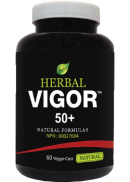
- 250 mg
- Red Ginseng (Panax ginseng C.A. Meyer (Araliaceae), Root)
- 40 mg
- Ginkgo Biloba Leaf Extract
- 250 mg
- L-Arginine
- 200 mg
- Avena Sativa Kernel Extract hydroxypropyl methylcellulose
Consult a health care practitioner prior to use if you have diabetes and/or if you are taking blood thinners or digoxin. Consult a health care practitioner prior to use if you re taking antidepressant medications, or if you are pregnant or breastfeeding. Some people may experience insomnia, anxiety, or headaches, in which case, discontinue use.
 Veggie Caps
60 V-caps
Adults, 2 capsules 1 time per day. Consult a health care practitioner for use beyond 3 months.
- Natural Herbal Formula
- Product of Canada

Uniting Families with Healthy Habits at National Nutrition
Every Nutridom product is crafted with non-GMO, sustainably sourced ingredients and features clinically proven key actives to ensure real, measurable results. From immune and joint support to energy, beauty, and digestive health, Nutridom offers a comprehensive line of natural supplements that meet the highest standards of quality and efficacy. Read more >- Reviews
- POST A NEW REVIEW
Ginseng
Several plants are commonly referred to as "ginseng". In the strict sense of the word "ginseng" refers to the Panax genus of plants, which includes Chinese ginseng (Panax ginseng), Korean Ginseng (Panax schinsen) and American Ginseng (Panax quinquefolius). The active constituents of the Panax family are ginsenosides. The name Panax derives from the Greek word for "all healing," and it has been claimed to treat a very wide variety of conditions. Let's explore the different ginseng varieties and their benefits on your health.
Exploring Ginseng Varieties & The Benefits Of Each
Siberian Ginseng (Elutherococcus senticosus), Indian ginseng (Ashwagandha), Brazilian ginseng (Suma), and Peruvian ginseng (Maca) are not members of this genus but share similar medicinal effects to the true ginsengs and thus, they share the same general name.
Ginseng, as a category of plants, is renowned for its healing benefits, with some types having been used for more than 2,000 years. Ginseng was traditionally one of the most widely used plants across the globe and is still used all over the world today for its many health benefits.
Key Health Benefits Of Ginseng Supplements
The ginsengs are adaptogenic herbs, meaning they help your body adapt and cope during stressful mental times and recovery from illness and fatigue. Studies show that the active constituents of ginseng have structures similar to those of human steroid hormones and that they can directly affect your brain. This action in the brain results in stimulation of the adrenal gland and activation of your body's energy reserves. This response keeps you safe, allowing you to fight for survival, or to flee from dangerous situations.
Ginseng also increases heart rate; blood pressure and blood flow to the brain, muscles, lungs and heart. Thus leading to increased energy, mental performance and performance in physical tasks like athletics. Stimulation such as this can deplete the body over time (yang depleting yin – see below) so ginseng also contains substances that stimulate cell replication, protein synthesis, immune functioning and blood sugar regulation.
All of these properties nourish the body and aid in recovery from times of high activity, illness and stress. The ginsengs are recommended by natural health practitioners for a variety of needs including athletic performance, energy, recovery from illness or surgery, stress, support during cancer treatment, impotence, low libido and frequent colds and infections.
Hormonal Effects
Ginseng members of the Panax family (North American, Chinese and Korean) have been shown to enhance libido and sexual performance. It is not known whether these effects are due to changes in hormone secretion or due to the direct effects of the ginsenoside constituents on the nervous system and gonadal (sexual organ) tissues. It is known that in males, ginsenosides can stimulate penile erection. Certain ginsenosides have also been shown to have weakly phytoestrogenic effects, meaning that they can weakly act in the human body as estrogen. This allows them to either directly stimulate estrogen receptors in people with insufficient estrogen, or to compete for binding sites with natural estrogen in those with excessive levels. In addition to their direct hormonal actions, ginsengs are great examples of adaptogens. Because of their effect on the adrenal gland, they can both directly and indirectly affect many different hormones in the human body. The most obvious examples of these are aldosterone, cortisol, adrenaline, and sex hormones.
Understanding Yin And Yang
Traditional Chinese Medicine acknowledges that there is a delicate balance in the entire universe and everything in it between two forces known as yin and yang, woman and man. Yin represents females, rest and regeneration while yang represents males, action and energy.
The same universal balance exists within each of our bodies that can be disturbed by excess or deficiency on either side (yin or yang), resulting in illness. The ginsengs are renowned in Chinese culture for their energizing (yang) properties, complemented by their nutritive (yin) properties. This is the case in most ginsengs, except Korean Ginseng, which is far more yang, and thus cannot be taken for extended periods. For more information on the properties of each ginseng, please see the chart below.
Comparing The Differences Of Each Ginseng Subtype
Cooling vs Warming
Another means of viewing the properties of herbs is traditional to most societies on Earth with roots in Indian, Chinese, American (North and South), and European cultures. This categorizes the herbs on a scale between cooling and warming. Some obvious examples familiar to most are mint as a cooling herb and cayenne pepper as a warming. The various ginsengs are also in different positions on this scale. This is important information for treatment, based on the inherent nature of the condition for which each particular ginseng is being used. For example, warming herbs are better used for cold, stagnant conditions such as a head cold with stuffiness and chills. On the other hand, cooling herbs are better used for hot conditions such as excessive fevers, and anxiety. The requirement for heating or cooling may also be determined by the seasons for those in climates where the weather changes with the seasons. Warming herbs are better used in the winter and cooling herbs in the summer.
White vs Red
There are many different preparations of the various ginsengs, two popular types are called white and red. The preparation called white ginseng consists of fresh ginseng that is grown for 4-6 years, peeled and dried. White ginseng is air dried in the sun and thus, becomes a yellowish-white colour and may contain less of the therapeutic constituents. The preparation called red ginseng is grown for 6 years before it is harvested and immediately boiled to steam-cure it, and then the root is dried. This process causes it to have a reddish-brown colour and is thought to change its biochemical composition and also prevent the breakdown of the active constituents. Red ginseng is used more commonly for herbal preparations and is generally the form studied when examining the pharmacological activities of ginsenosides.
Obtaining The Benefits Of Ginseng: Selecting The Right One
The difference in the ginsengs is the strength of their activity and the ratio of stimulation to nourishment of the body. This can also be seen as their yin/yang and/or warming/cooling natures in more traditional herbal understanding.
Back to Top ↑
-

Maca 750mg - 120 V-Caps - Vega
Sale: $31.99
Reg.: $39.99 (Save $8.00)












