

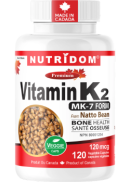
- 120 mcg
- Vitamin K2 (Menaquinone-7, Natto-derived)
Hypromellose (vegetable capsule), Microcrystalline Cellulose, Magnesium Stearate
Consult a health care practitioner prior to use if you are taking blood thinners.
 Veggie Caps
120 V-caps
Adults: 1 capsule, 1 time per day.
- GMO Free
- Third Party Tested
- Formulated in Canada
- Made with Clinically Proven Ingredients

Uniting Families with Healthy Habits at National Nutrition
Every Nutridom product is crafted with non-GMO, sustainably sourced ingredients and features clinically proven key actives to ensure real, measurable results. From immune and joint support to energy, beauty, and digestive health, Nutridom offers a comprehensive line of natural supplements that meet the highest standards of quality and efficacy. Read more >- Reviews
- POST A NEW REVIEW
Vitamin K
We've all heard about the relationship between calcium and bone health, but very few people know about the importance of Vitamin K. Vitamin K is one of the major nutrients required for the production of osteocalcin, which is the protein web-like structure upon which bone is built. Without the proper scaffolding framework, new bone cannot be properly assembled, and will not have the correct structure or strength.
FORMS OF VITAMIN K
VITAMIN K is a fat-soluble vitamin made in two naturally occurring forms, which are conveniently called Vitamin K1 and K2. The synthetic forms of VITAMIN K are known as K3, K4, and K5.
Vitamin K1 - Phylloquinone
Vitamin K1, also known as phylloquinone, is found in green leafy vegetables such as kale, spinach and broccoli, as well as fruits, such as avocado and kiwi. It is also found in vegetable oils, such as canola, soybean and olive oils.
Vitamin K2 – Menaquinone (MK)
Vitamin K2 has a number of subtypes that are characterized by the number of side-chains (isoprenoid units) they contain. The two most common subtypes are menaquinone-4 (MK4) and menaquinone 7 (MK7). The MK4 form of vitamin K2 can be converted from vitamin K1 by certain tissues in our body, such as the testes, pancreas and arterial walls. The MK7 form, on the other hand, requires certain species of bacteria present in the gut to convert vitamin K1. The role MK7 form of vitamin K has not yet been determined althought it has been found to alter proteins in bone structure. MK4 has been shown to decrease the risk of fractures by up to 87%. Vitamin K2 has been shown to prevent bone loss and/or fractures in a variety of circumstances including: postmenopausal osteoporosis, anorexia nervosa, and corticosteroid use.
Vitamin K3, K4, K5
Menadione (Vitamin K3) is a synthetic molecule that has been shown to have vitamin K activity in the body. Larger doses of vitamin K3 has been shown to be toxic in humans, and in North America, human supplements have been banned. Vitamin K4 is only used by prescription for specific clotting disorders, and vitamin K5 is not used at all.
WHAT IT DOES
Building Bone
Simply put, by enhancing osteocalcin, Vitamin K attracts calcium to bone tissue, playing a role in the formation, remodeling and repair of bone. This is especially important for menopausal women or those with a history of osteoporosis in their family. Osteoporosis is the term used to describe a low mineral bone density or bone mass due to a progressive deterioration of bone. This loss of bone density leaves the bones fragile and can increase susceptibility to debilitating fractures, such as hip and spine fractures. For more information on osteoporosis, please click here. The Framingham Heart Study found that women ingesting higher vitamin K amounts had a significantly lower risk of hip fracture. Vitamin K2 is the only form found to be beneficial to bone health at this time. It is possible, vitamin K1 will also be of benefit in those with proper gut flora, but further research is required.
Blood Clotting
Vitamin K also plays an integral role in blood clotting. It is responsible for the manufacturing of clotting factors, such as prothrombin and clotting factors VII, IX and X. These clotting factors play an essential part of hemostasis (blood coagulation), the innate physiologic process that prevents excessive blood loss from damaged blood vessels by first plugging and then repairing the damage. Ineffective coagulation and hemostasis can lead to uncontrolled bleeding (hemorrhage) and can be life threatening.
Role of Gut Bacteria
Individuals currently taking, or those who previously took large amounts of antibiotics, tend to have an altered gut flora. Because gut flora is responsible for the conversion of vitamin K1 in the gut, incorrect gut flora can cause a deficiency in vitamin K2. In fact, broad-spectrum antibiotics can reduce vitamin K production in the gut by nearly 74%. See our other article for more information on probiotics for restoring gut flora. The risk of vitamin K deficiency is also present in those with damage to their small intestine, impairments in fat absorption, significant liver damage or disease and those taking vitamin K antagonist anticoagulant drugs like Warfarin.
Vitamin K Deficiency
Vitamin K deficiency results in impaired blood clotting, usually demonstrated by laboratory tests that measure clotting time (PTT, PT, etc.). Symptoms of this include easy bruising and bleeding that may be manifested as nosebleeds, bleeding gums, blood in the urine, blood in the stool, tarry black stools, or unusually heavy menstrual bleeding. In infants, a vitamin K deficiency may result in possibly life-threatening bleeding within the skull called intracranial hemorrhage.
Back to Top ↑
-

Sale: $143.99
Reg.: $154.99 (Save $11.00)
-

Electrolytes XL (Raspberry Lemonade) - 180g + BONUS
Sale: $42.49
Reg.: $46.49 (Save $4.00)
-
Diatomaceous Earth - 227g - Harmonic Arts
Sale: $15.95
Reg.: $17.99 (Save $2.04)












