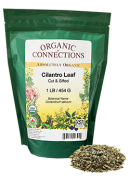
Store in a cool, dry place. Keep out of reach of children.
Cut & Sifted
454g
Enhance both cooked dishes, like beans and stews, and cold dishes, like salsas.
- Cut & Sifted
- Organic
- Absent of harmful chemicals and GMOs
- Unique flavor and aroma
- Indispensable herb in Asian, Middle Eastern, and Latin cuisines

Certified Organic Loose Herbal Teas & Remedies
Organic Connections makes quality food supplements including: Organic ground Cinnamon powder, both Ceylon and Cassia and Organic Slippery Elm Bark powder to provide fibre and support intestinal health. Organic Connections believes in quality, natural and organic ingredients to provide the best in natural health. Read more >- Reviews
- POST A NEW REVIEW
Reviews By Rating
helpful votes
1
1 customers found this product review helpful
Cilantro
By: Articles by a Naturopathic Doctor (N.D.)
Cilantro, a culinary herb that can chelate heavy metals.
Cilantro is one of those herbs that you either love or hate. It seems there is very little middle ground when it comes to this plant and if you Google cilantro, you will see whole websites devoted to loving or hating this culinary herb. Julia Child hates it, Jamie Oliver loves it.
People who dislike cilantro describe it as tasting and smelling like soap or bugs, however, those who love it enjoy the strong, unique taste and aroma of this herb. Science hasn’t confirmed why we either love or hate cilantro, but some evidence is pointing to a genetic influence. Some people even start off hating the taste of cilantro and over time grow to love it and it is thought that you can train your palate to enjoy it. Regardless of your preferences, cilantro is more than a culinary treat; it’s good for you too!
What is Cilantro?
Cilantro can be a little confusing because it is also called coriander. Coriander refers to the dried seeds of the plant, which is used as a spice in foods. The leaves are called fresh coriander, coriander leaves or cilantro and they have the unique flavor and aroma that creates all the controversy. Cilantro is often used in Mexican, Asian, Indian and South American cuisine. If you like cilantro, you’ll love it in tacos, guacamole, salsa, chutneys, salads and rice dishes to name a few.
What is Cilantro used for?
Obviously, cilantro is used to add flavor and interest to cuisine. Cilantro also has many medicinal qualities including reducing cholesterol and triglyceride levels, enhancing liver function, chelating heavy metals, promoting detoxification and improving digestion. It is also a good source of antioxidants and vitamin C. Interestingly, cilantro has a historical use in preventing food spoiling and its antibacterial effects against salmonella may prevent food poisoning. It also has antibacterial effects against H. pylori and E.coli.
How does Cilantro work?
First of all, cilantro is a green leafy herb that is full of nutrients like vitamin C and antioxidants, which enhances the diet and fights the damaging effects of free radicals. It also has numerous active ingredients that work to protect the liver, while also enhancing liver function. Many of the active ingredients are antibacterial and work to kill bacteria like E.coli and salmonella. Cilantro also has the ability to chelate heavy metals like lead and mercury. The unique chemical structure of cilantro can bind to heavy metals in deep body tissues like the brain and spinal cord so they can be excreted through the stool and urine. Often cilantro will mobilize heavy metals in deeper tissues to more superficial, peripheral tissues and other chelating agents can be used to completely remove the heavy metals from the body.
How do you use it?
Fresh cilantro is easy to add to most culinary dishes, just chop and add it. It’s most flavorful raw and loses some of its taste as you cook it. It’s very tasty when added to salads, salsas, guacamole, tacos, bean salads or any dish you feel needs fresher, citrus-like tastes. You can find cilantro in capsules form, which is most often used for heavy metal detoxification. At this time there is no known, researched optimum dosage for supplemental cilantro so simply follow the manufacturer’s directions. Some historical sources suggest 2 teaspoons of cilantro pesto taken daily for three months will detoxify the body of heavy metals like mercury, lead, aluminum and tin.
Cilantro Quick Facts
Parts Used
· Leaves, Seeds.
Applications
· Culinary Excitement, Antibacterial, Antioxidant, Lowering Cholesterol, Digestive Aid, Chelating Heavy Metals
Dosage
· No Known Optimum Dosage, Follow Manufacturer’s Directions.
Works Well With
· Water, Milk Thistle, Dandelion, Burdock, Fiber
Important Information
· It Is Important To Make Sure The Main Organs Of Elimination (Bowels, Kidneys, Liver) Are Working Well Before Using Cilantro To Prevent Heavy Metals Re-Depositing In Other Areas. There Is Insufficient Evidence To Support Using Cilantro In Pregnancy Or Breastfeeding.
Back to Top ↑