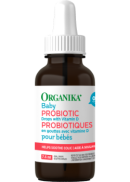
- 25 Million CFU
- Lactobacillus rhamnosus (19070-2)
- 25 Million CFU
- Lactobacillus reuteri (12246)
- 2 μg (80 IU)
- Vitamin D3 (Cholecalciferol)
Sunflower Seed Oil, Fructooligosaccharides
Do not exceed 5 drops in 24 hours. Do not add to hot drink or food.
 Liquid
7.5ml
Mix 5 drops with breast milk or infant formula, or dispense directly from dropper into baby’s mouth, 1 time per day. Recommended age: 0-3 years
- Helps reduce crying and fussing time due to colic in breastfed infants
- Provides live microorganisms to benefit health
- Source of Vitamin D, a factor in normal growth and development
- Helps to build strong bones and teeth
- Helps to maintain immune function
- Shelf Stable

Nourishment Rooted in Nature - 12 New Added
Organika, formulators of Canada’s best-selling Collagen and marine collagen and Bone Broth supports skin and joint health. Organika's health products also include; Organika spirulina, Chlorella, Curcumin to support inflammation, Organika Enhanced Collagen Protein, and Adaptogens to provide balance. Shop Organika here at National Nutrition.ca for quality, Canadian-made supplements. Read more >- Reviews
- POST A NEW REVIEW
WHAT IS COLIC?
Crying is a newborn’s primary mode of communication. It is how they express their wants and needs to their caregivers. Some babies, however, will cry longer and more often than others, for no apparent reason. When a healthy baby has bouts of crying and fussing lasting more than three hours at a time and occurring several times a week, despite the parents’ best efforts to comfort them, they are considered to have colic.
While the exact causes of colic are debated in the medical community, many experts believe that gastrointestinal factors play a role in it due to some of the symptoms present in colicky infants, which are indicative of abdominal discomfort. Those include:
- Tense abdomen
- Arched back
- Pulled up or stiffened legs
How Can Probiotics Help?
During infancy, the foundations for a baby’s gut microbiome are still being laid. The microbes introduced at this stage play a key role in the development of the gut eco-system.
Probiotics can be used to add good bacteria to your baby’s gut, promote the growth of important native bacteria, prevent the growth of harmful bacteria, and maintain an overall healthy digestive system. Certain probiotic species, such as L. reuteri, have been shown to have a direct effect in the reduction of crying and fussing time in colicky babies.
Prebiotics are dietary fibers that feed the good gut bacteria, providing the nutrients they need to continue supporting your baby’s healthy digestion. They help the bacteria help your newborn!
FAQ
Q: Does this product need to be refrigerated?
A: No! Organika’s Baby Probiotic drops can be stored at room temperature. Just make sure to keep it under 25oC! This makes it a great product to be taken on-the-go or when travelling.
Q: Does it matter what strains are in a probiotic?
A: There are many different strains of Probiotics, but research has shown that they don’t all have the same effects. When purchasing probiotics, it is important to make sure it contains clinically-studied strains with proven benefits. Organika’s Baby Probiotic Drops’ probiotic strains are clinically studied and science-backed!
Q: Isn’t more bacteria better?
A: Different probiotics are effective at different levels. More does not necessarily mean better! The effective dose for any given probiotic depends on the strain used and is determined based on clinical studies. The strains used in Organika’s Baby Probiotic Drops have been clinically proven to work at the quantities used in our formula.
Q: Are probiotics safe for infants?
A: There is plenty of research showing that probiotics and prebiotics are not only safe but beneficial when used by infants and young children. Like all of our products, Baby Probiotic adheres to strict quality standards and has been clinically tested to ensure its safety and efficacy.
Q: Is this product free from common allergens?
A: Yes, Baby Probiotic is allergen-free and contains no eggs, preservatives, artificial flavours and colours, yeast, artificial sweeteners, wheat, soy, gluten, or GMO ingredients.
Back to Top ↑