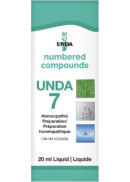
- 12X
- Argentum Metallicum (Silver)
- 4X
- Cytisus Scoparius Aerial Parts
- 4X
- Equisetum Arvense (Common Horsetail) Stem
- 4X
- Hieracium Pilosella (Mouse-Ear Hawkweed) Whole Plant
- 4X
- Juniperus Communis (Common Juniper) Berry
- 4X
- Uva-Ursi (Bearberry) Leaf
Ethanol (beet)‚ purified water.
If symptoms persist or worsen, consult your healthcare practitioner. If you are pregnant or breastfeeding, consult your healthcare practitioner prior to use.
 Liquid
20ml
Adults and Children (12 years and older): Take 10 to 30 drops one to three times daily, or as recommended by your healthcare practitioner.
Children (6-11 years): Take 5 to 15 drops one to three times daily, or as recommended by your healthcare practitioner.
Children (1-5 years): Take 5 to 10 drops one to three times daily, or as recommended by your healthcare practitioner.
Infants (0-11 months): Take 1 to 5 drops one to three times daily, or as recommended by your healthcare practitioner.
Acute Dosing: Follow the above age recommended drop amounts and take every 15 to 60 minutes (up to 12 times per day) or until symptoms improve, then resume general dosing.
- Relief of symptoms associated with difficult urination
- Inflammatory conditions of the kidneys
- Homeopathic Remedy
- Unique herbal and mineral blend

Homeopathic Liquid Compounds for Whole Body Health
Unda formulates homeopathic supplements including Unda #245 for hormone support, Unda #30 for insomnia support, Unda #8 to support circulation and Unda #6 for digestive support. Unda uses quality herbal blends to help support overall health and provide a diverse range of homeopathic supplements. Read more >- Reviews
- POST A NEW REVIEW
Kidney Stones
Improper use of calcium in the body is a major cause of kidney stones, but not the only one. Read on to discover what you can do to help prevent and treat kidney stones naturally...
Excruciatingly painful, kidney stones begin as small crystals that form in the kidneys, usually from excess minerals. They can stay as small as a grain of sand, or grow as large as a grape. While in the kidneys, they can cause dull back ache, mild irritation and lead to infections of the kidney called nephritis.
Excruciating pain results when these stones begin to travel from the kidneys and out into the bladder and urinary tract. Very small stones may pass without you even noticing. For those with larger stones, it is a completely different story. Severe pain accompanied by fever, nausea and extreme distress result. People at this stage are often hospitalized and recommended very strong pain killers, such as morphine.
Stones can be made of calcium, amino acids, uric acid or oxalic acid. The type of the stone can be determined through a combination of medical tests or upon analysis after it is passed, but by and large, about 80% of them are usually of the calcium type. If you have passed a kidney stone, it is important to discover what type of stone it was, as this can help you to alter your diet and supplement regimen to address specific aggravating factors of each.
Other causes of kidney stones are: concentrated urine, a diet high animal protein and dairy products, kidney infection, hyperparathyroidism, excess bone breakdown, and dehydration. Conventional treatment of kidney stones involves the use of painkillers until the stone has passed. If it becomes stuck, various surgical techniques are used to break it down. Kidney stones can be prevented and the pain of acute attacks can be minimized by using nutritional supplements.
BALANCING PH AND THE ROLE OF CALCIUM
Proper calcium balance and absorption is crucial for the prevention and treatment of kidney stones.
As most people know, calcium is a vital nutrient that your body needs on a daily basis - the problem occurs when there is too much calcium in your blood. While it is normal for your blood to contain a certain amount of calcium, it is when it reaches a certain concentration that your body needs to filter this excess out into the kidneys. It is in the kidneys where this excess calcium can begin to form small crystals. These crystals can eventually lead to the formation of stones.
Excess calcium in the blood often occurs from over acidity. When there is too much acid in the blood calcium and other minerals are pulled out of your bones to neutralize it. This also plays a role in the development of osteoporosis, but in respect to kidney stones, it causes your blood to shunt the excess calcium to the kidneys, where over time stones can form. To prevent this from happening, it is important to maintain a healthy and balanced ph.
Your acid alkaline balance is crucial if you have kidney stones or are at a risk of them. Heredity is a factor, so if someone in your immediate family has them, pay particular attention to your PH.
Using a green food supplement will usually raise your ph, making it more alkaline and thereby reducing the leaching of calcium. See the list below for types of green foods and dosages useful for balancing PH in respect to kidney stones. Avoid the mineral potassium that is often used to help neutralize acidity, as it can often irritate this condition. You can easily monitor your ph daily with convenient ph paper or an electronic ph meter. This allows you to alter your diet and supplement program accordingly.
OPTIMIZING CALCIUM ABSORPTION
Excess calcium in the blood can also be caused by an impairment of the utilization of calcium. Certain minerals and other nutritional cofactors are needed by the body to integrate calcium into the bones and for use in other tissues. Ensure that you are getting enough of the minerals silica, zinc, and magnesium, as they are all needed for the uptake of calcium by your bones. Also ensure that you are getting enough fibre, as it helps the body excrete excess calcium that might otherwise be reabsorbed by the intestines when it is not needed. A daily fibre supplement is a convenient and effective way of increasing your fibre intake and reducing re-absorption of unneeded calcium. Other important nutrients for calcium utilization are: vitamin D, soya extracts, boron, and primrose oil.
Taking a calcium supplement does not cause kidney stones, although it is important that you take yours with a meal as taking it on an empty stomach inhibits proper utilization. Ensure that it is of a high quality such as a citrate or a chelate type. If you have osteoporosis, use the hydroxyapatite form, as it the easiest to integrate into new bone mass and is less likely to contribute to higher calcium levels in the blood.
Dietary interventions to prevent kidney stones include drinking 2-2.5 litres of filtered water, juice or herbal tea daily, which keeps the urine diluted. If the stones contain uric acid include black cherry juice in your fluid intake. To prevent concurrent kidney or bladder infections drink unsweetened cranberry juice. Eat plant source protein, like beans, and egg whites. Consume foods that are high in B6 and vitamin A to prevent stones. This includes fish, whole grains, legumes, carrots, yams, apricots, peaches, cantaloupe and mangoes.
To avoid calcium oxalate stones do not eat foods containing oxalic acid, for example, spinach, rhubarb and tomatoes. Minimize the consumption of sugar, caffeine, antacids, alcohol and salt because they increase urinary calcium. Animal protein and dairy products increase urinary calcium and uric acid and should also be avoided.
Back to Top ↑