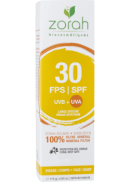
- 24.70%
- Non-Nano Zinc Oxide
*Ingredient from organic farming
For external use only. Avoid contact with eyes.
 Cream
Cream
115ml
First, warm the product in the palm of your hand. Then, apply to areas that are exposed to the sun, 15 minutes prior to exposure. Re-apply every 2 hours. Re-apply after swimming or sweating, immediately after towelling off. For babies under 6 months old, consult a health professional.
- Gentle formula with no harsh chemicals
- Light, non-greasy texture
- Applies easily and leaves no white residue
- Nourishes and moisturizes skin
- Suitable for all skin types
- Animal cruelty free, Vegan, GMO free, Gluten free

Botanical luxury for luminous skin at National Nutrition
Zorah was born from the dream of a young aid worker in Morocco, Mélissa Harvey, who wanted to help the Berber women producing argan oil. Back in Montreal, she began selling her oil at the Jean-Talon Market, sharing with her customers the incredible topical benefits of argan oil. It was through a chance encounter at that same market with a renowned biochemist that Mélissa decided to take things further—combining science and nature to develop highly effective products that respect both people and the environment. Read more >- Reviews
- POST A NEW REVIEW
SUNBURN
The skin is the largest organ in the body. Burns can severely injure the skin and can require medical attention. First-degree burns make the skin turn red. Second-degree burns form blisters. Third-degree burns look charred and cause damage to both the skin and underlying tissue. Excessive heat, friction, chemicals, electricity and radiation can cause burns. Sunburns are a form of radiation burn. The most common complications of a burn are shock, dehydration and infection. The skin plays a large role in fluid regulation.
A burn causes a large loss of fluid form the skin and can lead to dehydration. The skin acts as a barrier to microbes. When the skin is compromised infectious agents have easy access to the exposed area. The body is also weakened by the burn and less able to fight off infections.
For a severe burn speedy medical treatment is the best first aid. Keep the person calm, quiet and hydrated to prevent shock. For common burns there are many topical treatments. Aloe vera gel can be used as needed to release heat and decrease pain. Vitamin E oil can be applied to burns that have not broken the skin open. It reduces scarring and inflammation. Diluted calendula tincture applied topically will prevent infection.
Use sunscreens to protect against sunburn. Sunscreens containing physical sun blockers like zinc oxide and titanium dioxide block both UVA and UVB rays. New technology makes the particles so small that they go onto the skin with no white coating. The protective agents need not be absorbed into the skin in order to work therefore they are less harmful to the body. You can find these sunscreens at health food stores and through National Nutrition.
A diet high in whole grains, raw fruits and vegetables provides a good source of vitamins, minerals and antioxidants. Drink lots of water to prevent dehydration. Yellow fruits and vegetables containing vitamin A should be consumed. B vitamins support the immune system and can be acquired by eating nutritional yeasts. Foods high in potassium such as bananas, potatoes and tomatoes should be eaten to balance electrolytes. Consume ocean-going fish, nuts, seeds and cold pressed oils for essential fatty acids.
Skin Protection
Many well known brands may contain a number of ingredients that have the potential to be harmful if absorbed into the skin. Others contain ingredients that degrade in heat and sun, potentially causing more damage than the UV rays they were meant to protect you from. Still others contain ingredients that can mimic hormones like estrogen. Some of your favourite brands may also be making exaggerated or misleading claims in terms of SPF protection.
Here are a list of ingredients you may want to avoid when buying a 'healthy' sunscreen:
PEG Emulsifiers (polyethylene glycol) - can be carcinogenic and/or cause skin reaction.
PABA - Rarely put in sunscreen anymore. It is said that at least 40% of the population is sensitive to it.
Benzophane (Benzophane 3)
Homosalate B - lab tests suggest that all of these chemicals can have estrogenic activity
Oxy/Methoxycinnamate (cetyl Cinnamates)
Parabens - difficult to avoid, as it is contained in many moisturizing and make-up products. Can also mimic estrogen and disrupt hormone balance in the body.
Padimate-O, Parsol 1789 - When these chemicals come in contact with sunlight, they can cause damage to DNA, said to be worse and more difficult to repair than the damage inflicted by UV rays alone. They are also absorbed into the skin, causing internal damage, as well.
Retinyl palmitate - A form of vitamin A with proven anti-ageing effects UNTIL exposed to the sun, in which case this substance has the potential to speed the development of skin tumours and lesions.
Understanding UVA & UVB
Aside from ingredients, it is important, when choosing a sunscreen, to understand the difference between UVA and UVB rays, as well as what an SPF rating is really telling you. UVB rays are what we most know as the 'tanning rays', these rays only penetrate the skin's outermost/top layer, the epidermis. These rays are the primary cause of sunburn. SPF ratings are based on how well the sunscreen protects from UVB rays alone. UVA rays, although some years ago thought to be harmless (This is when they were promoting tanning beds as the 'healthy' way to tan.), are now known to be potentially more damaging than UVB rays. Similar to an x-ray, they has the ability to penetrate light clothing, windshields, office windows and more.
UVA rays reach the deeper dermis layer of skin, which after a certain age cannot repair itself as effectively, if at all, causing accelerating ageing of the skin. In the United States, the FDA has yet to finalize a single draft of sunscreen regulations. In fact, since it was originally written in 1978, it is still not finalized and therefore sunscreens do not have to include UVA protection, nor do they have to comment on the level of UVA protection they provide. Similarly, sunscreen companies have been asked to keep the maximum SPF rating at SPF 50, so as not to give consumers false assurance of protection, nor to cultivate the mentality that they can be out in the sun all day. Not only do many companies continue to advertise SPF 70, 80 and higher, they simply have no evidence to support these claims. Experts are suggesting that using mineral based sunscreens, with zinc oxide or titanium dioxide, have a better safety profile than their chemical based competitors, as well as effective UVA protection.
The Environmental Workers group puts out a yearly list, in which they rank some well-known sunscreens available in the United States and Canada. Their rankings are based on the safety and efficacy of the ingredients to both protect the skin from sun damage and include ingredients that do not pose any other potential risks to health. Brands like Soleo Organics, Kabana, Coola and Badger all rate high in their list.
How Your Diet Can Assist With Skin Protection:
Something else to consider in terms of skin care prevention, is what we are putting into our body. There is a small amount of research to show that a diet high in antioxidants or supplementation if one is unable to achieve these levels with food alone, may help to prevent the development of unhealthy skin cells. Green tea (EGCG), bilberry, ginkgo, milk thistle, ginger and hawthorn are all well-known antioxidant herbs/plants that have been used traditionally to protect the skin.
Remember To Seek Shade & Cover Up
No group has come out and said that the health concerns associated with many name brand sunscreens outweigh the benefit they may have in terms of sun protection. They have suggested, however, that sunscreen not be your first line of defence. As much as we love a tan, don't over due it. Seek shade throughout the day, cover up and avoid hot mid-day sun, if possible (12-3pm).
Vitamin D
Don't forget about vitamin D. One of the major sources of vitamin D is the sun and sunscreens prevent our absorption of this absolutely essential vitamin. In fact, sun exposure, although it has been causally linked to both basal cell and squamous cell carcinoma, has no proven connection to melanoma. Melanoma has, however, been connected to vitamin D deficiency. As little as 10 minutes a day of unprotected sun can significantly boost levels. Remember sun exposure and sun burn are two very different things. Never allow yourself to burn.
Back to Top ↑