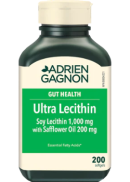
- 1000 mg
- Soy lecithin [Glycine max] (beans)
- 200 mg
- Safflower oil [Carthamus tinctorius] (seeds)
Gelatin, glycerin
Do not use if you are pregnant or breastfeeding. Consult a health care practitioner prior to use if you are taking blood thinners.
 Softgels
200 Softgels
Adults: Take 3 softgels daily, before a meal.
- Supports And Protects Healthy Liver Function
- Helps To Regulate Fat In The Body
- Protect Both The Brain And Cardiovascular Systems
- Helps To Support The Nervous System
- Non-GMO, and free from dairy, gluten, and tree nuts

Empowering Canadians with Natural Wellness for Over 75 Years
Adrien Gagnon is a Canadian Naturopath that has been formulating natural health products for over 70 years. Adrien Gagnon supports many health concerns including; Energy with Super Energex, Women’s health with formulations like Feminex Meno Relief & Healthy Legs for varicose veins, Joint health with Glucosamine & Collagen Type 2, and overall health with vitamins and minerals such as calcium, magnesium and zinc, plus many more. They’re constantly finding innovative ways to offer top quality supplements with the best natural ingredients. Read more >- Reviews
- POST A NEW REVIEW
LECITHIN
By: Articles by a Naturopathic Doctor and a Holistic Nutritionist
Lecithin has been used for cardiovascular disease, improving memory, repairing the liver, AIDS, chronic fatigue syndrome, herpes and other immune system disorders...
Sometimes there is confusion surrounding exactly what makes up lecithin. In biochemistry, lecithin is just another word used for phosphatidyl choline. Generally in other industries and in general public knowledge, lecithin is an emulsifying agent that contains anywhere from 20-90% phosphatidyl choline, as well as a variety of other lipids.
These other lipids are mostly choline, sterols, and smaller amounts of the essential fatty acid linoleic acid and inositol. Lecithin has been used for cardiovascular disease, improving memory, repairing the liver, AIDS, chronic fatigue syndrome, herpes, multiple sclerosis (MS) and other immune system disorders.
Emulsifying Agent
It is common knowledge that under normal circumstances oil and water won't mix. The term "emulsifier" is used to describe a substance that makes fat soluble in water. Its emulsifying properties allow it to prevent fatty build-ups in the body, for example in the blood vessels and liver. It can also aid in digestion by helping fat in foods be more easily digested.
Lecithin And The Liver
Interestingly, your liver naturally produces lecithin in small amounts. The liver requires lecithin to function properly, and supplementation can help to protect the liver against the scarring and cirrhosis caused by chronic alcoholism. Research has also shown that lecithin supplementation can help to slow the degeneration caused by chronic liver diseases like viral hepatitis.
Cholesterol Regulation
Lecithin helps maintain cholesterol levels because it's healthy fats help to build up "good" HDL cholesterol. HDL cholesterol is responsible for moving fat, from storage or plaques, into the liver where processing and excretion of fat occurs. By decreasing fatty build-up on arteries it helps to regulate blood pressure, and prevent the formation of arteriosclerosis.
Memory
Lecithin is a large component of all cell membranes because it regulates the passage of substances into and out of the cell. The choline it contains can cross the blood-brain barrier to produce brain chemicals (neurotransmitters) that aid in memory - in particular acetylcholine.
Multiple Sclerosis (MS)
The protective coating of the brain and nerve cells are also composed of choline. In this respect, lecithin helps to make the myelin sheath that surrounds the nerves responsible for conducting messages from the brain to the muscles and organs of your body. In this way, the myelin sheath performs a similar function to the insulation sheathing of electrical wires. If this protective sheath degenerates, a "shorting out" of the message that the nerve is carrying occurs, which can result in the symptoms associated with multiple sclerosis (MS).
Where Does Lecithin Come From?
Most of the commercially used sources of lecithin are extracted from soybeans, although some may be from egg yolk, or sunflower or grape seeds. In fact, new research is finding greater value from supplements made from fresh egg yolk. Lecithin can be purchased in capsules, as granules, or even as a liquid. The granules and liquid should be refrigerated for freshness because the essential fatty acid components can go rancid.
How Can I Take Lecithin?
The general dosage range is between 1200 and 3600mg of lecithin daily in divided doses (often three times daily). For liver and cardiovascular health and as a general nutritional supplement, dosing of lecithin can be on the lower end of the dosage range. It is generally considered best to dose at the highest end of the range for more degenerative conditions like cirrhosis of the liver and multiple sclerosis.
Lecithin – Quick Facts
Food Sources
· Egg Yolk, Soybeans, Grains, Legumes, Fish, Wheat Germ, Nutritional Yeast.
Deficiency Symptoms
· Constipation, Hair Loss, High Cholesterol, Irritability, Mood Swings, Eczema, Fatty Build-Up In The Body, Gastric Ulcers, High Blood Pressure, Intolerance To Dietary Fat, Kidney Or Liver Impairment, Infertility, Stunted Growth.
Optimum Dosage
· 1200-3600mg In Capsules Or 2 Tbsp Of Granules Daily. (Clinical Doses May Be Higher As Recommended By Your Practitioner).
Works Well With
· Vitamin B Complex
Important Information
· When Using Lecithin Along With Calcium Supplementation Use A Chelated Calcium Supplement.
· Oral Contraceptives, Estrogen, Sulfa Drugs, Food Processing, Coffee And Alcohol Deplete Lecithin.
· If You Have A Sensitivity To Soy Products Use Caution Because Most Lecithin Is Sourced From Soybeans.
Back to Top ↑