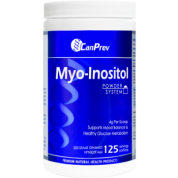
1 capsule contains:
- 500mg
- myo-Inositol
Capsule Ingredient:
Hypromellose
Hypromellose
Important Information:
Contains no wheat, gluten, nuts, peanuts, sesame seeds, sulphites, mustard, soy, dairy, eggs, fish, shellfish or any animal by product. For adult use only. Consult a health care practitioner prior to use if pregnant or breastfeeding.
Format
 Veggie Caps
90 V-caps
Dosage
Take one capsule daily with or without food, or as directed by a qualified health care practitioner.
Product Information:
- Supports normal cell growth and differentiation.
- Supports mood balance.
- Convenient.
- Normal Cell Growth.
- Cellular signal transduction.

Innovative Formulas by AOR Canada found at National Nutrition
AOR Canada is the innovative formulators of Canada’s best-selling antioxidant support, AOR Advanced B Complex and AOR Tri-B12. They are also known for their top bone health supplements, Ortho Adapt and Bone Basics. You can also SHOP AOR's Nattokinase, and trusted Curcumin Ultra, Curcumin Active and Curcumin95 inflammation support at National Nutrition.ca. AOR are leaders in natural health with innovative product development. Read more >What People Are Saying:
- Reviews
- POST A NEW REVIEW
Reviews for:
Inositol Caps - 90 V-Caps
(2 reviews)
Reviews By Rating
helpful votes
0
0 customers found this product review helpful
More Info
Inositol(myo-inositol) is a B-vitamin-like simple polyol. Most people take small quantities of this nutrient in their multivitamins or B-complex pills without thinking about it - not for any reason, but just because it's there. But in recent years, research has uncovered the powerful influence of very high doses of this nutrient on the mind - and its potential to heal wounded souls.
Inositol is a raw material to the key neuronal phospholipid phosphatidylinositol 4,5-bisphosphate (PIP2), which occupies a lynchpin place in the phosphoinositide cycle. This cycle is essential to multiple brain signaling systems, delivering messages from a variety of hormones and neurotransmitters (brain messenger-molecules) from receptors on the neuronal membrane into the heart of the cell. Signaling systems dependent on the phospohoinositide system include neurotransmitters, which are key targets to antidepressant drugs.
One such neurotransmitter is serotonin, the target of the selective serotonin reuptake inhibitor (SSRI) drugs, like fluoxetine (Prozac), citalopram (Celexa), sertraline (Zoloft), and paroxetine (Paxil). Another is norepinephrine, which is important to feeling energized, and a main target of both the older tricyclic antidepressants and the new selective noradrenaline reuptake inhibitors (NARIs, such as Vestra/Edronax (reboxetine)). Still other, "dual inhibitor" drugs act on both of these neurotransmitter systems; these include venlafaxine (Effexor) and duloxetine (Cymbalta).
Because the brain needs the cycle to transmit messages from neurotransmitters into the neuron, any weakness in the system means that neuronal communication breaks down, even if neurotransmitter levels are adequate.
A decade ago, scientists armed with an emerging understanding of the phosphoinoside cycle began studies of high-dose supplementation with inositol powder by people suffering with a variety of psychological disorders linked to abnormal phosphoinositide signaling. These trials have found inositol to be a safe, natural nutritional approach which delivers effective relief for many of these dis-eases - often providing results as effective as psychiatric drugs, but without the side effects and potential for addiction.
Depression
In one of the first clinical trials, researchers assembled 39 people with major depression or bipolar depression, who quit taking their antidepressant medications three days to a week before the trial began. For the next four weeks, sufferers took either twelve grams of inositol powder a day (two teaspoons, twice daily, in juice) or a placebo powder (glucose).
Hamilton depression Rating Scale (HAM-D) scores fell during the first two weeks in both groups. An initial response even on a dummy substance is often seen early on in clinical trials for depression, because of the power of hope actually affects brain function. But while those assigned to take the stand-in powder remained stuck at this plateau from then on, people taking inositol powder experienced an additional 20.5% drop in their depression scores by the end o the trial. Plus, inositol was not associated with manic episodes in the victims of bipolar depression - an important result, since many treatments for this disorder push its victims into the opposite pole, with disastrous consequences.
Inositol had loosened the jaws of the black dog of depression. And this was just the beginning.
Bipolar Depression
Buoyed by the success of patients with bipolar affective disorder depression who had taken inositol in the first trial, scientists next initiated a trial using only victims of this specific disease. In this trial, 24 men and women suffering with bipolar depression were randomly placed into groups supplementing with either 12 grams of inositol powder or an equal amount of glucose powder as a placebo for six weeks. All patients kept up their standard medications throughout the trial.
At the end of the trial, half of the people taking the inositol powder supplement enjoyed a 50% or greater relief of their depression as measured on the HAM-D; likewise on the Clinical Global Improvement (CGI) scale, the same inositol supplementers were seen to be "much" or "very much" improved. By contrast, only 30% of those taking the placebo experienced such benefits. Similarly, twice as many people supplementing with the inositol powder improved by 50% or more on the Montgomery-Asberg Depression Rating Scale (MADRS) as people stuck with the placebo.
The numbers did not meet the statisticians' criteria for "significance;" however, they were so consistent that the researchers concluded that this was likely just the result of the small number of participants, and perhaps reflected the need for a more precise way of evaluating this specific class of depression. The effects the physicians saw in their patients lives left them confident that the power of inositol in victims of bipolar depression is real.
Eating Disorders
Twenty-four bulimic or binge eating patients took part in a double-blind, placebo-controlled crossover trial in which, after an initial run-in period, they took either 18 grams of inositol powder or a sugar placebo for six weeks each. They then switched over to taking the substance, which they had not taken in the previous period, again for six weeks. No one knew which sweet powder a given person was taking at a given time.
When the "blinds" came off at the end of the study, it was revealed that these eating disorder victims experienced a 45% alleviation in their Visual Analog Scale of severity of binge eating (VAS-B) scores, along with a 30% improvement on their CGI scores, a 24% better Eating Disorder Inventory (EDI) result, and a 28% healthier Eating Attitude Test (EAT) result while supplementing with inositol powder. While patients were also slightly better off during their time on the sugar powder than they had been before the trial began, the differences were the weak effects to be expected from a mild "placebo effect:" just a 15.5% shift on the VAS-B, no improvement on the CGI, a 9.9% blip on the EDI, and an 18.6% change on the EAT. None of the changes associated with the placebo period was strong enough to be statistically significant, unlike the potentially life-saving effects seen with inositol.
Panic Disorder
In yet another study, 21 people with panic disorder who wanted to escape the side effects of their drug therapies completed a double-blind trial of inositol powder. All stopped taking their standard medications one week before starting the study; after a one week run-in period, the participants supplemented with one of two sweet powders - either inositol or a placebo powder (6 grams of glucose or mannitol, twice daily) - for four weeks, after which they switched over to the alternative powder for the remaining four weeks. Their initial condition, and their progress, was quantified using the HAM-D, along with the Hamilton Rating Scale for Anxiety (HAM-A) and a panic score that based on the number of panic attacks a person suffered weekly and the severity and number of symptoms associated with each attack.
Every outcome was improved while people were supplementing with inositol powder. Inositol users suffered over 40% fewer panic attacks per week than they did when only taking a sugar. Their panic scores were only a third as high as they were during their time on a placebo, and their phobia scores were more than a third lower. And while the results did not cross the threshold of statistical significance, raw HAM-D and HAM-S scores also fell more in the inositol supplementation period than when they were swallowing the powdered sweeteners. Clearly, inositol powder lifted of much of the desperate burden of nameless anxiety from the shoulders people who took it.
In a second trial, researchers pitted inositol head-to-head against fluvoxamine (Luvox) in a double-blind, placebo-controlled, random-order crossover study. For one month, twenty victims of panic disorder took either a dummy Luvox tablet and real inositol powder (18 grams), or real Luvox and powdered sugar as a stand-in for inositol; then, they were switched to the opposite combination for a second month.
It was exciting enough when the study revealed that by most criteria, people got just as much relief from panic by using inositol supplements as they did from taking the drug: HAM-A, phobia, and CGI scores all improved by about the same amount in both groups. This alone is enough to merit the attention of panic disorder victims and their physicians - especially when you consider how much more often drug users traded symptomatic relief for side effects such as nausea (twice as common) and tiredness (nine times more likely).
But in fact, the study revealed that inositol is actually more effective than fluvoxamine in reducing the number of panic attacks suffered, cutting weekly attacks by 57% while the drug only reduced them by 41%!
Obsessive-Compulsive Disorder (OCD)
Inositol powder has also been documented to relieve the maddening fixations of OCD. In a double-blind, placebo-controlled crossover study, thirteen obsessive-compulsive men and women completed a cycle of taking 18 grams of either inositol powder or a sugar placebo each day for six weeks, followed using the other treatment for the next six weeks.
Even on a preliminary analysis, people experienced 12.5% greater relief of obsessive symptoms while taking inositol powder, as measured on the Yale-Brown Obsessive-Compulsive Scale (Y-BOCS), than when taking the placebo. Even this was a statistically significant difference. But the full power of inositol was only revealed when the researchers re-analyzed the data after excluding the patients who had initially been referred from a clinic's "resistant" patients only, looking instead at patients from clinics whose patients had a wider spectrum of patients. Looking at these "mixed" obsessive-compulse patients, the improvement experienced from taking inositol powder was nearly double that reported for the placebo period (181% as great an improvement).
Important Notes About Inositol Powder
In all of the placebo-controlled trials, safety was monitored using various blood and urine tests for things like liver enzymes, blood cell counts, and indicators of kidney function; no significant changes were noted, nor was there any difference between the people taking real inositol powder and those just swallowing sugar. Side effects were all minor, and were just as common in the placebo group as in the people taking inositol. As is common in psychological disturbances responsive to SSRI drugs, there was a high dropout rate in the trials - but it was equally spread out among groups taking inositol and groups fed sugars. In every respect assayed, the studies found high-dose inositol to be an extremely safe, well-tolerated supplement.
However exciting these results may be, inositol powder is not a panacea for psychic ills. Inositol is of no benefit in premenstrual dysphoric disorder, anergic schizophrenics, Alzheimer's disease victims, or children with autistism; and in fact, high-dose inositol made children with attention deficit disorder worse. It appears that inositol is effective nutritional support for people with disorders that usually respond to SSRI drugs, and not to those that don't. That also probably explains why trials have found that adding inositol supplementation to existing SSRI usage does not yield further improvements in people with depression, partially-responsive OCD, or depression that is immune to the effects of the SSRIs themselves.
Other Benefits
Inositol is also a lipotropic factor, helping the body to metabolize fatty substances so that they do not accumulate in the liver, and scientists have published reams of preclinical research documenting its immune boosting powers, especially in combination with inositol hexaphosphate (IP6). But you can reap these benefits at much lower doses than those that are needed to deliver the rays of sunshine into the depths of the mental prisons studied in the trials in this discussion. For people bound by such disorders, inositol powder is a new orthomolecular key to the shackles that bind their minds.
Inositol is a raw material to the key neuronal phospholipid phosphatidylinositol 4,5-bisphosphate (PIP2), which occupies a lynchpin place in the phosphoinositide cycle. This cycle is essential to multiple brain signaling systems, delivering messages from a variety of hormones and neurotransmitters (brain messenger-molecules) from receptors on the neuronal membrane into the heart of the cell. Signaling systems dependent on the phospohoinositide system include neurotransmitters, which are key targets to antidepressant drugs.
One such neurotransmitter is serotonin, the target of the selective serotonin reuptake inhibitor (SSRI) drugs, like fluoxetine (Prozac), citalopram (Celexa), sertraline (Zoloft), and paroxetine (Paxil). Another is norepinephrine, which is important to feeling energized, and a main target of both the older tricyclic antidepressants and the new selective noradrenaline reuptake inhibitors (NARIs, such as Vestra/Edronax (reboxetine)). Still other, "dual inhibitor" drugs act on both of these neurotransmitter systems; these include venlafaxine (Effexor) and duloxetine (Cymbalta).
Because the brain needs the cycle to transmit messages from neurotransmitters into the neuron, any weakness in the system means that neuronal communication breaks down, even if neurotransmitter levels are adequate.
A decade ago, scientists armed with an emerging understanding of the phosphoinoside cycle began studies of high-dose supplementation with inositol powder by people suffering with a variety of psychological disorders linked to abnormal phosphoinositide signaling. These trials have found inositol to be a safe, natural nutritional approach which delivers effective relief for many of these dis-eases - often providing results as effective as psychiatric drugs, but without the side effects and potential for addiction.
Depression
In one of the first clinical trials, researchers assembled 39 people with major depression or bipolar depression, who quit taking their antidepressant medications three days to a week before the trial began. For the next four weeks, sufferers took either twelve grams of inositol powder a day (two teaspoons, twice daily, in juice) or a placebo powder (glucose).
Hamilton depression Rating Scale (HAM-D) scores fell during the first two weeks in both groups. An initial response even on a dummy substance is often seen early on in clinical trials for depression, because of the power of hope actually affects brain function. But while those assigned to take the stand-in powder remained stuck at this plateau from then on, people taking inositol powder experienced an additional 20.5% drop in their depression scores by the end o the trial. Plus, inositol was not associated with manic episodes in the victims of bipolar depression - an important result, since many treatments for this disorder push its victims into the opposite pole, with disastrous consequences.
Inositol had loosened the jaws of the black dog of depression. And this was just the beginning.
Bipolar Depression
Buoyed by the success of patients with bipolar affective disorder depression who had taken inositol in the first trial, scientists next initiated a trial using only victims of this specific disease. In this trial, 24 men and women suffering with bipolar depression were randomly placed into groups supplementing with either 12 grams of inositol powder or an equal amount of glucose powder as a placebo for six weeks. All patients kept up their standard medications throughout the trial.
At the end of the trial, half of the people taking the inositol powder supplement enjoyed a 50% or greater relief of their depression as measured on the HAM-D; likewise on the Clinical Global Improvement (CGI) scale, the same inositol supplementers were seen to be "much" or "very much" improved. By contrast, only 30% of those taking the placebo experienced such benefits. Similarly, twice as many people supplementing with the inositol powder improved by 50% or more on the Montgomery-Asberg Depression Rating Scale (MADRS) as people stuck with the placebo.
The numbers did not meet the statisticians' criteria for "significance;" however, they were so consistent that the researchers concluded that this was likely just the result of the small number of participants, and perhaps reflected the need for a more precise way of evaluating this specific class of depression. The effects the physicians saw in their patients lives left them confident that the power of inositol in victims of bipolar depression is real.
Eating Disorders
Twenty-four bulimic or binge eating patients took part in a double-blind, placebo-controlled crossover trial in which, after an initial run-in period, they took either 18 grams of inositol powder or a sugar placebo for six weeks each. They then switched over to taking the substance, which they had not taken in the previous period, again for six weeks. No one knew which sweet powder a given person was taking at a given time.
When the "blinds" came off at the end of the study, it was revealed that these eating disorder victims experienced a 45% alleviation in their Visual Analog Scale of severity of binge eating (VAS-B) scores, along with a 30% improvement on their CGI scores, a 24% better Eating Disorder Inventory (EDI) result, and a 28% healthier Eating Attitude Test (EAT) result while supplementing with inositol powder. While patients were also slightly better off during their time on the sugar powder than they had been before the trial began, the differences were the weak effects to be expected from a mild "placebo effect:" just a 15.5% shift on the VAS-B, no improvement on the CGI, a 9.9% blip on the EDI, and an 18.6% change on the EAT. None of the changes associated with the placebo period was strong enough to be statistically significant, unlike the potentially life-saving effects seen with inositol.
Panic Disorder
In yet another study, 21 people with panic disorder who wanted to escape the side effects of their drug therapies completed a double-blind trial of inositol powder. All stopped taking their standard medications one week before starting the study; after a one week run-in period, the participants supplemented with one of two sweet powders - either inositol or a placebo powder (6 grams of glucose or mannitol, twice daily) - for four weeks, after which they switched over to the alternative powder for the remaining four weeks. Their initial condition, and their progress, was quantified using the HAM-D, along with the Hamilton Rating Scale for Anxiety (HAM-A) and a panic score that based on the number of panic attacks a person suffered weekly and the severity and number of symptoms associated with each attack.
Every outcome was improved while people were supplementing with inositol powder. Inositol users suffered over 40% fewer panic attacks per week than they did when only taking a sugar. Their panic scores were only a third as high as they were during their time on a placebo, and their phobia scores were more than a third lower. And while the results did not cross the threshold of statistical significance, raw HAM-D and HAM-S scores also fell more in the inositol supplementation period than when they were swallowing the powdered sweeteners. Clearly, inositol powder lifted of much of the desperate burden of nameless anxiety from the shoulders people who took it.
In a second trial, researchers pitted inositol head-to-head against fluvoxamine (Luvox) in a double-blind, placebo-controlled, random-order crossover study. For one month, twenty victims of panic disorder took either a dummy Luvox tablet and real inositol powder (18 grams), or real Luvox and powdered sugar as a stand-in for inositol; then, they were switched to the opposite combination for a second month.
It was exciting enough when the study revealed that by most criteria, people got just as much relief from panic by using inositol supplements as they did from taking the drug: HAM-A, phobia, and CGI scores all improved by about the same amount in both groups. This alone is enough to merit the attention of panic disorder victims and their physicians - especially when you consider how much more often drug users traded symptomatic relief for side effects such as nausea (twice as common) and tiredness (nine times more likely).
But in fact, the study revealed that inositol is actually more effective than fluvoxamine in reducing the number of panic attacks suffered, cutting weekly attacks by 57% while the drug only reduced them by 41%!
Obsessive-Compulsive Disorder (OCD)
Inositol powder has also been documented to relieve the maddening fixations of OCD. In a double-blind, placebo-controlled crossover study, thirteen obsessive-compulsive men and women completed a cycle of taking 18 grams of either inositol powder or a sugar placebo each day for six weeks, followed using the other treatment for the next six weeks.
Even on a preliminary analysis, people experienced 12.5% greater relief of obsessive symptoms while taking inositol powder, as measured on the Yale-Brown Obsessive-Compulsive Scale (Y-BOCS), than when taking the placebo. Even this was a statistically significant difference. But the full power of inositol was only revealed when the researchers re-analyzed the data after excluding the patients who had initially been referred from a clinic's "resistant" patients only, looking instead at patients from clinics whose patients had a wider spectrum of patients. Looking at these "mixed" obsessive-compulse patients, the improvement experienced from taking inositol powder was nearly double that reported for the placebo period (181% as great an improvement).
Important Notes About Inositol Powder
In all of the placebo-controlled trials, safety was monitored using various blood and urine tests for things like liver enzymes, blood cell counts, and indicators of kidney function; no significant changes were noted, nor was there any difference between the people taking real inositol powder and those just swallowing sugar. Side effects were all minor, and were just as common in the placebo group as in the people taking inositol. As is common in psychological disturbances responsive to SSRI drugs, there was a high dropout rate in the trials - but it was equally spread out among groups taking inositol and groups fed sugars. In every respect assayed, the studies found high-dose inositol to be an extremely safe, well-tolerated supplement.
However exciting these results may be, inositol powder is not a panacea for psychic ills. Inositol is of no benefit in premenstrual dysphoric disorder, anergic schizophrenics, Alzheimer's disease victims, or children with autistism; and in fact, high-dose inositol made children with attention deficit disorder worse. It appears that inositol is effective nutritional support for people with disorders that usually respond to SSRI drugs, and not to those that don't. That also probably explains why trials have found that adding inositol supplementation to existing SSRI usage does not yield further improvements in people with depression, partially-responsive OCD, or depression that is immune to the effects of the SSRIs themselves.
Other Benefits
Inositol is also a lipotropic factor, helping the body to metabolize fatty substances so that they do not accumulate in the liver, and scientists have published reams of preclinical research documenting its immune boosting powers, especially in combination with inositol hexaphosphate (IP6). But you can reap these benefits at much lower doses than those that are needed to deliver the rays of sunshine into the depths of the mental prisons studied in the trials in this discussion. For people bound by such disorders, inositol powder is a new orthomolecular key to the shackles that bind their minds.
Back to Top ↑