

Niacin (Vitamin B3) : Benefits, Sources & Side Effects
Updated Feb. 28th, 2025 | Read Time: 6 Minutes | What You Will Learn:
- Key Health Benefits of Niacin
- Improves Cardiovascular Health
- Niacin Benefits For Metabolism
- Improves Nervous System and Mental Health
- Helps To Combat Allergies
- Symptoms of A Niacin Deficiency
- Niacin Supplements and Dosage
- Avoiding The Niacin Flush While Still Reaping Its Benefits
- Potential Side Effects & Cautions
- Nutritional Information
- Reader Comments (4)
Niacin (nicotinic acid) is one form of a water-soluble vitamin, commonly known as vitamin B3. The body can produce its niacin from tryptophan with the help of vitamins B1, B2 and B6. There are several different forms of vitamin B3, including niacin, niacinamide (non-flushing niacin), and inositol hexaniacinate (IHN), which is also known as no-flush or flush-free niacin. Although niacin cannot be converted into nicotinamide directly in the body, both substances can be converted into NADH for use as a cofactor in cellular energy production. Let's explore niacin specifically and its benefits on your health.
Key Health Benefits of Niacin
Improves Cardiovascular Health
It is the only form of vitamin B3 that improves cholesterol levels. It is involved in chemical reactions that metabolize fats in the body. It affects the body's cholesterol balance similarly to many statin drugs, although through a different mechanism. Niacin blocks the production of VLDL (a precursor to the "bad" LDL cholesterol) and increases the level of HDL ("good" cholesterol) in the body. In addition to changing the lipid profile of the body, niacin also triggers cells to release histamine, a chemical responsible for dilating blood vessels. This affects both our internal blood vessels and the blood vessels in our skin. When the blood vessels in the skin dilate, it causes a reddening that is commonly referred to as a "niacin flush". It is through this dilatory effect that niacin can benefit the circulation in cardiovascular disease, as well as other diseases where circulation is compromised.
For example, niacin can help to increase circulation in the extremities of diabetic people suffering from numbness due to reduced blood flow. Interestingly, these processes of cardiovascular benefit are tied to the conversion of niacin to NADH and thus are provided only by niacin supplementation, and not by using the non-flushing forms of niacin (niacinamide or IHN).
Niacin Benefits For Metabolism
Niacin also benefits metabolism because it's involved in several different metabolic processes in the body, and it even plays a part in the production of stomach acid and bile for the initial digestion of food. It affects blood sugar by acting as a component of the glucose tolerance factor, one of the blood-sugar regulatory molecules in the body. In this way, niacin is a therapeutic agent for diabetes. It also helps with the digestion of fats, carbohydrates and protein because it is converted to NADH in the body. NADH increases the rate of energy-producing chemical reactions in the body and helps to repair damaged DNA.
Improves Nervous System and Mental Health
Vitamin B3 is an important vitamin for the proper functioning of the nervous system and has been well-researched for its ability to improve the outcomes of mental illness. It is also used by many practitioners to help manage symptoms associated with depression and anxiety.
Helps To Combat Allergies
Niacin benefits those with environmental allergies. It can also help allergy sufferers by depleting the body's histamine stores during the initial flush response. Histamine release leads to allergic symptoms like runny nose and itchy, watery eyes. Thus, reducing the body's stores of this allergy-producing chemical, by using them up in the flush response, can help to reduce these common symptoms in allergy sufferers.
Symptoms of A Niacin Deficiency
Niacin deficiency is known as "pellagra", which is a condition that appears with symptoms of diarrhea, dementia, dermatitis (skin rashes), and eventually results in death ("the 4 D's"). It can also cause a swollen tongue, an enlarged heart, and extreme sensitivity to sunlight.
Niacin Supplements and Dosage
In general, it is a good idea to take niacin along with other B vitamins in a B complex supplement.
If additional supplementation of niacin is needed, it can be taken in addition to this B complex to avoid any depletion of other B vitamins. Spray or sublingual forms of B vitamins are easily absorbed, as are capsules. If your digestion is healthy, then the tablet form is usually suitable for most people. There are time-release formulations available to create a more steady release of niacin throughout the day.
The dosage recommendations for niacin vary widely depending on the application. Daily supplementation for general health is usually suggested at between 40 and 300mg of niacin per day. When attempting to achieve cardiovascular and neurological benefits, most studies use between 1,000 and 3,000mg (1-3g) per day. It is important to note that these higher dosages can be associated with toxicity. Because of this, it is recommended that people taking high doses of niacin to modify their cholesterol levels should have frequent blood tests to monitor liver function. In general, if you want to do high-dose niacin therapy, you should discuss it with your physician first, and have them monitor you throughout treatment.
Avoiding The Niacin Flush While Still Reaping Its Benefits
Taking niacin with inositol (like IHN) can help to reduce the skin-flushing side effects.
The elderly and those with impaired digestion are particularly prone to deficiency of all B vitamins, so it is often a good idea to supplement with a B complex in these individuals. Niacin (nicotinic acid) causes a transient skin flushing caused by the release of histamine. This flushing can also cause harmless tingling or burning sensations in the skin. These effects are worsened by taking niacin with alcohol or hot liquids or while on some antibiotics. Taking niacin on a full stomach, with cold water or with inositol can help to minimize these effects. Individuals who cannot tolerate the niacin flush response can try supplementing with inositol hexaniciacinate (IHN) or niacinamide, both of which do not cause the flush response.
Time-release forms of B3 may increase the risk of liver toxicity, so using them with higher dosages is particularly discouraged. Caution should be used when supplementing niacin if you have a stomach ulcer, active bleeding, or liver or kidney disease. Vitamin B3 should not be used by pregnant or nursing mothers as it may cause harm to the baby. Vitamin B3 can interact with blood thinners, blood pressure and heart medications, sleeping pills, estrogen, alcohol and sulfonamide antibiotics.
Potential Side Effects & Cautions
Immediate toxicity of niacin appears as nausea, dizziness, itching, vomiting, and dermatological conditions such as extreme flushing and rashes. It is important to note that high doses of niacin have also been associated with indigestion, high blood sugar, heart arrhythmias, and even liver damage. It is a good idea to be monitored by your healthcare practitioner while taking higher doses of niacin regularly.
All of the B vitamins are cofactors in a series of reactions and thus, work together in the body. Because of this, they are best supplemented together in a B complex. This is why most B complex supplements include a small dose of it. B vitamins are water-soluble, which means that any extra remaining in the body after large supplemental doses is easily flushed out in the urine. This makes it difficult to overdose on B vitamins in the long term but also means that it is best to take lower dosages of your B complex several times a day rather than one large dose.
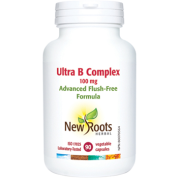













I am 66 and have been taking Niacin for the better part of 40 years. Initially, I took it in an attempt to minimize the effects of migraine headaches, which worked. Then having discovered my migraines were rooted in “fear” I continued taking Niacin for all of it’s other benefits. The flush to me is on of the most important benefits of Niacin. This function helps to flush stored toxins out of the body and to me this is very valuable. So I really appreciate getting all warm red and tingly. New Roots formula for Niacin is particularly good in my opinion.
Hi Peter,
Thank you for sharing your experience. We're thrilled to hear that Niacin has supported the underlying causes of your migraines and our article was able to help. If you'd like to learn more about migraines and natural health, check out our other article:
https://www.nationalnutrition.ca/articles/health-concerns/migraine/
Stay healthy & well!
Thank you so much for all of your amazing B vitamin articles: it's been a long time since I have taken organic chemistry class and I find your articles a real great refresher, especially since all of the B vitamins were slowly starting to blend together in my mind. So, I really appreciate these articles-and B vitamins! Clearly, all B vitamins are generally important for brain and body health & B3 is no exception: boosting VLDL, acting as a component of blood sugar regulatory molecule glucose tolerance factor, potentially helping to combat allergies and playing an important role in nervous system function.
Hello Rachel,
Happy you're enjoying our articles on all the b nutrients, there are a lot of them, each offering different benefits. However, if supplementing with a specific b vitamin for any length of time, a b complex should also be considered so there isn't an imbalance, you can discover more on b complex here: https://www.nationalnutrition.ca/articles/supplements/vitamin-b-4/