

Product of Peru.
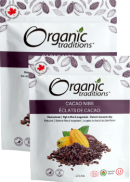
 Nibs
Nibs
454g
Sprinkle them on cereal, yogurt, soups, salads or mix together with almond/peanut butter, smoothies, drinks and various bakery products.
- Antioxidants
- Cacao
- Raw Superfoood
- Add to recipes
- 100% organic

It’s Not A Trend, It’s a Tradition... Naturally
Organic Traditions Fibre Flow range offers an easy and delicious way to support daily digestive health and increase fibre intake, with options like Fibre Flow (Strawberry), Fibre Flow (Unflavoured), Fibre Flow (Yuzu Lime), and Fibre Flow (Variety Pack), all made with clean, plant-based ingredients to support gut wellness. The functional latte collection includes nourishing blends such as Matcha Latte With Probiotics, Turmeric Latte With Probiotics And Saffron, Beet Latte With Probiotics, Chocolate Latte With Ashwagandha And Probiotics, Lavender Latte, Pumpkin Spice Latte, Holiday Spice Latte, Mint Chocolate Latte, and Yerba Mate Mint Latte With Matcha And Probiotics, delivering targeted benefits for energy, immunity, relaxation, and overall wellness. Shop these high-quality superfoods right here at National Nutrition.ca Read more >- Reviews
- POST A NEW REVIEW
Reviews By Rating
helpful votes
0
0 customers found this product review helpful
Cacao (Chocolate), once revered by the Aztecs as "the food of the gods", is a rich source of antioxidants. Cacao Nibs are incredibly rich source of magnesium and other essential minerals like calcium, zinc, iron, copper, sulfur and potassium.
Magnesium
Magnesium is an important catalyst for the body's chemical reactions, meaning that it increases the rate at which chemical reactions occur. Some of the most important chemical reactions that involve magnesium are in the Kreb's cycle, the cycle inside every cell that leads to energy production.
Without magnesium the transmission of nerve and muscle impulses is compromised. This can lead to nervous disorders, depression and muscle weakness or twitches. Magnesium is a useful supplement for PMS symptoms that involves irritability and mood swings. Magnesium also decreases menstrual pain by relaxing the uterine muscles. In pregnancy magnesium acts as a uterine relaxant and can prevent premature labour.
Studies show supplemental magnesium in pregnancy also decreases the risk of birth defects such as cerebral palsy. Magnesium is an important mineral for cardiovascular health. It regulates the heartbeat, prevents the calcification of arteries and relaxes arterial vessels to prevent hypertension. Magnesium has also been researched for its ability to reduce cholesterol, protect against osteoporosis and support optimal cell growth.
Magnesium can be found as a lone mineral, usually in tablet or capsule form (rarely as a powder). Chelated or citrated magnesium supplements are easier for the body to use and can be taken with or without food. Chelated simply means that magnesium is bonded to a protein molecule, for example aspartate or glycinate, and citrated means that magnesium is bonded to a citrate molecule.
Zinc
Zinc concentrates in the reproductive glands where it aids in normal fetal development and sperm maturation.It is especially important in the prostate gland where supplemental zinc has been shown to decrease prostate inflammation. Zinc is a regulator of the immune system ensuring that cells for identifying and killing microbes, viruses and harmful cells are in good working order. Zinc is a cofactor for the antioxidant system superoxide dismutase (SOD). Antioxidants neutralize free radicals. They are unstable molecules that in their bid to become more stable must bump into healthy cells and cause damage. Zinc also speeds wound healing and is used for the healing of burns and surgical incisions. Zinc is involved in the sensory organs, the eyes, nose and taste buds.
One of the first signs of zinc deficiency can be altered taste and smell. Zinc regulates the activity of insulin, for blood sugar control, thyroid hormone, for metabolism and the digestion of sugar and protein. Natural health practitioners use zinc for a variety of health concerns including; acne, benign prostatic hyperplasia, colds, flus, diabetes, diaper rash, stomach ulcers, macular degeneration, impotence, osteoporosis, eczema and wound healing.
The supplemental forms of zinc are the inorganic zinc sulphate and the organic zinc gluconate and zinc picolinate. The chelated, organic forms of zinc, picolinate and gluconate, are easier for the body to use. Zinc is usually found in tablet form or as lozenges, for use during colds. Zinc is also a part of multivitamin/mineral formulas and some immune boosting and antioxidant formulas. A special form of zinc called zinc monomethionine is used as an antioxidant. It has antioxidant activity equivalent to that of vitamin C, vitamin E and beta-carotene. It is often recommended to take a copper supplement concurrently with zinc, usually in a ratio of 10-15mg of zinc to 1mg copper.
Zinc levels are decreased by diarrhea, kidney disease, liver disease, alcoholism and diabetes. Zinc is not absorbed when it is consumed with fibre, phytates (found in grains and legumes), hard water, calcium, copper and iron. Zinc is lost through perspiration so supplementation may be helpful for athletes, those who live in hot climates and those who regularly use saunas or steam rooms. Zinc is depleted by the following medications: oral contraceptives, some diuretics, ulcer medications, antiviral medication and some antibiotics. Much of our food is deficient in zinc due to poor soil levels of the mineral. Food processing techniques destroy zinc.
Back to Top ↑
-

Pure Beeswax Candle Heritage Drip 3" x 3.25" Pillar
Sale: $22.99
Reg.: $29.99 (Save $7.00)
-

Kind Granola (Cinnamon Oat With Flax Seeds) - 312g
Sale: $8.99
Reg.: $10.99 (Save $2.00)
-
Dgl Ultra (Caramel Creme Flavoured) - 90 Chew Tabs - Enzymatic Therapy
Sale: $19.99
Reg.: $22.99 (Save $3.00)












