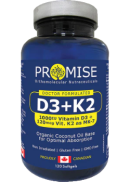
- 120mcg
- Vitamin K2 (natto derived Menoquinone 7)
- 25mcg
- Vitamin D3 (Cholecalciferol) (1000iu)
Keep out of reach of pets & children. If pregnant or breastfeeding or taking blood thinners, consult a health care practitioner prior to use. Contains no added gluten, nuts, eggs, dairy products, fish or shellfish, corn, wheat or yeast.
 Softgels
120 Softgels
Adults: 1 softgel, 1 time per day.
- Supports immune system function
- Support cardiovascular health
- Supports bone growth and density
- Bioavailable form MK-7 K2
- Organic Coconut Oil Base
- Vegan, Non Irradiated and Free from gluten and GMOs

Canadian Superior Quality Assurance
Promise Orthomolecular Nutraceuticals is a trusted Canadian leader in the manufacturing and distribution of premium herbal supplements for the health food market avaialble at National Nutrition. Their success is driven by innovation, offering high-quality products in convenient liquid and easy-to-swallow capsules that support the wellness goals of consumers around the globe. With an unwavering commitment to quality, value, and exceptional customer service, Promise has earned a strong reputation as a reliable national brand within the natural health industry. Read more >- Reviews
- POST A NEW REVIEW
VITAMIN D 1,000IU - BEYOND BONE HEALTH
Surprising new research reveals that vitamin D is not just for bone health. It plays a critical role in the health of the brain and nervous systems, and the cardiovascular and immune systems, as well as in pregnancy and child development. One recent study found that people who took vitamin D supplements had a 7% lower risk of death than those who did not, and many ailments are now being linked to vitamin D deficiency.
Called the sunshine vitamin, vitamin D is formed naturally in the skin by exposure to sunlight. But when a person does not get enough sun exposure, their body cannot make sufficient vitamin D.
Why Is Vitamin D Deficiency Increasing?
We are experiencing an unprecedented epidemic of vitamin D deficiency, with resulting health problems, because so many people are now avoiding exposure to sunshine due to the risk of skin damage and skin cancer from UV rays.
People living in places like Canada, where the sun is not strong enough from mid-September to mid-May to stimulate vitamin D production in the skin, are at risk of developing a vitamin D deficiency. Vitamin D has a half-life of about two weeks. After mid-September, a rapid drop in vitamin D levels leaves most people susceptible to increased incidence and severity of colds, flus, and infections, and increased risk of degenerative diseases.
The Right Form Of Vitamin D For The Human Body
Only the natural form of vitamin D enhances human health. When buying a vitamin D supplement it is important to get vitamin D3 (also called cholecalciferol). This is the form made by your skin on a sunny day.
Some supplements contain vitamin D2 (also called ergocalciferol), a form synthetically derived from vegetables. Ergocalciferol does not normally occur in the human body and may actually impair vitamin D actions in the body (Cannell).
How Much Vitamin D Is Needed?
A person with fair skin with full body exposure to sunlight can produce up to 20,000 IU of vitamin D3 in just 20 minutes. New research shows that the medical profession has vastly underestimated the amount of vitamin D required to maintain good health. While Health Canada currently recommends a maximum dose of only 1,000 IU daily, experts now suggest adults take up to 5,000 IU daily in winter or whenever exposure to sunlight is limited. Published scientific research has confirmed that there is no risk of toxicity from vitamin D3 supplements in doses below 10,000 IU per day.
How Does Vitamin D Work?
Vitamin D is produced when sunlight converts cholesterol in your skin into a form of vitamin D3 called calciol. Then the liver hydroxylates calciol into a form called calcidiol (25-hydro- xyvitamin D3). The kidneys then hydroxylate calcidiol into the active form of vitamin D called calcitriol (1,25-dihydroxy- vitamin D3).
Calcidiol, the inactive form of vitamin D3, is circulated and stored in the body. This is the form that should be measured during a blood test of vitamin D3 levels. Researchers now recommend that blood levels of calcidiol be maintained at 50 ng/mL or 125 nmol/L, the level at which vitamin D actually has broader health benefits.
Virtually every cell in the human body has receptors for vitamin D3 because it is not just a vitamin, it is also a hormone. As a hormone, it regulates cellular production of important proteins and peptides.
The Many Benefits Of Vitamin D3
- Maintains bone, joint and muscle health
- Supports the brain and nervous system
- Reduces the risk of cardiovascular disease
- Supports the health of mother and child during pregnancy and lactation
- Strengthens the immune system, reducing the incidence and severity of bacterial infections
- Improves lung function, especially in former smokers
- Supports health cell growth
- Inhibits skin cell growth associated with psoriasis and other skin conditions
- Helps maintain adequate insulin levels for people with type II diabetes
Additional Information
Pregnancy and lactation: Suitable for pregnant and lactating women.
Children: Health Canada recommends 200 IU daily for children of all ages. Emerging research indicates that much higher doses are safe and support optimal health for children.
Drug interactions: Many drugs cause vitamin D deficiencies because they interfere with the absorption and/or metabolism of vitamin D, including cholestyramine (Questran), colestipol (Colestid), phenytoin (Dilantin), phenobarbital, orlistat (Xenical), and mineral oil. Also, corticosteroids, such as prednisone, increase the need for vitamin D.
Contraindications: People using digoxin (Lanoxin) and thiazide diuretics should consult a health care practitioner before supplementing with vitamin D. People with liver or kidney disease, primary hyperthyroidism, lymphoma, tuberculosis and granulomatous diseases should consult a health care practitioner before supplementing with vitamin D.
Most people experience some degree of vitamin D3 deficiency, but an explosion of research is showing that taking a vitamin D3 supplement can improve physical and mental health, and reduce the risk of infections and degenerative diseases.
Back to Top ↑