

- 0.25 ml
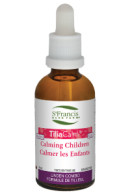
- Linden flower (Tilia x europaea) (1:4, QCE 62.5 mg)
- 0.25 ml
- Chamomile flower (Matricaria chamomilla) (1:4, QCE 62.5 mg)
- 0.25 ml
- Catnip herb top (Nepeta cataria) (1:4, QCE 62.5 mg)
- 0.25 ml
- Lemon Balm herb top (Melissa officinalis) (1:4, QCE 62.5 mg)
- QCE = Quantity Crude Equivalent
Consult a health care practitioner before use if you are breastfeeding. Consult a health care practitioner if sleeplessness persists continuously for more than 3 weeks. Consumption with alcohol, other medications or health products with sedative properties is not recommended. Do not use if you are pregnant or if you are allergic to plants of the Asteraceae/Compositae/Daisy family.
 Liquid
50ml
All doses should be taken 3 times daily in a little water on an empty stomach. Children (2-4 years): 1.6 ml (48 drops) Children (5-9 years): 2.1 ml (64 drops) Adolescents (10-14 years): 4.3 ml (128 drops) Adults and Adolescents (15 years & over): 8 ml (240 drops)
- Help relieve mild digestive disturbances
- A calmative and/or sleep aid
- Soothe and relax nervous system
- Relieves colic
- Easy to use & absorb liquid tincture
- Gluten-free

Wild Crafted & Organic Liquid Herbs - 50 New Added
St. Francis Herb Farm is a leading natural health and herbal supplement company with popular immune-supporting products like Deep Immune and Chest Rub. They also offers a top-selling stress-supporting supplement, Strest Adrenal Tonic. St. Francis Herbs use high-quality herbs and delivers on quality. Read more >- Reviews
- POST A NEW REVIEW
CHAMOMILE
A Cup of Chamomile tea isn't just tasty, it's proven to be calming in many ways ...
Chamomile is a well-known herb amongst the general population. Its mild, pleasant taste makes it a favourite tea for soothing the digestion and nerves. Chamomile is a sedative, anti-inflammatory and spasmolytic agent that is used for arthritis, insomnia, anxiety, muscle spasms, digestive upsets, diarrhea, headaches and pain. One component of chamomile, azulene, has been shown to decrease the release of histamine and serotonin in tissues.
Serotonin and histamine promote inflammation by attracting immune cells to the area and by increasing the permeability of blood vessels so that more fluid goes into the area.
Chamomile tea or tincture can be gargled to help prevent infection and heal mouth or gum abrasions. It can also be applied topically to wounds, burns and acne for the same purpose. Chamomile has been traditionally used as a tonic for the uterus, specifically to relieve menstrual cramps.
Dried chamomile flowers are commonly made into a tea. Chamomile can also be purchased in capsules or as a tincture. Standardized preparations are available and give the consumer the assurance that the proper plant, and usually, some of an active ingredient is present. Chamomile may be found in formulas for soothing the digestive tract or relaxing the mind and body.
Chamomile is in the same plant family as ragweed therefore individuals with ragweed allergies should not use chamomile. Also, prolonged use of chamomile may lead to sensitization to ragweed. Do not use chamomile while you are pregnant or nursing. Theoretically chamomile may cause drowsiness and should not be taken when performing tasks that require alertness. Theoretically chamomile may increase the effect of sedative medications. Although both of these contraindications have never been proven clinically, caution should be observed.
Chamomile– QUICK FACTS
PARTS USED
· Aerial parts of the plant, flowers.
APPLICATIONS
· Indigestion, nervousness, insomnia, stress, menstrual cramps, minor mouth infections.
OPTIMUM DOSAGE
· Tea containing 1-2tsp of dried herb per cup, Capsules 400-1600mg daily standardized to 1.2% apigenin. (Clinical doses may be higher as recommended by your practitioner).
WORKS WELL WITH
· Vitamin B complex, fennel, catnip, skullcap, valerian, marshmallow.
IMPORTANT INFORMATION
· Prolonged use of chamomile may cause a ragweed allergy.
· Do not use chamomile if you are allergic to ragweed.
· Do not use chamomile if you re pregnant or nursing.
Back to Top ↑
-

Cannacell Botanical Shower Gel (Harmony) - 236ml
Sale: $11.94
Reg.: $15.63 (Save $3.69)












