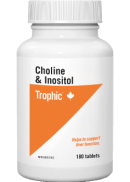
- 102mg
- Choline (choline bitartrate)
- 250mg
- Inositol
Cellulose, Hyprolose, Magnesium Stearate, Dibasic Calcium Phosphate Dihydrate
Keep out of the reach of children. Do not use if cap seal is broken. Store in a cool, dry place.
 Tablets
180 Tabs
Adults, take 1 tablet daily or as recommended by a health care practitioner.
- Prevents hardening of the arteries and liver by keeping cholesterol in a solution
- Helps to eliminate constipation
- Ideal for those concerned with liver health and high blood pressure and cholesterol
- Balanced blend
- Convenient tablet formula
- free from wheat, soy, gluten, dairy, sugar, artificial colours, preservatives, or animal products

- Reviews
- POST A NEW REVIEW
Reviews By Rating
helpful votes
3
3 customers found this product review helpful
Trophic Choline and Inositol are part of the B group of complex vitamins.
BENEFITS OF CHOLINE & INOSITOL
- Inositol - needed for the growth of cells in the bone marrow, eye membrane and intestines
- In combination with PABA and pantothenic acid, helps to prevent gray hair
- Choline - Essential for a healthy liver by enabling it to metabolize fatty deposits which may interfere with its biochemical efficiency
- Necessary for the synthesis of acetylcholine which transmits impulses from one nerve to another and plays a critical role in memory functions
Inositol occurs in large amounts in nerve tissue and the tissues of the brain, stomach, kidney, spleen, liver and heart
Inositol is invaluable as a pre-operative aid for stomach cell growths as it helps to reduce total liver fat.
Choline is present in high amounts of colostrum, the extra rich milk mothers produce the first few days of nursing.
Choline is necessary for the manufacture of phospholipids which fight against streptococcus infection.
HIGH CHOLESTEROL
Cholesterol is not all bad; it is the amount and the ratio of the various forms of cholesterol that are a health concern. LDL (low density lipoprotein) cholesterol is fat that is being transported from the liver for use by your cells. It is commonly called bad cholesterol. HDL (high density lipoprotein) cholesterol is called good cholesterol because it is fat that is being taken unused cholesterol from your cells back to the liver, where it is broken down. Cholesterol levels are unhealthy if you have lots of circulating LDL, not enough HDL or a combination of the two.
High cholesterol contributes to heart disease when the fatty molecules build up on the inside of arteries. This leads to a decrease in the flexibility and elasticity of the walls. As the artery becomes narrower, decreased circulation leads to high blood pressure because the body struggles to maintain enough blood flow to its tissues. Pieces of the cholesterol plaque can break off or the turbulent flow of blood can cause clots to form. If the pieces or clots lodge in smaller vessels this leads to heart attack or stroke.
Dietary cholesterol is different than the serum cholesterol mentioned above. Although eating foods that are high in cholesterol does raise serum cholesterol levels the liver is responsible for making cholesterol when needed. Thus a cholesterol reduction plan should include a low cholesterol diet with other treatments to help to reduce serum cholesterol. Genetics also plays a role in high cholesterol.
LIVER HEALTH
The liver is the largest gland in the body and one of the most important organs. It has many functions. It produces bile, the digestive juice that breaks down fats and helps to absorb fat-soluble vitamins. Bile also stimulates intestinal contractions, to promotes regularity, and converts beta-carotene into vitamin A. The liver acts as filter for all of the blood in the body.
Blood from the intestines, carrying nutrients, goes to the liver where some vitamins and minerals are stored. The liver also metabolizes fat into cholesterol, phospholipids (for cell membranes) and lipoproteins (for carrying other molecules). The liver plays a role in blood sugar regulation by making glucose tolerance factor. Sugar can be stored in the liver for later use and extra food is converted to fat by the liver and then transported to the fatty tissue.
Liver supportive foods include artichokes, black radish, beets, carrots, spinach, sauerkraut, tomatoes and watercress. Make sure that you are getting enough water-soluble fibre in your diet, as found in apples, oats and supplemental inulin. They help to eliminate bile and toxins from the intestines. Avoid sugar, alcohol, red meat, trans-fatty acids and processed foods. They are difficult for the liver to process. Avoid high doses of niacin and vitamin A because they can raise liver enzymes.
Back to Top ↑