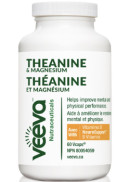
- 125mg
- L-Theanine
- 100mg
- Magnesium (Provided by 500 mg of Magnesium glycinate)
- 25mg
- Vitamin B6 (Pyridoxal-5-phosphate)
- 500mcg
- Vitamin B12 (Methylcobalamin)
- 400mcg
- Folic acid (Folate)
Veeva Basics Siberian Ginseng with B Happy Complex is vegan, non-GMO, gluten free (tested, each batch) and made in Canada by strict GMP standards.
 Veggie Caps
60 V-caps
Two capsules, once per day, with or without food.
- Temporarily promote relaxation.
- Therapeutic dosage of theanine
- Improves learning, concentration, focus and mood
- With B Happy Complex for psychological well-being
- Magnesium supports muscle relaxation

- Reviews
- POST A NEW REVIEW
Veeva's Theanine and Magnesium
Theanine is an amino acid found in green, black and oolong teas (Camellia sinensis), as well as a specific type of mushroom called the Boletus badius. Theanine is able to cross the blood brain barrier, giving it a strong affinity for the brain and central nervous system. Among its psychoactive properties, theanine has been shown to reduce mental and physical stress, improve cognition and mood, as well as treat insomnia, specifically for those individuals who can initially fall asleep, but have trouble staying asleep throughout the night.
The medicinal properties of theanine come directly from its ability to increase the level of the brain neurotransmitters, GABA and dopamine. GABA and dopamine do not cross the blood brain barrier making supplementation with these substances useless in terms of effecting the nervous system. Supplementation using precursors to these substances is necessary. GABA, being an inhibitory transmitter balances or regulates neuronal excitability throughout the nervous system. Studies have shown that individuals with impaired or deficient dopamine have problems with mood, memory, attention, sleep, cognition and learning.
Theanine has also been shown to directly stimulate alpha waves, the brain wave emitted during awake and relaxed periods and used as an index of relaxation.
Magnesium as an amino acid chelate, such as magnesium glycinate or magnesium taurate, is up to 4 times better absorbed than magnesium oxide and can be taken with our without food. Also, magnesium taurate has added benefit for the heart, so you may want to consider this form if you are supplementing for cardiovascular benefits. Magnesium chloride, magnesium citrate, and other magnesium salts are about 30% bioavailable. Magnesium glycinate and citrate are both soluble forms, considered highly absorbable that provide a high elemental mineral content. These are probably the most widely recommended forms.
Magnesium is an essential mineral for all known living organisms. Magnesium ions catalyze many chemical reactions in the human body, including those in the mitochondria where most of the energy inside each cell of the body is produced. It also plays a role in cell signaling within the body, with wound healing and with enzymes governing the replication of DNA.
Magnesium is actually essential for more than 300 biochemical reactions in the body!
Vitamin B6
B6 is required for the production of neurochemicals in the brain, such as serotonin and GABA. Serotonin regulates pleasurable experiences and appetite, and GABA calms the body. Therefore, B6 is useful for a variety of neurological disorders including autism and hormone-associated depression. Poor B6 status in the elderly has been associated with an increased rate of cognitive decline. Supplementation of vitamin B6 may help to slow this process of mental decline and memory loss associated with age.
The breakdown of the toxic substance homocysteine into harmless byproducts involves vitamin B6. Homocysteine damages the inner lining of arteries and having high levels of homocysteine in the body is associated with an increased risk of atherosclerosis and cardiovascular disease. The effect is increased with co-supplementation of vitamin B12 and folate.
Vitamin B12
B12 is a water-soluble B vitamin. Deficiencies of B12 may not be seen for several years because the body can store up to 5 years worth of this vitamin. There are several forms of B12 including cyanocobalamin and methylcobalamin. B12 is required in areas where there is high cell turnover, for example the gastrointestinal tract, bone marrow and nervous system. Thus B12 has been used for the treatment of neurological diseases like multiple sclerosis and depression.
Back to Top ↑