

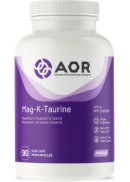
- 70mg
- Magnesium (Citrate)
- 25mg
- Potassium (Chloride)
- 375mg
- Taurine
Silicon Dioxide and Sodium Stearyl Fumarate. Capsule: Hypromellose
Contains no wheat, gluten, corn, nuts, peanuts, sesame seeds, sulphites, mustard, soy, dairy, eggs, fish, shellfish or any animal by product. Consult a health care practitioner prior to use if you are pregnant or breastfeeding.
 Veggie Caps
90 V-caps
Take one capsule four times daily with/without food, or as directed by a qualified health care practitioner.
- Cardiovascular support.
- Brain function.
- Pharmaceutical synthesis.
- Heart health.
- 100% vegan.
Innovative Formulas by AOR Canada found at National Nutrition
AOR Canada is the innovative formulators of Canada’s best-selling antioxidant support, AOR Advanced B Complex and AOR Tri-B12. They are also known for their top bone health supplements, Ortho Adapt and Bone Basics. You can also SHOP AOR's Nattokinase, and trusted Curcumin Ultra, Curcumin Active and Curcumin95 inflammation support at National Nutrition.ca. AOR are leaders in natural health with innovative product development. Read more >- Reviews
- POST A NEW REVIEW
Reviews By Rating
helpful votes
0
0 customers found this product review helpful
Electrolytes are conductors of electricity, but they are better summarized as substances that dissociate in solution to form ions. Electrolytes, such as magnesium and potassium, have many major functions, including:
1) Impulse transmission activity - electrolytes maintain activity of nerves and muscles.
2) Help regulate water levels in the body. Shifts of fluids are controlled by electrolytes.
3) Help regulate acid-base balance.
Potassium
Potassium is a mineral that is often recognized as one of the body's many resident electrolytes. Deficiencies in potassium can be caused by magnesium deficiency, refined glucose intake, alcohol, exercise-induced water loss, dieting (decreased dietary intake), gastrointestinal losses (i.e. diarrhea), and many other dietary factors. Potassium deficiencies have become much more common today because of refined high salt diets and the increasing levels of alcohol consumption.
Low levels of potassium directly result in an electrolyte imbalance in the heart (salt concentrations in the heart muscle increase.) Even mild deficiencies in potassium may result in nervous disorders, insomnia, and irregular heartbeat. Also, potassium has a definite impact upon blood pressure. In study after study, the efficacy of using potassium supplementation for lowering blood pressure has been established.
Magnesium
When a magnesium deficiency arises, the result is high blood pressure. In a 1988 study on the prevalence of magnesium deficiency, it was reported that "Magnesium is the most under-diagnosed electrolyte abnormality..." (Whang, R: Prevalence of magnesium deficiency, Clifton, N.J., Oxford Health Care Inc., pg. 5-6). How prevalent are magnesium deficiencies? In a nationwide study conducted by the U.S. Department of Agriculture in 1977-78, only 25% of 37,785 people surveyed had magnesium intake at or greater than the RDA. That means 75% of the population was deficient!
Taurine
Taurine is the most abundant free amino acid in the blood of mammals. Within the heart muscle, taurine is again the most abundant amino acid. A variety of studies have shown taurine to be an effective modulator of heart activity, although the mechanism still has not been clarified.
Nutritional research has been gathered upon taurine's effects on the cardiovascular system. Some of the results are astounding, especially for an unpopular (but well researched) amino acid: hypotensive activity, membrane stabilizing effects, and antiarrhythmic activity. In repeated studies, taurine has been effective in minimizing the injurious effects of congestive heart failure.
The beneficial effects of taurine reach past cardiovascular system:taurine protects the cellular membranes from being damaged by toxic compounds, such as oxidants, bile acids, and xenobiotics. The cellular membranes are protected by taurine because it:
1) Acts as a direct antioxidant: It protects tissues from oxidative stress because of its ability to scavenge free radicals.
2) Acts as an indirect antioxidant by preventing the disruption of ion transport and membrane permeability that results from oxidative damage. It protects the heart against free radical damage by its ability to stabilize the membranes.
Back to Top ↑
-

Sale: $35.95
Reg.: $41.99 (Save $6.04)
-

Up & Away - 30 Vaginal Suppositories
Sale: $31.99
Reg.: $34.99 (Save $3.00)
-

Hydro Clear (Rocket Pop) - 500g - 4EverFit
Sale: $56.99
Reg.: $59.99 (Save $3.00)












